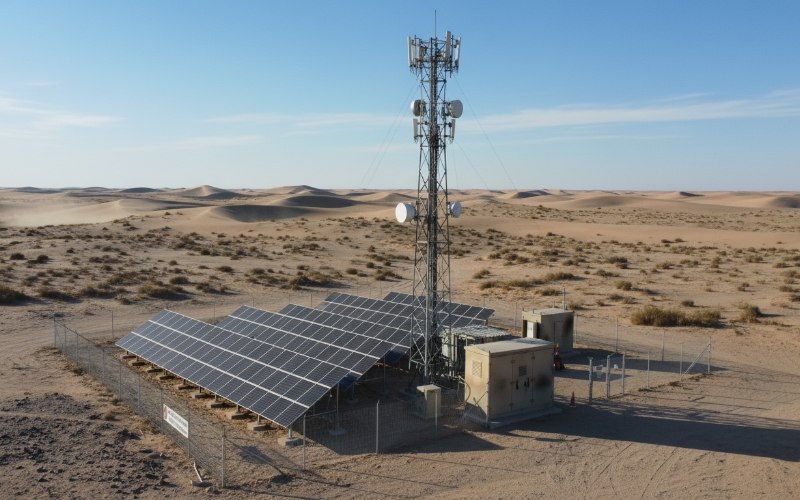
This is more than just a series of products; it is an ecosystem we have built to achieve a more efficient, reliable, and sustainable energy future. Discover how our products and solutions can create t...
Our Industrial Batteries combine high-quality materials, robust design, and dependable performance. With excellent deep-cycle capability and easy maintenance, they are ideal for diverse applications. ...
JYC Transportation batteries are a category of power storage devices specifically designed for transportation scenarios, with core functions of providing continuous, stable, and high-efficiency power ...
JYC Motive Power batteries are deep-cycle energy storage devices specifically designed for industrial and commercial vehicles and specialized equipment. Their core function is to provide continuous an...
Based on the low-carbon concept, and thanks to the competitiveness of energy storage technology, lithium applications in various systems will be gradually realized globally. JYC Lithium Battery Soluti...
Focus on company news, product updates and market events. We provide continuous updates to bring you first-hand information, helping you stay informed about our development progress at all times.
Battery Date Codes & Shelf Life Guide for Distributors
2026-01-24 10:30:32
Key Takeaways
Date Code Interpretation: Accurate reading of manufacturing timestamps is critical for warranty validation and FIFO (First-In, First-Out) implementation.
Chemistry Matters: VRLA lead-acid batteries require maintenance charging every 3-6 months, whereas LiFePO4 batteries can sit longer but have BMS parasitic draws.
Temperature Impact: Every 10°C increase above 25°C (77°F) cuts the passive shelf life of a lead-acid battery in half due to accelerated self-discharge.
Voltage Audits: Regular OCV (Open Circuit Voltage) checks prevent irreversible sulfation in lead-acid and deep-discharge sleep modes in lithium systems.
For battery distributors and large-scale warehouse managers, inventory is a perishable asset. Unlike inert hardware components, electrochemical energy storage devices—whether Lead-Acid (AGM/GEL) or advanced Lithium-ion (LiFePO4)—are "living" chemical systems. From the moment they leave the production line, internal chemical reactions begin to degrade their capacity. Managing this natural decay through precise understanding of date codes and shelf life protocols is the difference between high profit margins and costly dead stock.
The Financial Impact of Poor Shelf Life Management
Ignoring strict inventory controls leads to two primary failure modes: Sulfation in lead-acid batteries and Deep Discharge Protection Mode in lithium batteries. Both scenarios result in warranty rejections and dissatisfied system integrators. A distributor holding stale inventory risks delivering batteries that fail to meet their rated capacity (Ah) immediately upon installation, damaging the supplier's reputation.
Decoding Battery Date Codes
The manufacturing date code is the single most important data point for inventory rotation. Manufacturers do not stick to a universal standard, but most follow traceable alphanumeric patterns stamped on the battery case or printed on the top label.
Common Date Code Formats
1. Numeric Format (YYMMDD): This is the most straightforward format. A code reading 231115 indicates production on November 15, 2023. This is frequently used on shipping cartons and individual block heat stamps.
2. Alphanumeric Lot Codes: Many manufacturers use a code like K23. Here, the letter often represents the month (A=January, B=February, ... K=November) and the number represents the year. Some variations flip this logic or use the letter for the year based on a 20-year cycle.
3. Serial Number Embedding: For industrial batteries (OPzV, large LiFePO4 modules), the date is often embedded in a long serial number. For example, in a serial number JYC2310150001, the central digits reveal the production date (October 15, 2023).
Electrochemical Shelf Life Physics
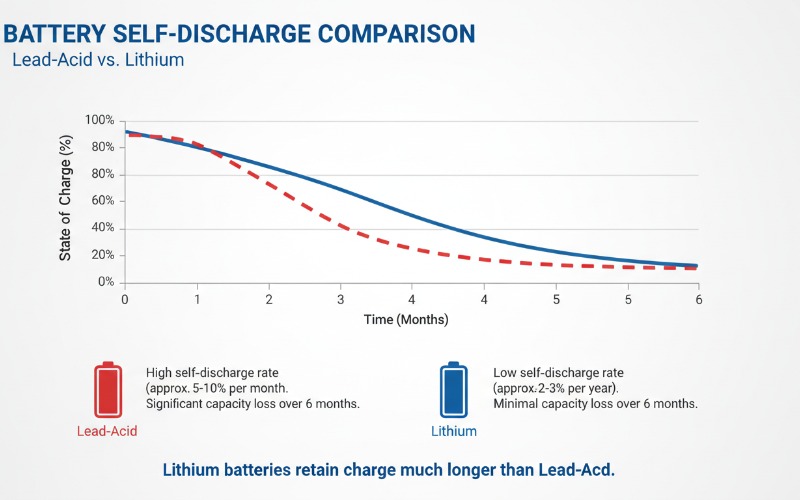
Shelf life is defined as the period a battery can be stored before it requires a recharge or becomes unusable. This is dictated by the Self-Discharge Rate.
Lead-Acid Self-Discharge Mechanisms
All lead-acid batteries (VRLA, AGM, GEL) suffer from self-discharge due to the instability of the lead oxide/sulfuric acid interface. Even without a load, the chemical potential energy slowly dissipates.
Standard Rate: Roughly 3% to 5% capacity loss per month at 25°C.
The Enemy (Sulfation): As the Open Circuit Voltage (OCV) drops, lead sulfate crystals form on the plates. If the OCV drops below roughly 12.4V (for a 12V block) for an extended period, these crystals harden (crystallize), making the battery impossible to recharge fully.
Lithium (LiFePO4) Self-Discharge Mechanisms
Lithium Iron Phosphate batteries have a much lower electrochemical self-discharge rate, often less than 2% per month. However, the Battery Management System (BMS) presents a unique challenge.
Parasitic Load: The BMS is always "awake" or in standby to monitor voltage, consuming a small amount of current. Over 6-12 months, this can drain the battery.
Sleep Mode Risk: If a lithium battery drains below its critical low-voltage cutoff (e.g., 10V for a 12V module), the BMS may enter a permanent protection mode or "sleep" state that requires specialized equipment to wake up, or worse, the cells may degrade irreversibly.
Storage Environment and Temperature Control
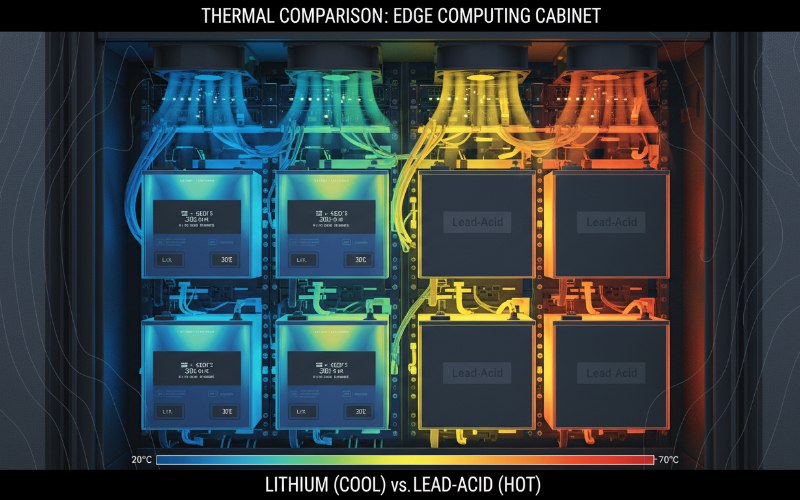
Temperature is the accelerator of chemical degradation. Distributors must adhere to the Arrhenius Law approximation in electrochemistry: For every 10°C (18°F) rise in temperature, the rate of chemical reaction (self-discharge) doubles.
Temperature
Lead-Acid Estimated Shelf Life
Maintenance Frequency
0°C - 10°C (32°F - 50°F)
12 - 18 Months
Check annually
20°C - 25°C (68°F - 77°F)
6 - 10 Months
Check every 3-6 months
30°C - 40°C (86°F - 104°F)
3 - 5 Months
Check every 2-3 months
> 40°C (> 104°F)
< 3 Months
Check monthly (Avoid storing)
Impact of Temperature on Lead-Acid Battery Shelf Life
Note: High temperatures significantly shorten the time before a refreshing charge is needed. Storing batteries in hot shipping containers or unventilated warehouses is a primary cause of premature failure.
Inventory Management Protocols (Best Practices)
To ensure customers receive "fresh" energy products, distributors must implement rigorous warehousing protocols.
1. Strict FIFO (First-In, First-Out)
Always ship the oldest inventory first. Warehouse management systems (WMS) should be configured to flag pallets that have been in stock longer than 90 days. Visual aids, such as color-coded stickers for arrival months, help forklift operators pick the correct stock.
2. The OCV Audit Strategy
Do not rely on assumptions. Implement a spot-check strategy:
Entry Audit: Measure voltage upon container arrival to establish a baseline.
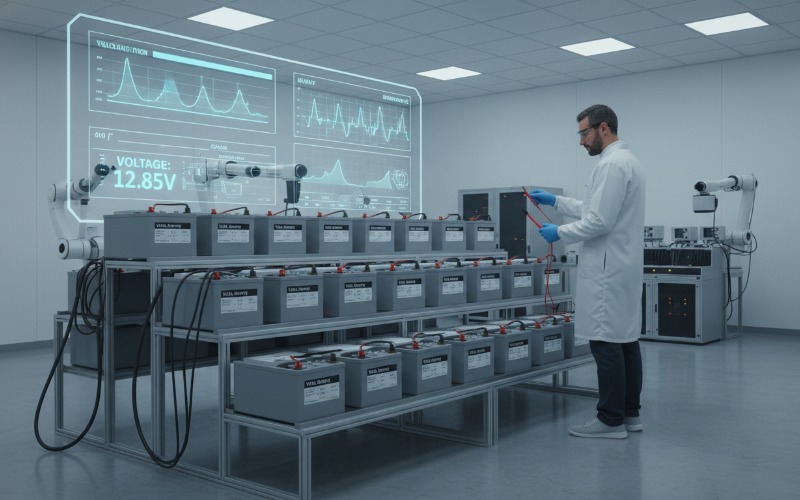
Rolling Audit: Every 3 months, measure the Open Circuit Voltage of a random sample (e.g., 5%) of the stock.
Lead-Acid Action Threshold: If OCV < 12.6V (for AGM), schedule a recharge. If < 12.4V, immediate attention is required to reverse sulfation.
3. Refresh Charging (Top-Up Charging)
Distributors should have a designated charging station. If Lead-Acid inventory approaches 6 months of storage (or 12.45V OCV), apply a "freshening charge." This involves charging at constant voltage (2.40-2.45 VPC) until the current drops to minimal levels. For Lithium batteries, it is generally recommended to store them at 40-60% State of Charge (SOC). If they drop too low, recharge back to this range, but avoid storing them at 100% SOC for long periods as it accelerates aging.
Technical Comparison: Managing Different Chemistries
Feature
VRLA Lead-Acid (AGM/GEL)
LiFePO4 Lithium-Ion
Self-Discharge Rate (25°C)
~3-5% / Month
~1-3% / Month (including BMS)
Critical Storage Voltage (12V)
~12.4V (Sulfation begins)
~10.5V - 11.0V (BMS Cut-off risk)
Storage SOC Recommendation
100% Full Charge
30% - 50% Partial State of Charge
Max Storage Duration (No Charge)
6 Months (Recommended)
6-12 Months (Depending on BMS draw)
Maintenance Action
Top-up charge to 100%
Charge to ~50% if voltage drops
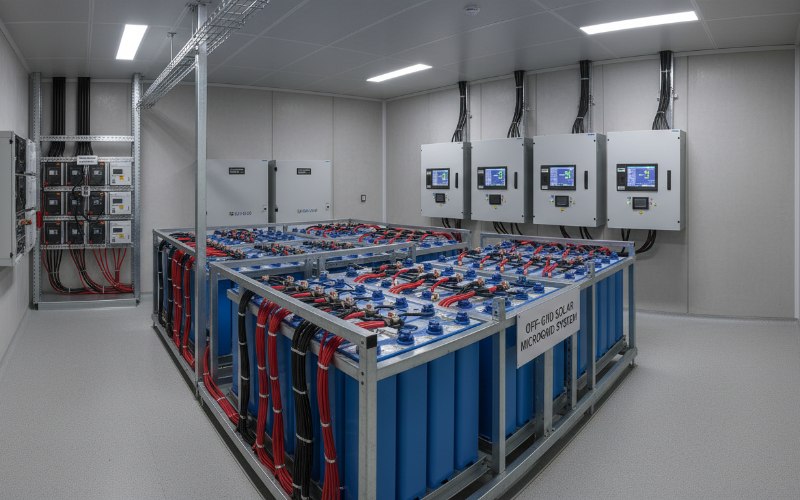
Warehousing Comparison: Lead-Acid vs. Lithium Storage Protocols
Frequently Asked Questions
What happens if I sell a battery that has been stored for 12 months without charging?
If it is a lead-acid battery, it likely suffers from hard sulfation. Even if it accepts a charge, it will have reduced capacity (Ah) and a significantly shortened cycle life. Selling this product poses a high risk of warranty claims within the first year.
Can I determine the exact manufacturing date from a JYC battery serial number?
Yes. JYC Battery utilizes a traceable coding system. For specific decoding of our industrial or solar battery series, please contact our technical support team with the serial number found on the top cover.
Why should Lithium batteries be stored at partial charge?
Storing lithium chemistry at 100% SOC places high stress on the internal electrode structure and electrolyte, accelerating degradation. Storing at roughly 50% SOC stabilizes the chemistry while providing enough buffer against self-discharge.
Proper inventory management is not just about logistics; it is a quality assurance process. By strictly adhering to date codes and shelf life maintenance, distributors protect their brand reputation and ensure end-users receive the reliability they pay for.







 en
en  ara
ara  de
de  fra
fra  kor
kor  ru
ru  spa
spa  vie
vie