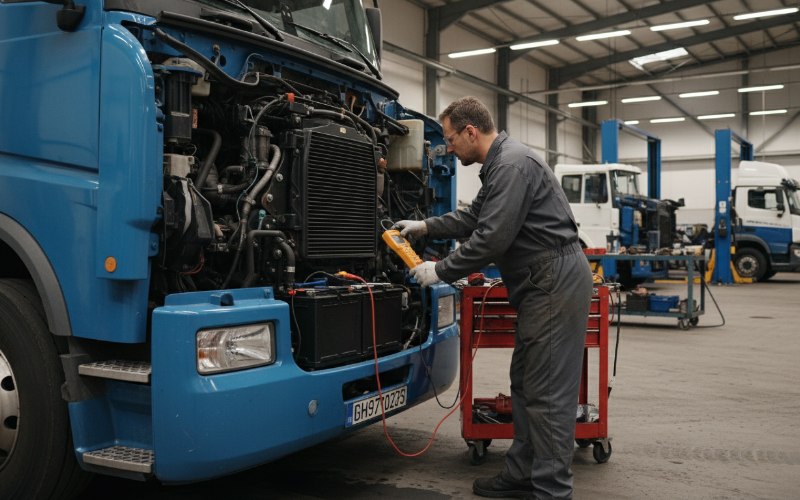
This is more than just a series of products; it is an ecosystem we have built to achieve a more efficient, reliable, and sustainable energy future. Discover how our products and solutions can create t...
Our Industrial Batteries combine high-quality materials, robust design, and dependable performance. With excellent deep-cycle capability and easy maintenance, they are ideal for diverse applications. ...
JYC Transportation batteries are a category of power storage devices specifically designed for transportation scenarios, with core functions of providing continuous, stable, and high-efficiency power ...
JYC Motive Power batteries are deep-cycle energy storage devices specifically designed for industrial and commercial vehicles and specialized equipment. Their core function is to provide continuous an...
Based on the low-carbon concept, and thanks to the competitiveness of energy storage technology, lithium applications in various systems will be gradually realized globally. JYC Lithium Battery Soluti...
Focus on company news, product updates and market events. We provide continuous updates to bring you first-hand information, helping you stay informed about our development progress at all times.
Drop-In Lithium Replacement Risks for Legacy Chargers
2026-01-30 18:05:00
Key Takeaways for System Integrators
Voltage Mismatch Risks: Legacy lead-acid chargers often utilize equalization and desulfation modes that exceed the over-voltage protection thresholds of Lithium Iron Phosphate (LiFePO4) Battery Management Systems (BMS).
Float Charging Issues: Continuous float charging, standard in VRLA maintenance, causes lithium plating and accelerates capacity degradation in lithium batteries.
Thermal Overload: The low internal resistance of lithium batteries can induce legacy chargers to operate at maximum current output for prolonged periods, risking charger burnout.
BMS Integration: Drop-in replacements lack communication protocols (CAN/RS485) with legacy rectifiers, leading to inaccurate State of Charge (SOC) drift and potential sudden system shutdowns.
The transition from lead-acid technology to lithium-ion, specifically Lithium Iron Phosphate (LiFePO4), represents a significant leap in energy density and cycle life efficiency. For system integrators and facility managers, the allure of a "drop-in" replacement—swapping a VRLA block for a lithium pack of the same form factor—is undeniably strong. However, simply inserting a lithium battery into a system designed for lead-acid chemistry introduces complex electromechanical compatibility issues that are often overlooked during the procurement phase.
While marketing materials often claim universal compatibility, the electrochemical realities tell a different story. This technical analysis explores the hidden costs and operational risks associated with retrofitting legacy charging infrastructure with drop-in lithium solutions, providing engineers with the data needed to make safe, long-term procurement decisions.
Fundamental Charging Algorithm Incompatibilities
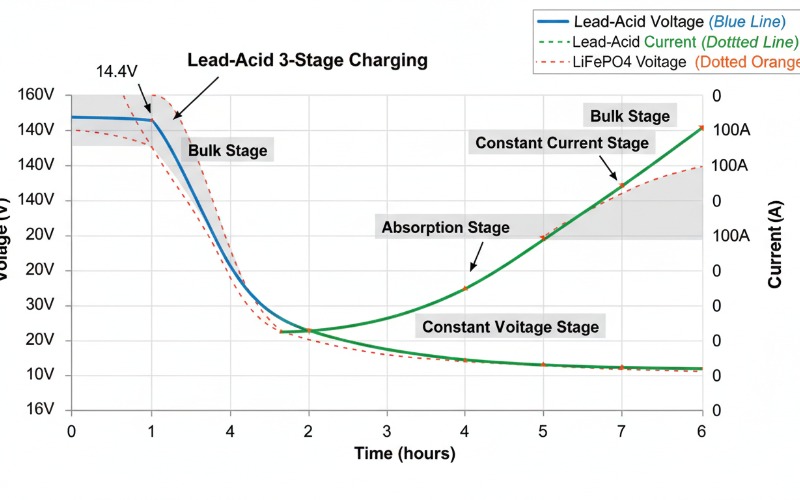
The primary point of failure in drop-in retrofits lies in the charging algorithm. Lead-acid chargers and lithium batteries operate on fundamentally different electrochemical principles. A standard industrial charger for lead-acid batteries typically employs a three-stage charging profile: Bulk (Constant Current), Absorption (Constant Voltage), and Float (Maintenance). Conversely, LiFePO4 chemistry requires a strict two-stage Constant Current/Constant Voltage (CC/CV) profile with a complete current cut-off upon saturation.
The Danger of Desulfation and Equalization Stages
Legacy chargers, particularly those used in industrial traction or unstable grid environments, often feature automatic equalization or desulfation cycles. These modes deliberately elevate the voltage (often exceeding 15.5V for a 12V nominal system) to dissolve sulfate crystals on lead plates.
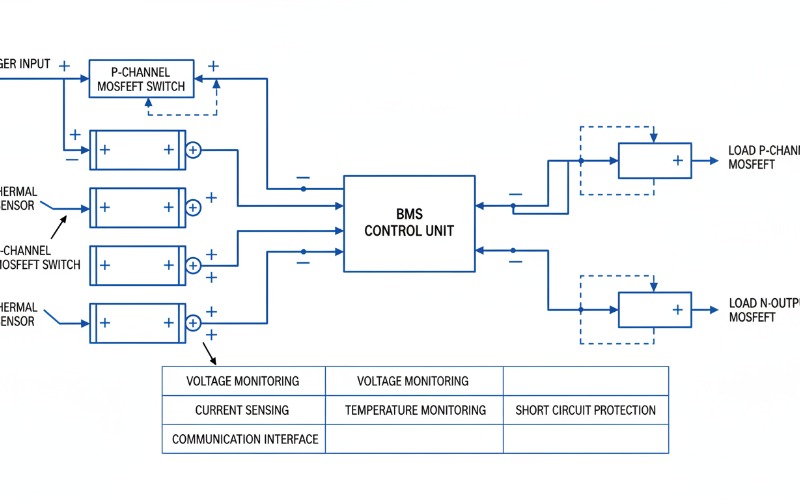
For a lithium battery, this voltage spike is catastrophic. A typical LiFePO4 cell has a maximum voltage ceiling of 3.65V (14.6V for a 12V pack). If a legacy charger initiates a desulfation cycle, the voltage will trigger the lithium battery's internal Battery Management System (BMS) to disconnect the circuit immediately via its MOSFETs to prevent thermal runaway. This sudden open-circuit condition can cause voltage spikes in the alternator or rectifier (load dump), potentially damaging sensitive downstream electronics or the charger itself.
Float Charge Induced Lithium Plating
Lead-acid batteries rely on a continuous "float" charge (typically 13.5V – 13.8V) to counteract high self-discharge rates. Lithium batteries have negligible self-discharge and do not require, nor should they receive, a float charge. Keeping a LiFePO4 battery at 100% State of Charge (SOC) with a constant voltage applied promotes the growth of metallic lithium plating on the anode. Over time, this plating reduces the active material available for intercalation, permanently diminishing capacity and increasing the risk of internal short circuits.
Thermal Risks Due to Internal Resistance Mismatch
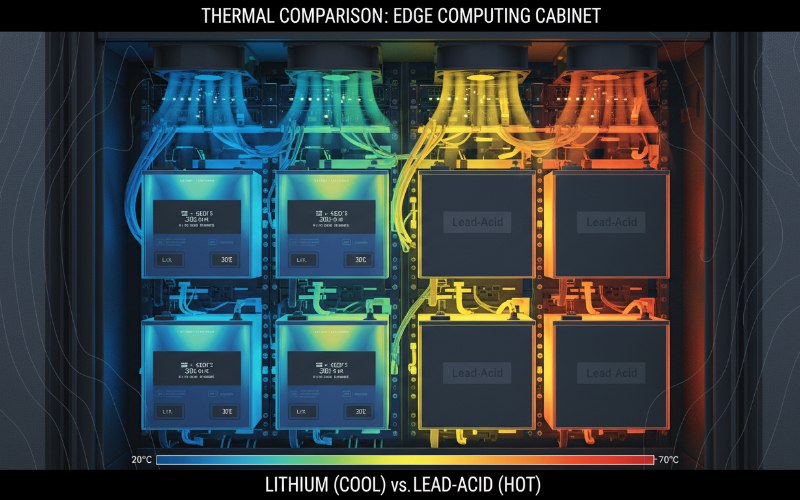
One of the most touted benefits of lithium technology is its extremely low internal resistance. While this allows for rapid charging and discharging, it presents a severe liability when paired with unregulated legacy chargers.
A lead-acid battery naturally limits the current it accepts as its voltage rises (Peukert’s Law and internal resistance dynamics). A lithium battery, however, will greedily accept as much current as the source can provide until it is nearly full. If the legacy charger relies on the battery's rising resistance to taper off the current, it may continue to run at maximum rated output for the entire charging cycle.
Most cost-effective lead-acid chargers are not rated for 100% duty cycle at maximum amperage. The sustained high-current draw from a drop-in lithium replacement can cause charger components (transformers, rectifiers, capacitors) to overheat and fail prematurely. In scenarios involving alternator charging (such as marine or RV applications), this can lead to alternator burnout in minutes.
BMS Limitations in High-Power Systems
The Battery Management System is the brain of any lithium solution, but in "drop-in" scenarios, the BMS is often a standard, internal component designed for general use, not specific industrial loads.
Inrush Current Tripping
Industrial equipment, such as pumps, compressors, and inverters, often generate massive inrush currents during startup—sometimes 5x to 10x their running current. Lead-acid batteries, being robust electrochemical blocks, absorb these spikes effortlessly.
A standard drop-in lithium battery's BMS typically utilizes MOSFETs for current switching. If the inrush current exceeds the BMS's peak discharge rating (even for milliseconds), the BMS will enter protection mode and cut power. This results in the system failing to start or shutting down intermittently, a scenario that is unacceptable in mission-critical UPS or telecom applications.
Technical Comparison: Lead-Acid vs Lithium Charging Parameters
To visualize the incompatibility, the following table contrasts the critical charging parameters of a standard VRLA AGM system against a LiFePO4 system.
Parameter
Lead-Acid (AGM/GEL) Requirements
Lithium (LiFePO4) Requirements
Retrofit Risk / Consequence
Nominal Voltage (12V Block)
12.0V - 12.8V
12.8V - 13.2V
Inaccurate SOC reading on legacy gauges.
Bulk Charge Limit
14.4V - 14.8V (Temperature Compensated)
14.2V - 14.6V (Strict Limit)
Legacy chargers with Temp Comp may overvoltage lithium in cold weather.
Charger increases voltage in winter, triggering BMS OVP cutoff.
End of Charge Current
Tapers naturally
Stays high until sudden drop
Charger overheating due to high duty cycle.
The Hidden Economic Costs of Partial Retrofitting
The Total Cost of Ownership (TCO) calculation often favors lithium due to its 10-year lifespan compared to the 3-5 years of lead-acid. However, this ROI calculation assumes the lithium battery actually lasts 10 years.
If a drop-in replacement is subjected to improper charging profiles from a legacy charger:
Cycle Life Reduction: Constant micro-cycling at high float voltages can reduce the cycle life of a LiFePO4 battery by up to 40%.
System Downtime: Unpredictable BMS disconnects caused by voltage spikes or inrush currents lead to expensive operational downtime and maintenance call-outs.
Warranty Voidance: Most tier-one battery manufacturers, including JYC Battery, specify precise charging parameters in their warranty terms. Using a legacy charger that employs equalization modes typically voids the warranty immediately.
Best Practices for System Integrators
When evaluating a legacy system for a battery upgrade, engineers should follow a strict decision matrix. A simple "drop-in" is rarely the professional engineering solution for critical power systems.
Option 1: Complete System Upgrade
If the benefits of lithium (weight reduction, fast charging, cycle life) are mandatory, the charger or rectifier must be upgraded simultaneously. Modern chargers feature programmable algorithms or specific "Lithium Modes" that respect the CC/CV requirements and eliminate float/equalization stages. In larger systems, shifting to smart lithium batteries with CAN-bus communication ensures the charger and battery act as a unified system.
Option 2: Optimized Lead-Acid Renewal
In many stationary applications where weight is not a constraint—such as UPS rooms or telecom base stations—advanced lead-acid technologies remain the superior economic and technical choice for legacy infrastructure. Deep Cycle AGM and Gel batteries provide robust performance without requiring expensive charger replacements. Furthermore, technologies like OPzV (Tubular Gel) offer cycle lives that rival entry-level lithium solutions while remaining fully compatible with existing rectifiers.
Frequently Asked Questions
Can I use a lead-acid charger for lithium batteries if I monitor it manually?
Technically, you can charge a lithium battery with a lead-acid charger if you disconnect it immediately once it reaches full charge and ensure the charger does not enter desulfation mode. However, relying on manual intervention for industrial systems is unreliable and dangerous. It is not recommended for professional applications.
Why does my drop-in lithium battery shut off when the generator starts?
This is likely due to the generator's starter motor creating an inrush current that exceeds the Maximum Discharge Current rating of the battery's BMS. Unlike lead-acid batteries which can surge to huge currents, the BMS protects the lithium cells by cutting the circuit. You may need a higher capacity battery bank or a soft-start device.
What is the impact of temperature compensation on lithium batteries?
Legacy chargers increase voltage in cold temperatures to aid lead-acid chemistry. Lithium batteries do not require this. In freezing conditions, a temperature-compensated charger might push voltage beyond safe limits (e.g., >15V), causing the BMS to trip or permanently damaging the cells if the BMS fails. You must disable temperature sensors when retrofitting.
JYC Battery specializes in both high-performance VRLA and advanced Lithium storage solutions. Contact our engineering team today to audit your power system and determine the safest path for your energy storage upgrade.








 en
en  ara
ara  de
de  fra
fra  kor
kor  ru
ru  spa
spa  vie
vie