This is more than just a series of products; it is an ecosystem we have built to achieve a more efficient, reliable, and sustainable energy future. Discover how our products and solutions can create t...
Our Industrial Batteries combine high-quality materials, robust design, and dependable performance. With excellent deep-cycle capability and easy maintenance, they are ideal for diverse applications. ...
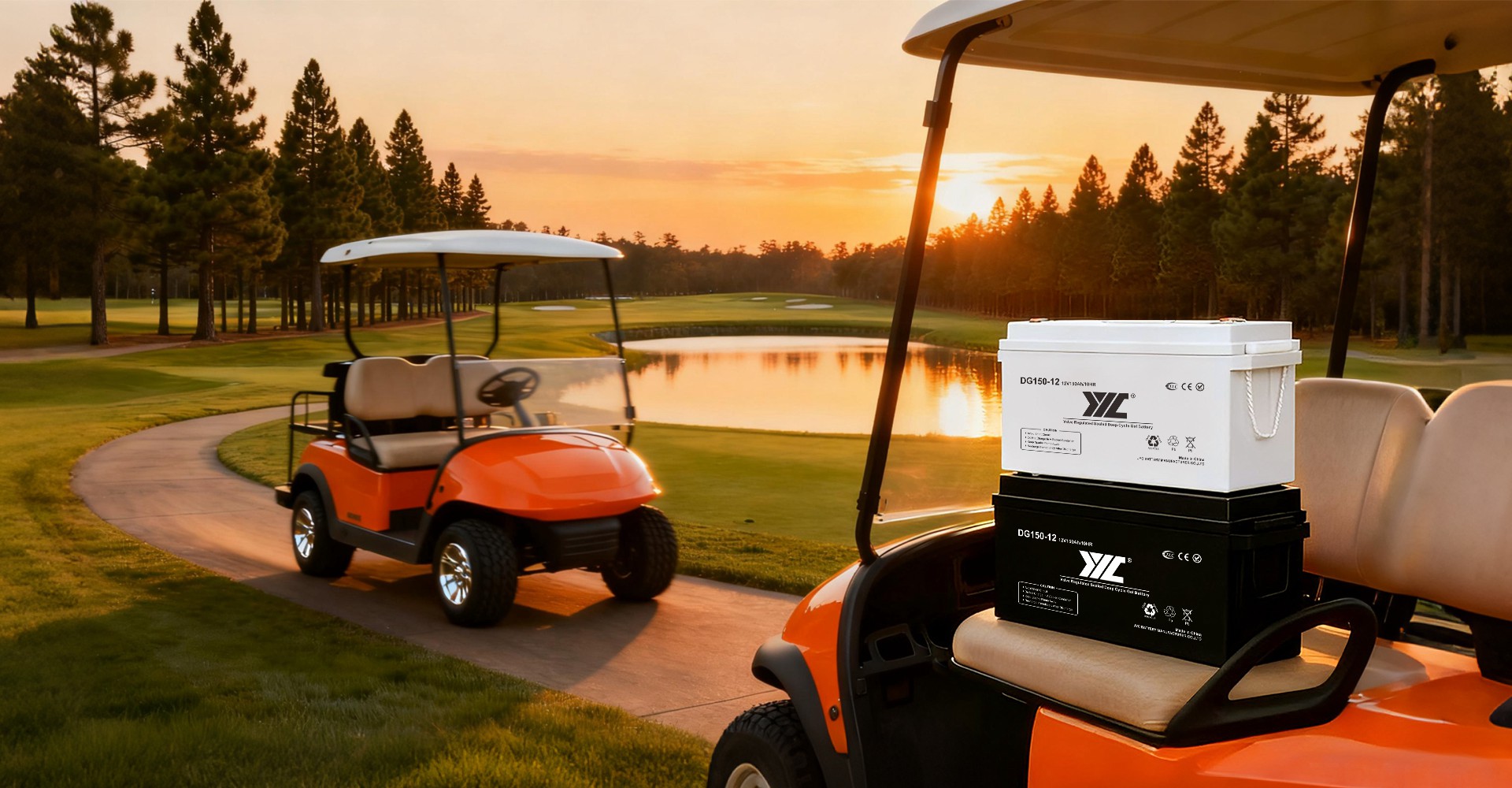
JYC Transportation batteries are a category of power storage devices specifically designed for transportation scenarios, with core functions of providing continuous, stable, and high-efficiency power ...
JYC Motive Power batteries are deep-cycle energy storage devices specifically designed for industrial and commercial vehicles and specialized equipment. Their core function is to provide continuous an...
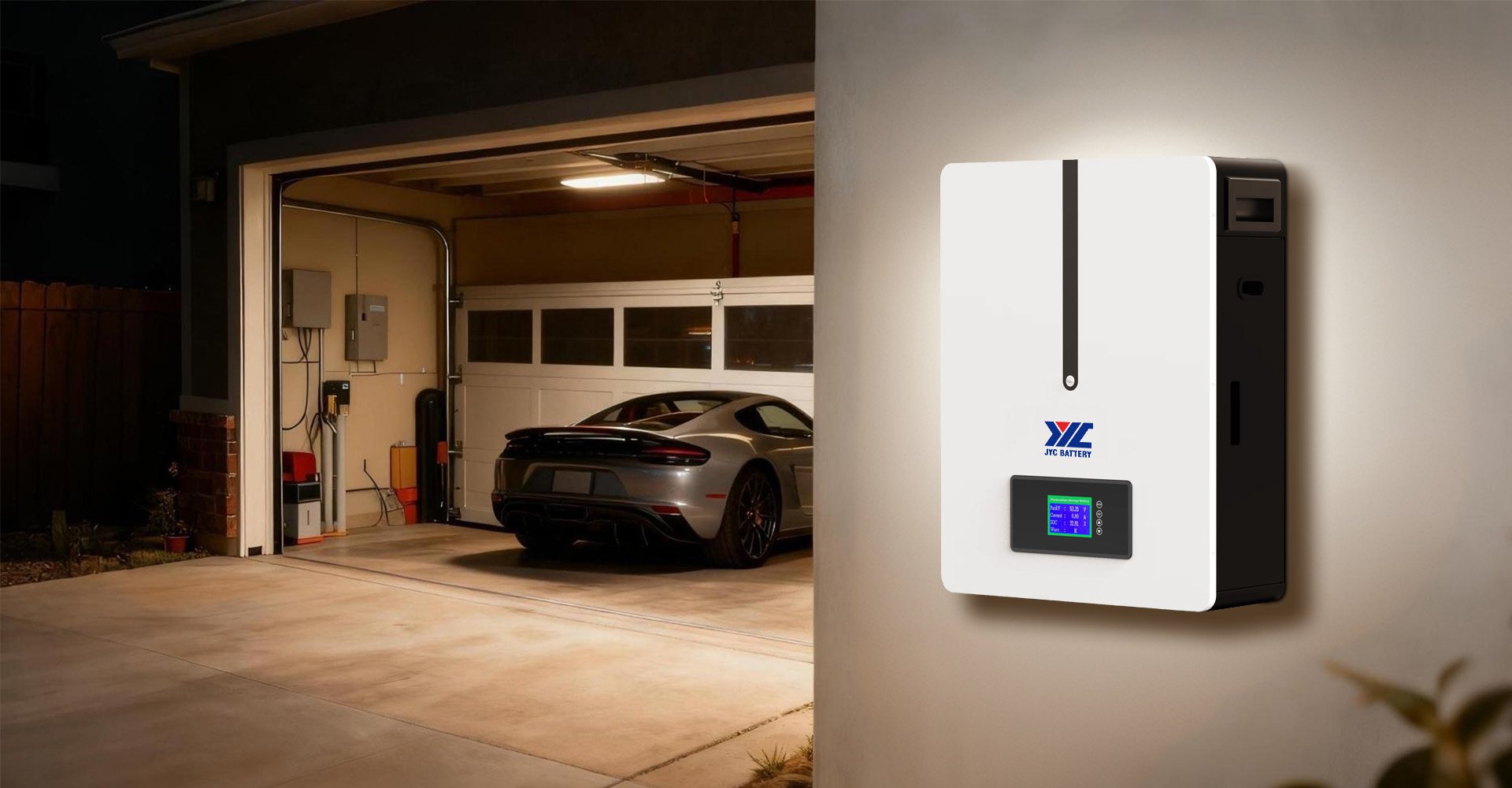
Based on the low-carbon concept, and thanks to the competitiveness of energy storage technology, lithium applications in various systems will be gradually realized globally. JYC Lithium Battery Soluti...
Focus on company news, product updates and market events. We provide continuous updates to bring you first-hand information, helping you stay informed about our development progress at all times.
EFB vs AGM Start-Stop Batteries: Technical Differences Explained
2026-01-23 14:02:45
The automotive industry has witnessed a paradigm shift from traditional internal combustion engines to micro-hybrid platforms, necessitating advanced energy storage solutions. For auto parts distributors and OEM procurement managers, understanding the distinction between Enhanced Flooded Batteries (EFB) and Absorbent Glass Mat (AGM) technologies is critical for inventory management and system integration.
Key Takeaways for Battery Distributors
Cycle Life Distinction: AGM batteries typically offer 3-4x the cycle life of standard flooded batteries, while EFB offers roughly 2x.
Hydrodynamic Stability: AGM utilizes immobilized electrolyte technology eliminating stratification, whereas EFB relies on passive mixing elements and scrim layers to manage liquid electrolyte dynamics.
PSoC Performance: Both technologies use carbon additives for Partial State of Charge resilience, but AGM maintains lower internal resistance under deep discharge.
Replacement Logic: An AGM battery can replace an EFB, but an EFB should never replace an OEM-spec AGM due to regenerative braking loads.
The Micro-Hybrid Demand on Energy Storage
Start-Stop systems, or micro-hybrids, reduce fuel consumption by shutting down the engine during idle stops. This places a massive strain on the battery, which must power all vehicle electronics (lights, AC, infotainment) while the alternator is disengaged. Furthermore, the battery must accept high-current pulses from regenerative braking systems.
Standard Lead-Acid (SLI) batteries fail rapidly under these conditions due to grid corrosion and active material shedding. This necessitates the use of advanced lead-acid battery technologies designed for high Dynamic Charge Acceptance (DCA) and cycling endurance.
Understanding EFB Technology Architecture
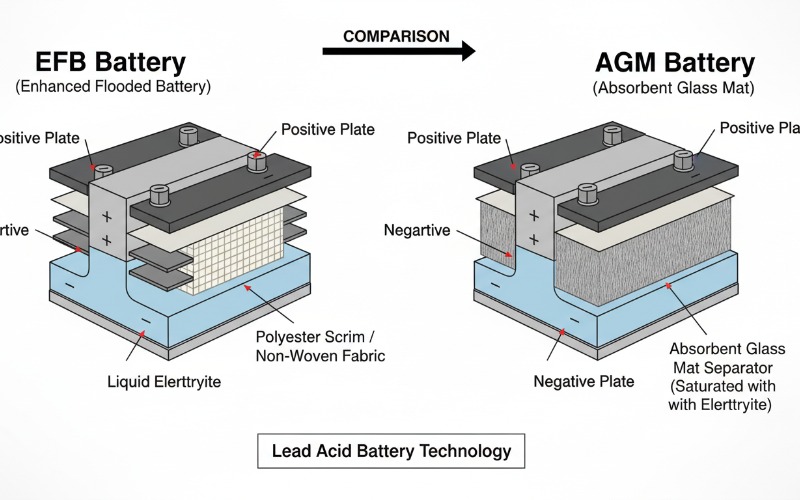
Enhanced Flooded Batteries (EFB) bridge the gap between conventional flooded batteries and premium AGM. They are essentially robust wet-cell batteries engineered to handle the cyclic stress of entry-level start-stop vehicles.
The Role of the Polyfleece Scrim
The defining feature of an EFB is the addition of a polyester scrim (polyfleece) applied to the positive plate. In a standard wet cell, the constant cycling causes the lead dioxide active material to soften and shed, falling to the bottom of the case and causing short circuits. The scrim provides mechanical pressure, holding the active mass in place against the grid. This significantly increases cycle life compared to standard SLI units.
Electrolyte Hydrodynamics in EFB
Unlike AGM, EFB batteries contain liquid electrolyte that is free to move. This presents a hydrodynamic challenge known as acid stratification. During charge cycles, heavy sulfuric acid is generated at the plates and sinks to the bottom, leaving water-rich electrolyte at the top. This stratification leads to uneven plate usage and sulfation.
To combat this, advanced EFB designs often incorporate mixing elements—plastic ramps or grooves inside the casing—that utilize the vehicle's inertial movement to circulate the acid. While effective, this hydrodynamic reliance means EFB performance is partially dependent on physical vehicle motion to maintain electrolyte homogeneity.
Understanding AGM Technology Architecture
Absorbent Glass Mat (AGM) batteries represent the pinnacle of lead-acid engineering for start-stop applications. They are Valve Regulated Lead-Acid (VRLA) batteries where the electrolyte is absorbed into fine fiberglass separators.
Immobilized Electrolyte and Recombination
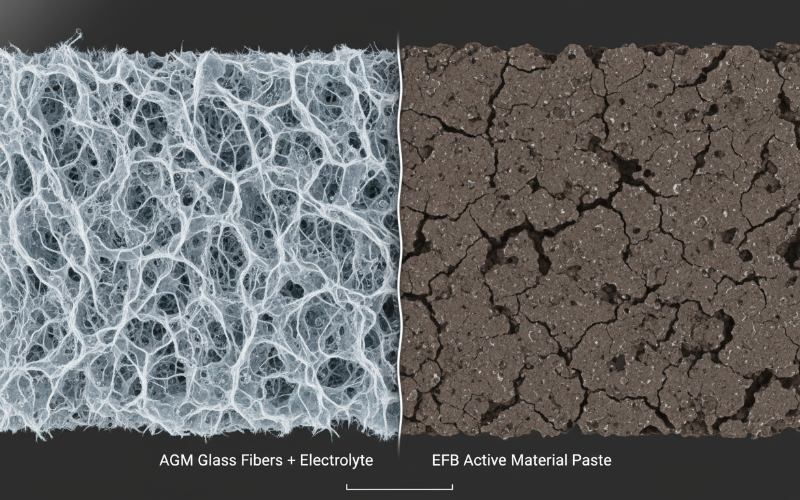
In AGM, the acid is immobilized. There is no "sloshing" or hydrodynamic movement. This creates a zero-stratification environment. The acid density remains uniform throughout the height of the plate, ensuring even electrochemical usage. Furthermore, the glass mat allows for the efficient transport of oxygen from the positive to the negative plate, where it recombines with hydrogen to form water. This recombination cycle prevents water loss, making the battery maintenance-free.
Compression and Internal Resistance
The AGM pack is compressed tightly into the battery case. This compression ensures maximum contact between the active material and the grid, resulting in extremely low internal resistance. Low resistance translates to higher cold cranking amps (CCA) and, crucially, faster recharge capability—essential for capturing energy from regenerative braking in short windows.
Comparative Analysis of PSoC Resilience
Partial State of Charge (PSoC) operation is inevitable in stop-start driving. The battery rarely reaches 100% saturation. Operating in PSoC typically invites rapid sulfation—the formation of hard lead sulfate crystals that act as insulators.
Carbon Additives and Negative Plate Expanders
Both EFB and AGM utilize advanced carbon additives in the negative plate paste (often referred to as Super Carbon or Carbon Black). Carbon increases the conductivity of the active mass and inhibits the growth of large sulfate crystals.
However, AGM batteries generally exhibit superior PSoC resilience due to the combination of carbon additives and high plate compression. The physical structure of the AGM separator prevents the shedding that might occur in an EFB under severe PSoC cycling. For high-demand applications involving heavy regenerative braking, AGM remains the superior choice.
Technical Comparison Data EFB vs AGM
Feature
Enhanced Flooded Battery (EFB)
Absorbent Glass Mat (AGM)
Electrolyte State
Liquid (Flooded)
Absorbed (Immobilized)
Stratification Risk
Moderate (Mitigated by mixing elements)
Zero (Fixed electrolyte)
Cycle Life (vs SLI)
2x
3x - 4x
Depth of Discharge (DOD)
Good resilience up to 50% DOD
Excellent resilience up to 80% DOD
Regenerative Braking Support
Basic
Advanced (High DCA)
Thermal Stability
Better in extreme heat (high thermal mass)
Susceptible to thermal runaway if not managed
Installation Angle
Upright only (max 45° tilt)
Any orientation (Non-spillable)
Cost Index
$$ (Mid-range)
$$$ (Premium)
Table 1: Technical performance comparison between EFB and AGM start-stop batteries.
Procurement Strategy for Distributors and OEMs
For B2B buyers deciding between stocking EFB or AGM lines, or OEMs specifying components for new chassis, the decision hinges on the electrical load balance and vehicle price segment.
When to Choose EFB
EFB is the standard for entry-level start-stop vehicles. These vehicles typically have basic electrical requirements and lighter regenerative braking loads. EFB offers a lower Levelized Cost of Energy (LCOE) for compact cars where the premium price of AGM is not justified by the power demand. Distributors should stock high volumes of DIN and JIS standard EFB sizes for mass-market European and Asian compact vehicles.
When to Choose AGM
AGM is mandatory for luxury vehicles, SUVs, and cars with advanced energy management systems (brake energy recuperation). The low internal resistance is non-negotiable for the heavy cranking loads of large engines and the rapid charge acceptance required by aggressive regenerative braking. Additionally, AGM is often installed inside the passenger cabin or trunk; its non-spillable nature is a safety requirement in these locations.
The Lithium Ion Consideration
While Lead-Acid remains dominant in the starter battery market, some high-performance OEMs are beginning to transition to Lithium-ion (LiFePO4) start-stop batteries. These offer weight reduction and vastly superior cycle life but come at a significantly higher initial cost.
Frequently Asked Questions
Can I replace an AGM battery with an EFB?
No. You should never downgrade from AGM to EFB. Vehicles equipped with AGM from the factory utilize battery management system (BMS) algorithms calibrated for the specific internal resistance and charge acceptance of AGM. Installing an EFB can lead to premature battery failure, loss of start-stop functionality, and potential voiding of vehicle warranties.
Can I replace an EFB with an AGM?
Yes. Replacing an EFB with an AGM is considered an upgrade. The AGM will provide better endurance, faster charging, and improved reliability. However, distributors must ensure the BMS is reset (coded) to recognize the change in battery technology to optimize charging profiles.
Why is heat resistance mentioned as a benefit for EFB?
AGM batteries, being "starved" electrolyte designs, are more prone to drying out (thermal runaway) in extremely high-temperature environments compared to flooded batteries. EFB, with its liquid acid reservoir, has higher thermal mass and can sometimes withstand hot engine bays better than AGM, provided the fluid levels are maintained (though most are sealed).






 en
en  ara
ara  de
de  fra
fra  kor
kor  ru
ru  spa
spa  vie
vie