This is more than just a series of products; it is an ecosystem we have built to achieve a more efficient, reliable, and sustainable energy future. Discover how our products and solutions can create t...
Our Industrial Batteries combine high-quality materials, robust design, and dependable performance. With excellent deep-cycle capability and easy maintenance, they are ideal for diverse applications. ...
JYC Transportation batteries are a category of power storage devices specifically designed for transportation scenarios, with core functions of providing continuous, stable, and high-efficiency power ...
JYC Motive Power batteries are deep-cycle energy storage devices specifically designed for industrial and commercial vehicles and specialized equipment. Their core function is to provide continuous an...
Based on the low-carbon concept, and thanks to the competitiveness of energy storage technology, lithium applications in various systems will be gradually realized globally. JYC Lithium Battery Soluti...
Focus on company news, product updates and market events. We provide continuous updates to bring you first-hand information, helping you stay informed about our development progress at all times.
Modular vs Monobloc 48V Batteries for Edge Computing
2026-02-19 15:30:21
Key Takeaways for Network Architects
Scalability Logic: Modular architectures offer granular N+1 redundancy and easier capacity expansion compared to fixed-capacity Monobloc configurations.
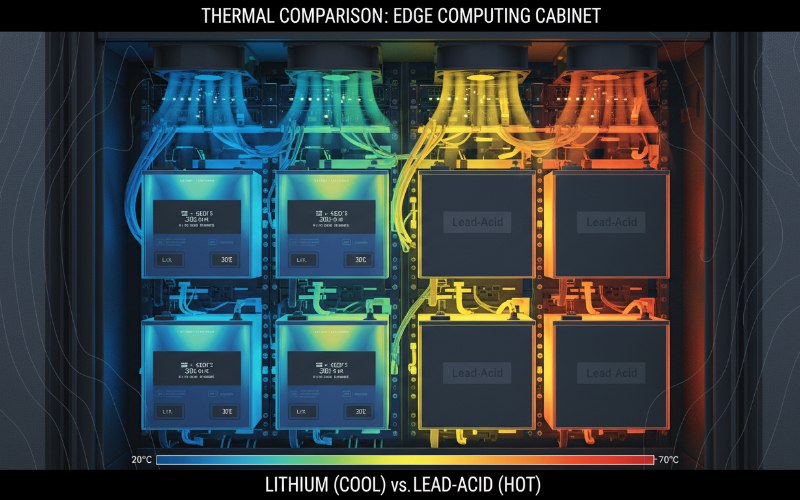
Thermal Dynamics: Rack-mounted modular lithium units typically feature superior passive cooling channels suited for dense edge enclosures.
Maintenance Efficiency: Modular systems significantly reduce Mean Time To Repair (MTTR) through hot-swappable designs, whereas Monoblocs often require full string decommissioning.
Cost Implications: While Monobloc Lead-Acid offers lower CapEx, Modular Lithium provides superior Total Cost of Ownership (TCO) through longer cycle life and reduced truck rolls.
The proliferation of Edge Computing has fundamentally shifted the requirements for backup power infrastructure. Unlike centralized hyperscale data centers with sprawling square footage, edge nodes operate in constrained environments—telecom towers, micro-data centers, and roadside cabinets. In these scenarios, the 48V DC power architecture remains the industry standard, but the form factor of energy storage is a critical architectural decision.
Infrastructure engineers must choose between two distinct configurations: the traditional Monobloc design (often associated with VRLA technology or large-format lithium blocks) and the modern Modular rack-mounted architecture. This article provides a rigorous technical comparison to guide selection for high-availability edge networks.
Defining the Architectures in Edge Contexts
To evaluate performance properly, we must first define the structural and electrical characteristics of both configurations within a standard 19-inch or 23-inch telecom rack environment.
The Monobloc Configuration
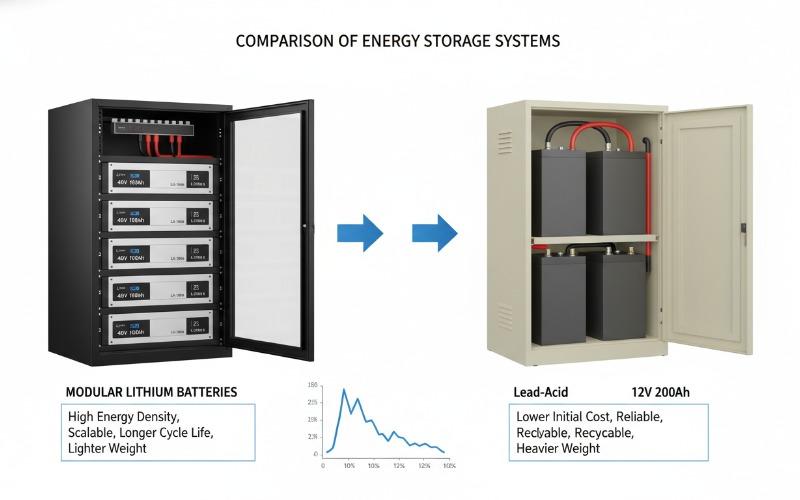
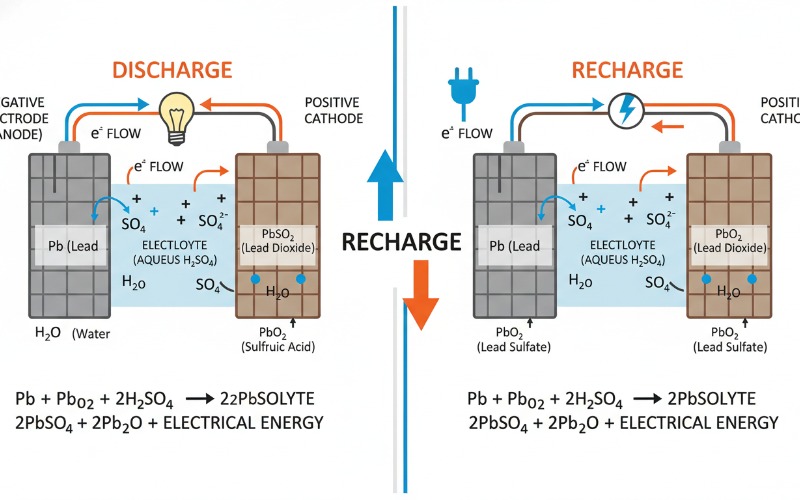
In the context of 48V systems, a Monobloc configuration typically refers to a string of four 12V batteries connected in series. This has been the standard for decades, primarily utilizing Lead-Acid Battery technologies such as AGM (Absorbent Glass Mat) or GEL. While robust and initially inexpensive, the Monobloc approach creates a "weakest link" scenario; if one block fails, the impedance of the entire string is compromised, often necessitating a full string replacement to maintain balanced internal resistance.
The Modular Rack-Mounted Configuration
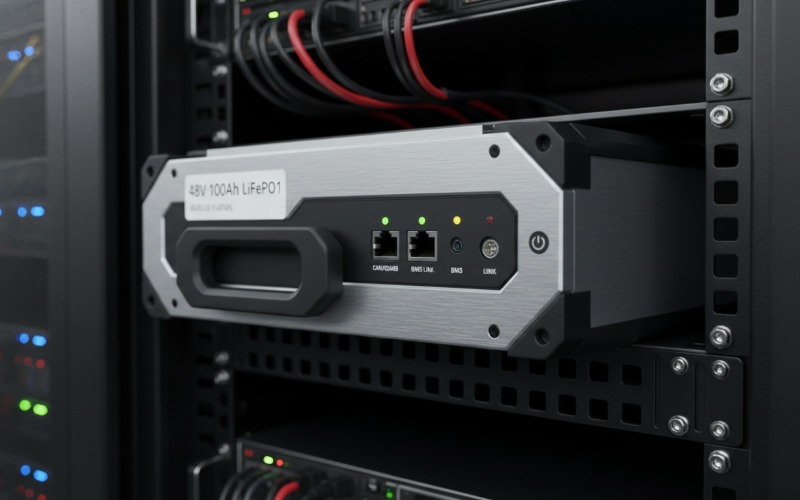
Modular systems are predominantly based on Lithium-ion Battery chemistry (specifically LiFePO4). These are self-contained 48V battery modules (e.g., 48V 50Ah or 48V 100Ah) designed to fit standard rack units (U-space). They operate in parallel, meaning each module contributes current to the bus bar independently. This architecture inherently supports hot-swapping and granular capacity scaling.
Scalability and Redundancy Analysis
For edge nodes, where physical access is costly and downtime is unacceptable, redundancy is paramount. The architectural differences heavily influence system reliability.
N+1 Redundancy Implementation
Modular Systems: Achieving N+1 redundancy is straightforward and space-efficient. In a load scenario requiring 100Ah of reserve, a modular system might employ three 50Ah modules. If one module fails or is removed for maintenance, the remaining 100Ah capacity fully supports the load without interruption. The parallel architecture ensures that a BMS (Battery Management System) cutoff in one unit does not cascade to the others.
Monobloc Systems: Achieving true redundancy with Monoblocs requires installing a completely separate parallel string (2N redundancy), effectively doubling the footprint and weight. In space-constrained edge cabinets, this volume penalty is often prohibitive.
Thermal Management and Energy Density
Edge computing nodes often lack the sophisticated HVAC systems of central data centers. Thermal runaway and heat dissipation are critical factors in battery selection.
Volumetric Energy Density
Modular Lithium systems offer roughly 3x the gravimetric energy density (Wh/kg) and 2x the volumetric density (Wh/L) of Monobloc Lead-Acid systems. In a standard 42U rack, this allows network architects to deploy more compute hardware (servers, routers) and less volume dedicated to power backup. A 48V 100Ah Modular LiFePO4 unit typically occupies 3U to 4U of space and weighs under 50kg, whereas an equivalent Lead-Acid Monobloc string can weigh over 120kg and occupy the floor space or reinforced bottom shelves.
Operating Temperature Ranges
Monobloc VRLA batteries are highly sensitive to temperature. For every 10°C rise above 25°C, the calendar life of a lead-acid battery is cut in half. Conversely, Modular LiFePO4 systems are engineered for wider operating windows (-20°C to +60°C). High-quality modular units integrate intelligent BMS that actively monitors cell temperatures and regulates charge/discharge rates to prevent thermal stress, making them far more resilient in outdoor edge cabinets.
BMS Architecture and Intelligence
The "Brain" of the battery system distinguishes modern edge power solutions from legacy storage. The Battery Management System (BMS) in modular configurations offers advanced telemetry that Monoblocs lack.
Digital Visibility: Modular units utilize RS485, RS232, or CAN bus communication protocols to interface directly with the rectifier or remote monitoring system. This provides real-time data on State of Charge (SOC), State of Health (SOH), cell voltage, and cycle count. Network Operation Centers (NOCs) can predict failures before they occur.
Passive vs Active Balancing: While Monoblocs rely on basic chemical recombination, Modular systems employ active cell balancing. If one cell within a module drifts in voltage, the BMS redistributes charge to equalize it, maximizing the usable capacity and longevity of the pack.
Technical Comparison Matrix
The following table compares a standard 48V 100Ah capacity requirement implemented via Monobloc Lead-Acid vs. Modular LiFePO4.
Feature
Monobloc VRLA (4x 12V 100Ah)
Modular LiFePO4 (2x 48V 50Ah)
Nominal Voltage
48V
48V
Architecture
Series String
Parallel Modules
Cycle Life @ 80% DOD
400 - 600 Cycles
4,000+ Cycles
Weight (Approx)
~120 kg
~45 kg
Round Trip Efficiency
80% - 85%
95% - 98%
Peukert Effect
High (Capacity drops @ high load)
Negligible
Expansion Capability
Difficult (Must match age/batch)
Flexible (Mix old/new modules)
Monitoring
Voltage only (unless ext. sensor)
Integrated Intelligent BMS
Maintenance
Periodic retorquing/testing
Maintenance-Free
Installation and Mean Time To Repair (MTTR)
Logistics of Deployment: Edge nodes are often located in hard-to-reach areas—rooftops, basements, or remote towers. Transporting 30kg monoblocs (totaling 120kg per string) presents significant occupational health and safety (OHS) risks and labor costs. Modular units, typically weighing 20-25kg per module, can be carried by a single technician and installed into a rack with ease.
Serviceability: When a failure occurs in a Monobloc string, the entire string must be taken offline to replace the faulty block. This risks dropping the load if redundant strings aren't available. In a Modular parallel architecture, a faulty module can be switched off and removed while the remaining modules continue to power the load. This hot-swappability reduces MTTR from hours (or days depending on part availability) to minutes.
Total Cost of Ownership (TCO) Analysis
The decision often comes down to CapEx versus OpEx. Monobloc Lead-Acid batteries are significantly cheaper upfront—often 2-3 times less expensive than lithium counterparts. However, for edge infrastructure with a planned lifespan of 10-15 years, the TCO heavily favors Modular Lithium.
Replacement Frequency: VRLA Monoblocs typically require replacement every 3-5 years in uncontrolled environments. Modular LiFePO4 systems often last 10+ years.
Remote Management Savings: The ability to remotely diagnose battery health via BMS reduces the need for exploratory site visits (truck rolls), which is a major cost driver for distributed edge networks.
Selection Guide: When to Choose Which?
Choose Monobloc (Lead-Acid) If:
Initial budget constraints are extremely tight (CapEx focus).
The site has strictly controlled ambient temperature (20°C - 25°C).
Discharge events are rare and shallow (pure standby use).
Choose Modular (Lithium) If:
Space and weight are constrained (e.g., pole-mounted enclosures).
The site experiences frequent power outages requiring deep cycling.
Remote monitoring and N+1 redundancy are required for SLA compliance.
You aim to minimize OpEx over a 10-year horizon.
Frequently Asked Questions
Can I mix Monobloc and Modular batteries in the same 48V system?
Generally, no. Mixing chemistries (Lead-Acid vs. Lithium) or different internal resistances causes severe imbalances. The stronger battery will attempt to charge the weaker one, leading to potential overheating or BMS shutdowns. It is best to use a uniform architecture.
Do Modular Lithium batteries require special rectifiers?
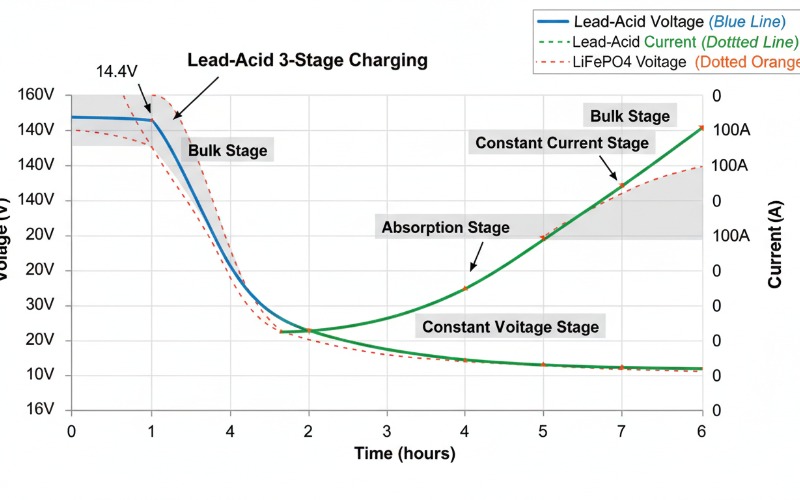
Most modern Modular LiFePO4 batteries are designed to simulate lead-acid charging curves and are compatible with standard telecom rectifiers. However, to utilize fast-charging capabilities and precise communication features, the rectifier settings should be adjusted to match the lithium profile.
What is the standard size for a Modular 48V battery?
The most common form factor is a 19-inch rack-mountable unit. Heights vary by capacity, with 50Ah units typically being 3U and 100Ah units being 3U to 4U. This standardization allows for seamless integration into existing server racks.
Is Modular Lithium safer than Monobloc Lead-Acid?
Modern LiFePO4 chemistry is chemically stable and does not suffer from thermal runaway as easily as other lithium chemistries (like NMC). Furthermore, the integrated BMS in modular systems provides protection against over-current, under-voltage, and short circuits—protection layers that standard Monobloc Lead-Acid batteries do not possess.








 en
en  ara
ara  de
de  fra
fra  kor
kor  ru
ru  spa
spa  vie
vie