This is more than just a series of products; it is an ecosystem we have built to achieve a more efficient, reliable, and sustainable energy future. Discover how our products and solutions can create t...
Our Industrial Batteries combine high-quality materials, robust design, and dependable performance. With excellent deep-cycle capability and easy maintenance, they are ideal for diverse applications. ...
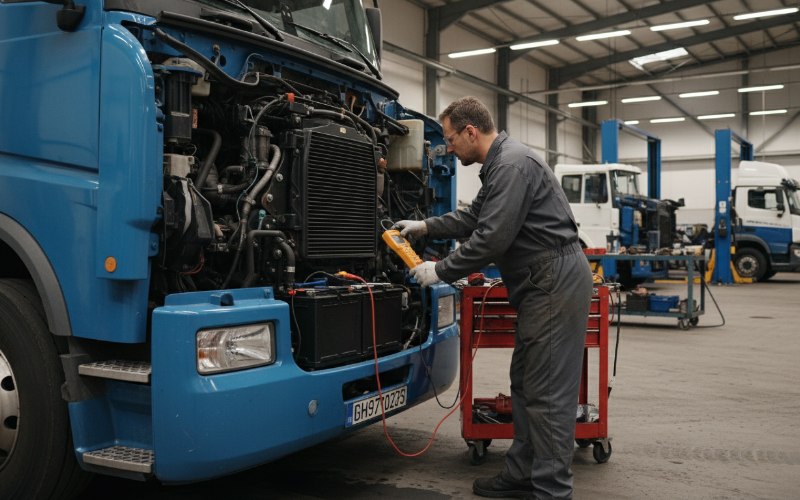
JYC Transportation batteries are a category of power storage devices specifically designed for transportation scenarios, with core functions of providing continuous, stable, and high-efficiency power ...
JYC Motive Power batteries are deep-cycle energy storage devices specifically designed for industrial and commercial vehicles and specialized equipment. Their core function is to provide continuous an...
Based on the low-carbon concept, and thanks to the competitiveness of energy storage technology, lithium applications in various systems will be gradually realized globally. JYC Lithium Battery Soluti...
Focus on company news, product updates and market events. We provide continuous updates to bring you first-hand information, helping you stay informed about our development progress at all times.
OpEx Reduction: Hybridizing Diesel Generators (DG) with deep-cycle batteries can reduce fuel consumption by up to 80%.
Generator Lifespan: Limiting DG run-time extends maintenance intervals and delays capital replacement costs.
Battery Selection: OPzV (Tubular Gel) and Deep Cycle AGM are the primary lead-acid technologies suited for cyclic hybrid applications.
ROI Timeline: Typical return on investment for hybrid retrofits occurs within 12 to 24 months depending on fuel logistics costs.
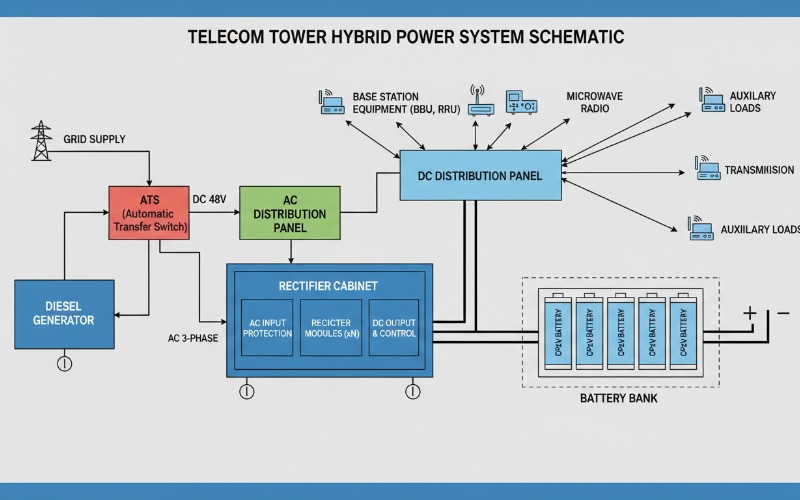
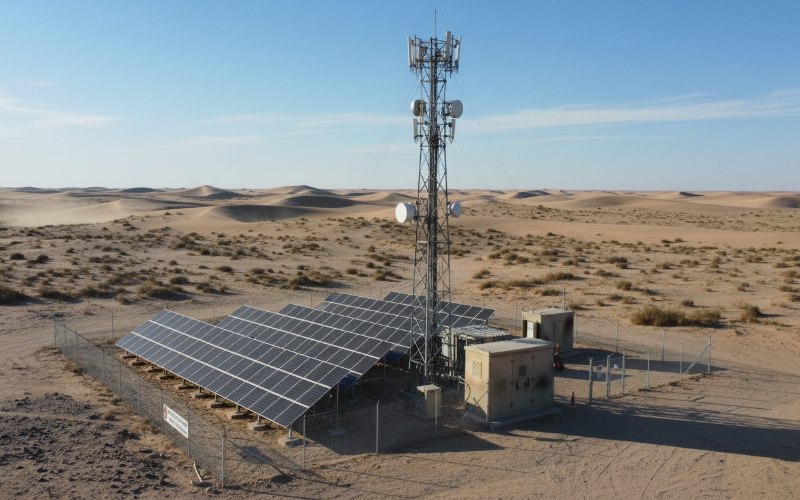
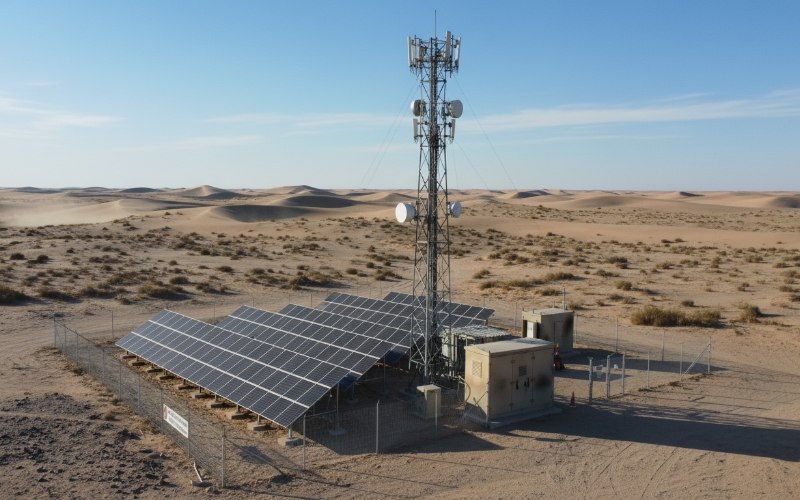
Managing power for remote telecom towers represents one of the most significant operational challenges for Tower Companies (TowerCos) and Mobile Network Operators (MNOs). In off-grid locations or areas with unstable grid connections, the traditional reliance on running Diesel Generators (DG) 24/7 is no longer economically viable. The volatility of fuel prices, combined with the logistical nightmare of refueling remote sites, necessitates a strategic shift toward battery hybridization.
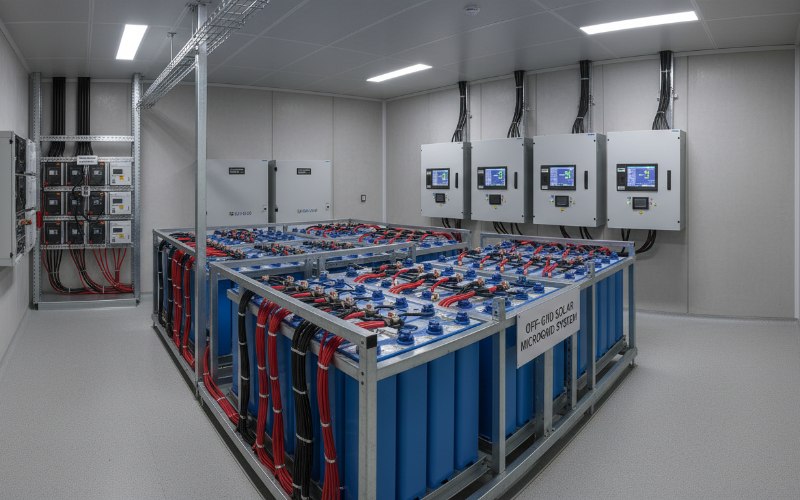
By integrating robust lead-acid battery storage with existing diesel infrastructure, operators can shift from continuous generator operation to a cyclic charging model. This article provides a technical analysis of battery hybridization, focusing on selecting the right lead-acid chemistry, calculating operational expenditure (OpEx) savings, and optimizing the Charge/Discharge cycle for maximum system longevity.
The Economic Case for Hybrid Power Systems
The primary driver for hybridization is the reduction of the Levelized Cost of Energy (LCOE). In a pure DG setup, the generator runs continuously, often at a low load factor (30-40%). Diesel engines are notoriously inefficient at low loads, leading to "wet stacking" (carbon buildup), increased fuel consumption per kWh, and frequent mechanical failures.
A hybrid system operates on a straightforward logic: the DG runs at its optimal efficiency (70-90% load) for a short period to power the load and recharge the battery bank. Once the batteries are charged, the DG shuts down, and the batteries support the telecom load. This cycle dramatically reduces engine run hours.
Quantifiable OpEx Savings
Consider a standard 3kW telecom load. A 24/7 generator setup might consume 24 to 30 liters of diesel daily. By introducing a battery bank capable of 8 hours of autonomy, the generator might only need to run for 4 to 6 hours to recharge the bank and power the load simultaneously. This reduction leads to immediate savings in three areas:
Fuel Consumption: Reductions of 50% to 80% are common, depending on the battery bank sizing.
Maintenance Intervals: Standard DGs require oil changes every 250 to 500 hours. Reducing daily run-time from 24 hours to 4 hours extends the service interval from every 20 days to every 120 days.
Logistics: Fewer refueling trips reduce transport costs and the risk of fuel theft, a major issue in remote tower management.
Selecting the Right Lead-Acid Chemistry
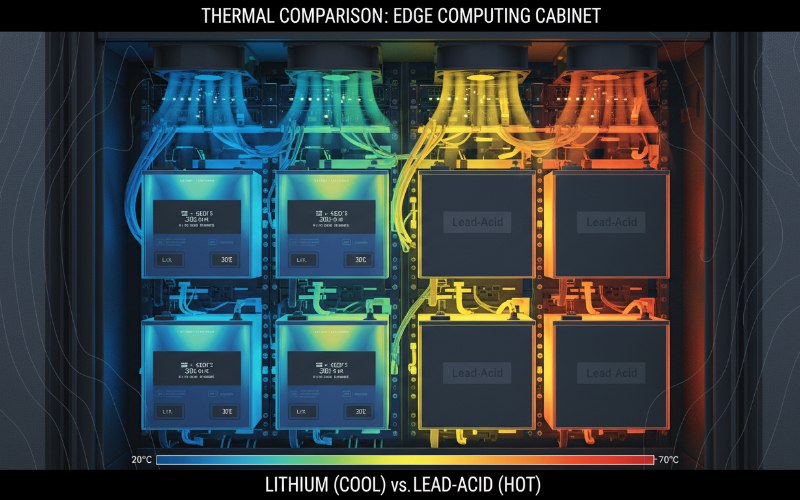
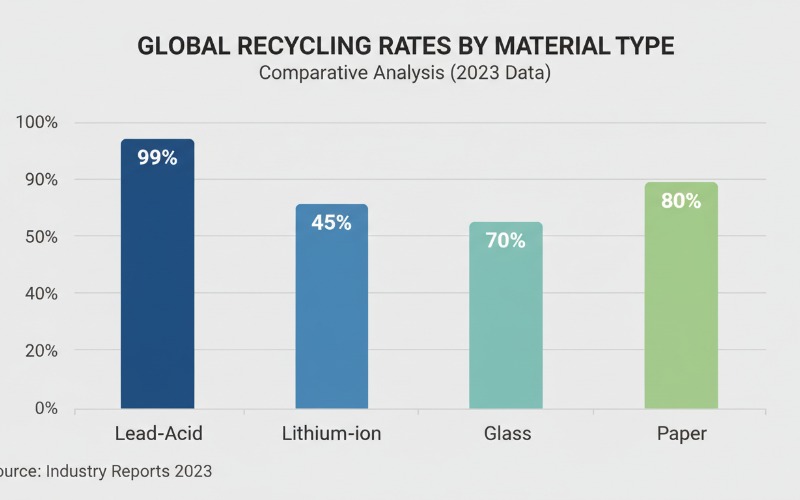
While Lithium-ion batteries are gaining traction, Lead-Acid remains the dominant choice for many TowerCos due to lower initial Capital Expenditure (CapEx), ease of recycling, and ruggedness in various thermal environments. However, not all lead-acid batteries are suitable for hybrid cycling.
AGM Deep Cycle Technology
Absorbent Glass Mat (AGM) batteries are sealed VRLA batteries where the electrolyte is absorbed in a fiberglass mat. For hybrid applications, standard UPS batteries are insufficient. Operators must specify "Deep Cycle" AGM batteries utilizing high-density active materials and reinforced grids.
Pros: Lower cost, low internal resistance (fast recharge), spill-proof. Cons: More sensitive to high temperatures, lower cycle life compared to OPzV.
OPzV Tubular Gel Technology
OPzV (Ortsfest Panzerplatte Verschlossen) batteries represent the gold standard for lead-acid cyclic applications. They combine a tubular positive plate with gelled electrolyte. The tubular design physically retains the active material, preventing shedding during deep discharges.
Pros: Excellent deep discharge recovery, high cycle life (1500+ cycles at 80% DOD), superior thermal stability compared to AGM. Cons: Higher CapEx than AGM, slower charge acceptance.
Feature
Standard AGM
Deep Cycle AGM
OPzV (Tubular Gel)
Cycle Life @ 50% DOD
250 - 400
600 - 800
2500+
Design Life (Float)
5 - 10 Years
10 - 12 Years
15 - 20 Years
Charge Acceptance
High
High
Moderate
Temperature Tolerance
Low
Moderate
High
Ideal Application
Standby / UPS
Unstable Grid
Off-Grid / Hybrid
Table 1: Comparison of Lead-Acid Technologies for Telecom Applications
Technical Implementation of Hybrid Cycling
Implementing a hybrid system requires precise configuration of the DC power system and controller. The goal is to maximize battery life while minimizing generator usage. This involves managing the Depth of Discharge (DOD) and the Partial State of Charge (PSoC).
Depth of Discharge Management
For lead-acid batteries, cycle life is inversely proportional to DOD. Discharging a battery to 80% DOD significantly shortens its life compared to discharging it to 40% DOD. In hybrid systems, a balance must be struck. A common strategy is to cycle between 30% and 50% DOD. This "shallow cycling" approach allows for thousands of cycles, often matching the site's refurbishment schedule.
Combating Sulfation in PSoC Operation
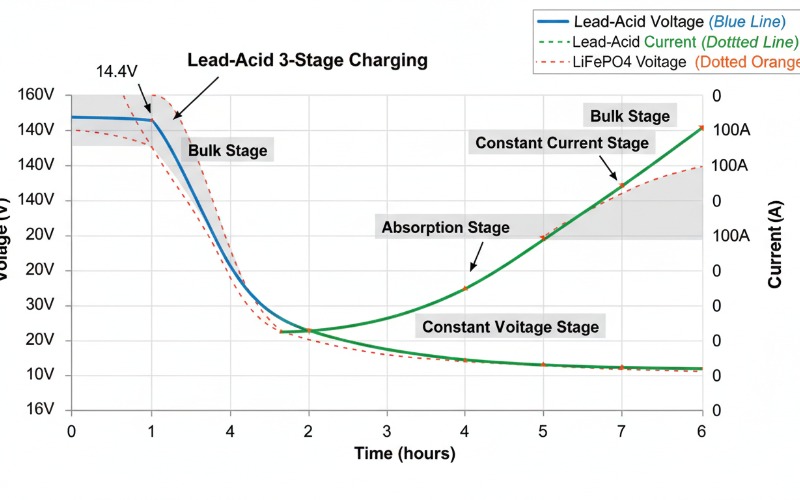
One of the biggest risks in hybrid systems is operating in a Partial State of Charge (PSoC). To save fuel, the generator typically shuts off once the battery reaches 85-90% charge (Bulk and Absorption phases). The final 10-15% of charge requires a long, slow absorption phase that is fuel-inefficient for a large generator.
However, consistently failing to reach 100% state of charge (SoC) leads to hard sulfation on the plates. To mitigate this, controllers must be programmed for a periodic "equalization" or "full refresh" cycle. For example, every 10 to 14 days, the generator should run longer to push the batteries to a full 100% charge, converting lead sulfate back into active material.
Comparison of Pure Diesel vs Hybrid Configurations
To visualize the operational impact, let us compare two scenarios for a typical remote site with a 2kW load.
Maintenance: Oil change every 250 hours (every ~41 days).
Annual Fuel: 7,665 Liters.
Result: Scenario B saves 14,235 Liters of fuel annually per site. At a conservative diesel price of $1.00/Liter, that is a direct OpEx saving of over $14,000 per year, not including logistics and maintenance labor savings.
Operational Best Practices for Remote Battery Maintenance
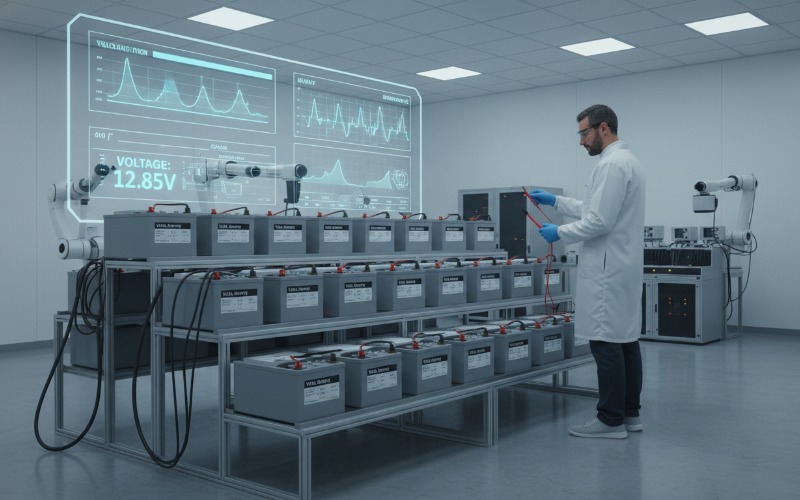
Even the best deep-cycle batteries require operational oversight to ensure the ROI is realized. Remote Monitoring Systems (RMS) are critical in this architecture.
Temperature Compensation
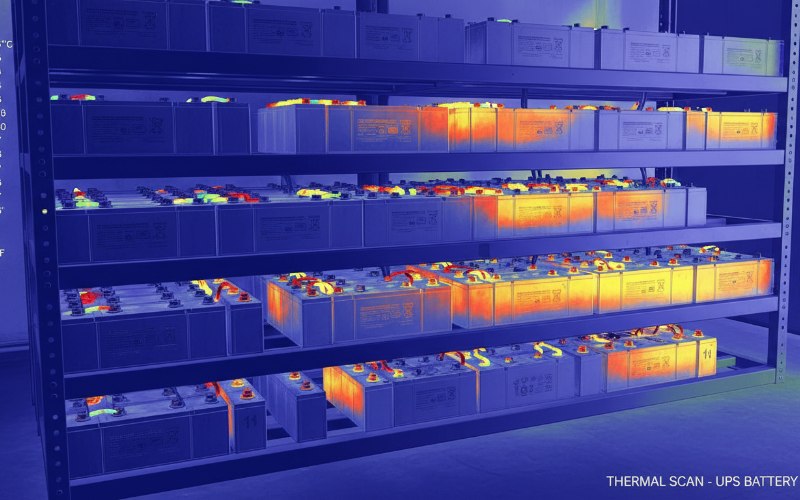
Electrochemical reactions are temperature dependent. In hot climates, the charging voltage must be lowered to prevent thermal runaway and grid corrosion. Conversely, in cold climates, voltage must be increased to ensure full charge. Hybrid power controllers must have active temperature compensation sensors installed directly on the battery terminals (usually the negative post of the center block/cell).
Preventing Stratification
In flooded or AGM cells, the acid can separate into layers of different density (stratification), leading to uneven plate wear. OPzV Gel batteries are naturally resistant to this due to the immobilized electrolyte. For AGM users, ensuring the battery reaches the gassing voltage occasionally helps mix the electrolyte, although VRLA batteries have limited recombination capabilities compared to flooded types.
Frequently Asked Questions about Telecom Hybrid Power
Can I mix old and new batteries in a hybrid system?
No. Mixing old and new batteries causes the new batteries to degrade rapidly to the level of the old ones. The internal resistance mismatch leads to uneven charging, where new batteries may overcharge and old ones undercharge. Always replace the entire bank or string.
Why choose OPzV over LiFePO4 for remote towers?
While LiFePO4 offers higher energy density and cycle life, OPzV (Tubular Gel) often requires lower upfront investment. Furthermore, OPzV is exceptionally robust in uncontrolled thermal environments and does not require the complex Battery Management Systems (BMS) that can be a single point of failure in remote lithium deployments. For budget-constrained retrofits, OPzV remains a superior choice.
What is the ideal generator sizing for hybridization?
The generator should be sized to handle the site load plus the maximum bulk charge current of the battery bank. Typically, the DG capacity is 1.5x to 2x the site load to ensure it runs at optimal efficiency (75-80% load) while rapidly charging the batteries.





 en
en  ara
ara  de
de  fra
fra  kor
kor  ru
ru  spa
spa  vie
vie