This is more than just a series of products; it is an ecosystem we have built to achieve a more efficient, reliable, and sustainable energy future. Discover how our products and solutions can create t...
Our Industrial Batteries combine high-quality materials, robust design, and dependable performance. With excellent deep-cycle capability and easy maintenance, they are ideal for diverse applications. ...
JYC Transportation batteries are a category of power storage devices specifically designed for transportation scenarios, with core functions of providing continuous, stable, and high-efficiency power ...
JYC Motive Power batteries are deep-cycle energy storage devices specifically designed for industrial and commercial vehicles and specialized equipment. Their core function is to provide continuous an...
Based on the low-carbon concept, and thanks to the competitiveness of energy storage technology, lithium applications in various systems will be gradually realized globally. JYC Lithium Battery Soluti...
Focus on company news, product updates and market events. We provide continuous updates to bring you first-hand information, helping you stay informed about our development progress at all times.
Selecting the Best Lead Acid Battery for Inverter Systems
2025-12-31 10:30:38
For solar system integrators and power backup engineers, the interface between the power conversion system (PCS) and the energy storage medium is the critical juncture determining total system efficiency. While the inverter manages the load and grid interaction, the electrochemical performance of the storage unit dictates the system's reliability. Selecting the optimal lead acid battery for inverter applications requires a rigorous understanding of Depth of Discharge (DOD), Peukert’s Law, and the thermal characteristics of VRLA (Valve Regulated Lead Acid) technology.
The Electrochemistry of Inverter Compatibility
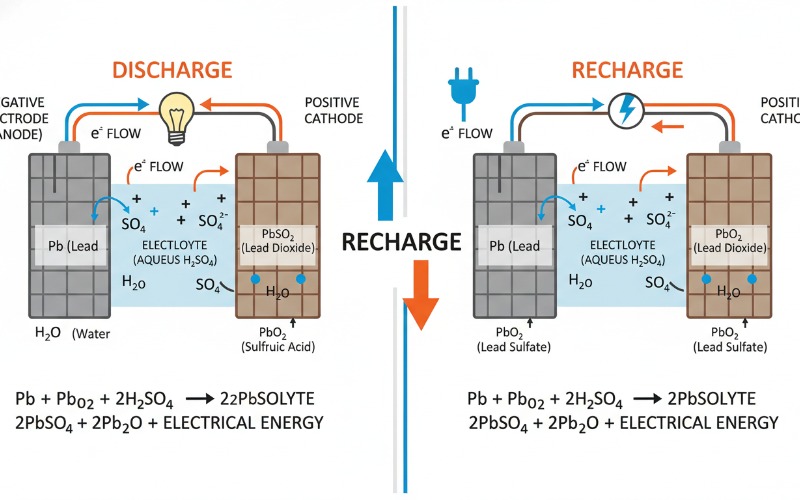
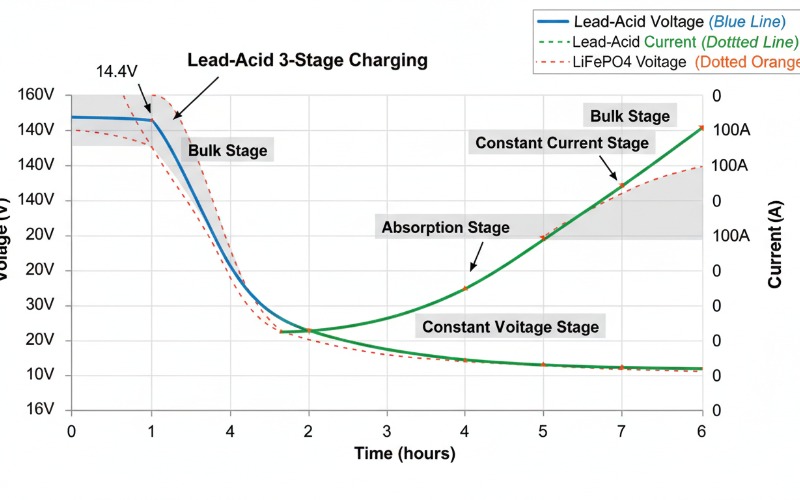
Unlike automotive starting batteries designed for short bursts of high amperage (CCA), a lead acid battery for inverter usage must endure deep, repetitive cycling. In a typical B2B solar or UPS scenario, the battery is subjected to prolonged discharge periods followed by specific multi-stage charging profiles (Bulk, Absorption, Float). Failure to match the battery's internal resistance and plate chemistry to the inverter's load profile often results in premature sulfation and capacity loss.
At JYC Battery, we engineer our Deep Cycle Lead-Acid batteries specifically to handle these rigorous demands. We utilize heavy-duty lead-calcium-tin alloy grids which reduce self-discharge and enhance corrosion resistance during the float charge phase common in UPS and inverter setups.
AGM vs. GEL: Choosing the Right Architecture for Your Inverter
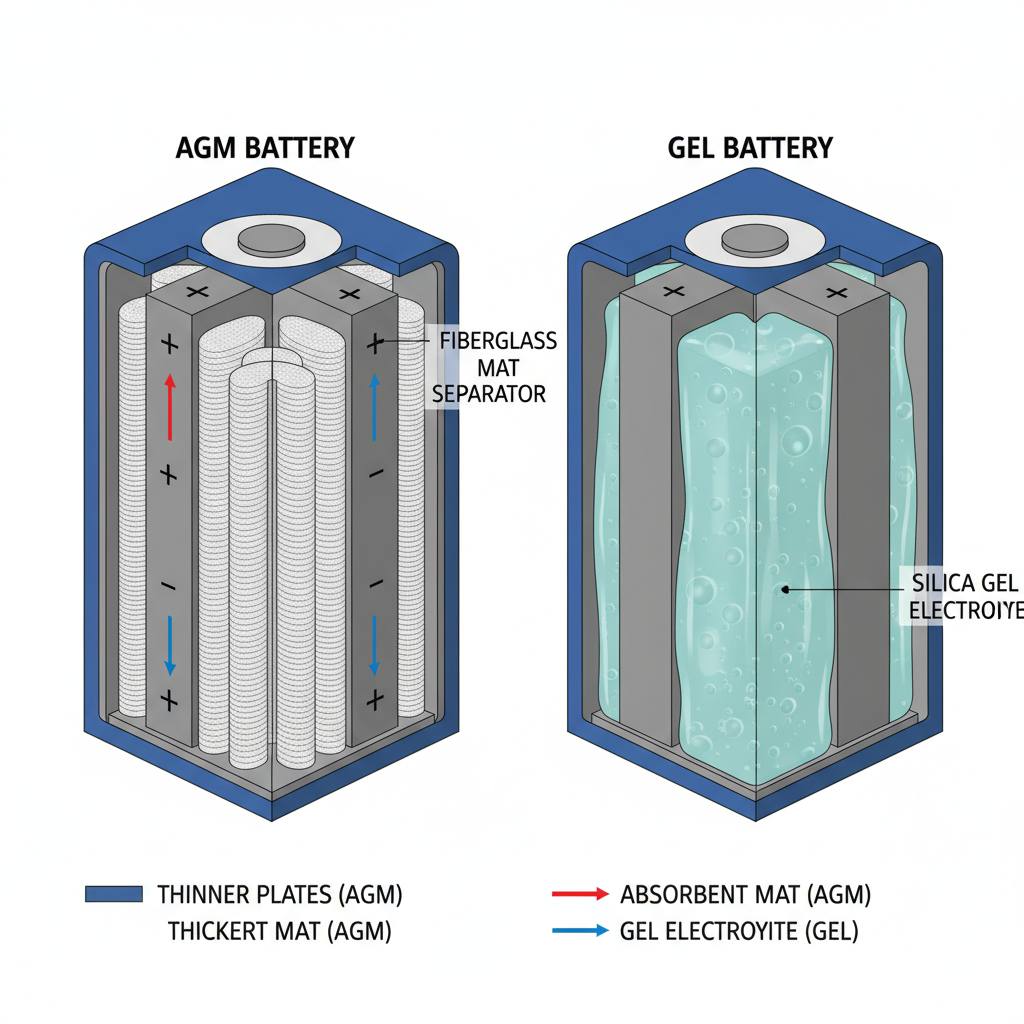
When specifying a lead acid battery for inverter systems, integrators generally choose between Absorbent Glass Mat (AGM) and GEL technologies. Both are VRLA non-spillable designs, but their application curves differ.
1. AGM Technology (Absorbent Glass Mat)
AGM batteries feature an ultra-fine fiberglass separator that absorbs the electrolyte. They have lower internal resistance, allowing them to support higher discharge currents—making them ideal for inverters powering inductive loads (like motors or compressors) that require significant surge power.
High Current Efficiency: Excellent for UPS systems where rapid discharge is required.
Application: Ideal for UPS/Data Center setups and hybrid solar systems.
2. GEL Technology
GEL batteries use a silica-based fumed gel electrolyte. While they generally have higher internal resistance than AGM, they offer superior thermal stability and recovery from deep discharge.
Thermal Resilience: Performs better in high-temperature environments without thermal runaway.
Cycle Life: Often provides greater cycle life at lower DOD compared to standard AGM.
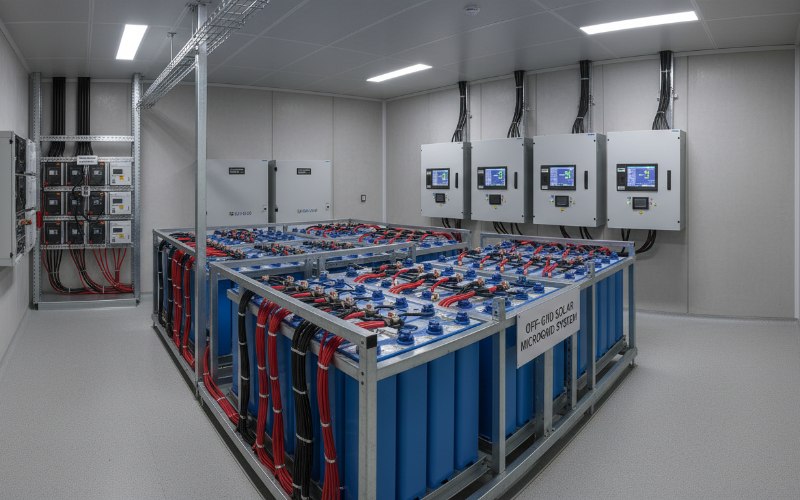
Application: Preferred for off-grid solar in hot climates or marine applications.
Technical Sizing: Matching Ah Capacity to Inverter Wattage
One of the most common errors in system integration is undersizing the battery bank, leading to excessive Depth of Discharge (DOD). For optimal ROI (Return on Investment), a lead acid battery for inverter systems should rarely exceed 50% DOD regularly.
The Calculation Logic: To determine the necessary capacity, engineers must consider the inverter efficiency (typically 85-95%) and the voltage drop under load.
Formula: Required Ah = (Total Watt-Hours / System Voltage) × (1 / Inverter Efficiency) × (1 / Max DOD)
For example, a 24V system requiring 2000Wh of usable energy at a maximum 50% DOD would need approximately 185-200Ah of capacity. Undersizing forces the battery deeper into its discharge curve, exponentially reducing cycle life.
Lead-Acid vs. Lithium: An LCOE Perspective
While the market is seeing a shift toward Lithium-ion (LiFePO4) solutions, lead-acid remains the dominant choice for cost-sensitive, high-reliability backup systems. For integrators, the choice often comes down to CapEx (Capital Expenditure) vs. OpEx (Operational Expenditure).
Feature
VRLA Lead-Acid (AGM/GEL)
LiFePO4 (Lithium)
Initial Cost (CapEx)
Significantly Lower
Higher
Safety Profile
Extremely Stable (No BMS required)
Requires BMS for Safety
Recyclability
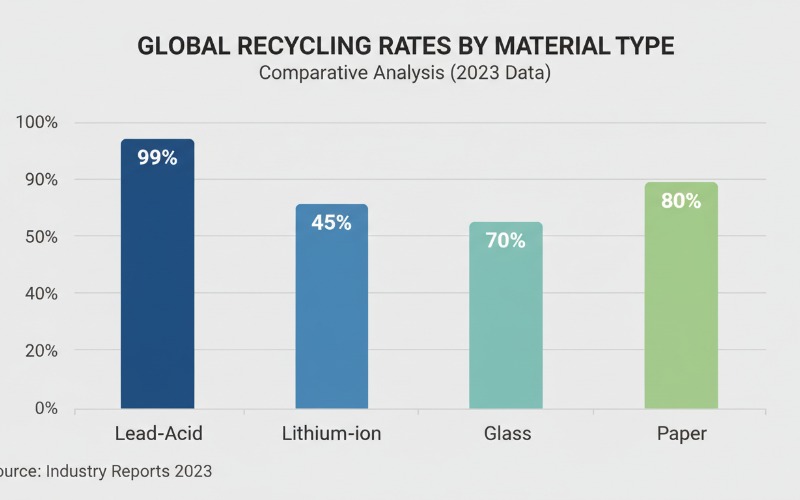
>99% (Mature Infrastructure)
Developing Infrastructure
Cold Weather Performance
Retains Charge Capability
Charging inhibited <0°C
Comparative analysis of VRLA Lead-Acid vs Lithium Iron Phosphate for Inverter Systems
Inverter systems, particularly those in series strings (48V, 96V, or higher), are highly sensitive to voltage imbalances. If one battery in a string has a slightly lower capacity or higher internal resistance, it drags down the performance of the entire bank.
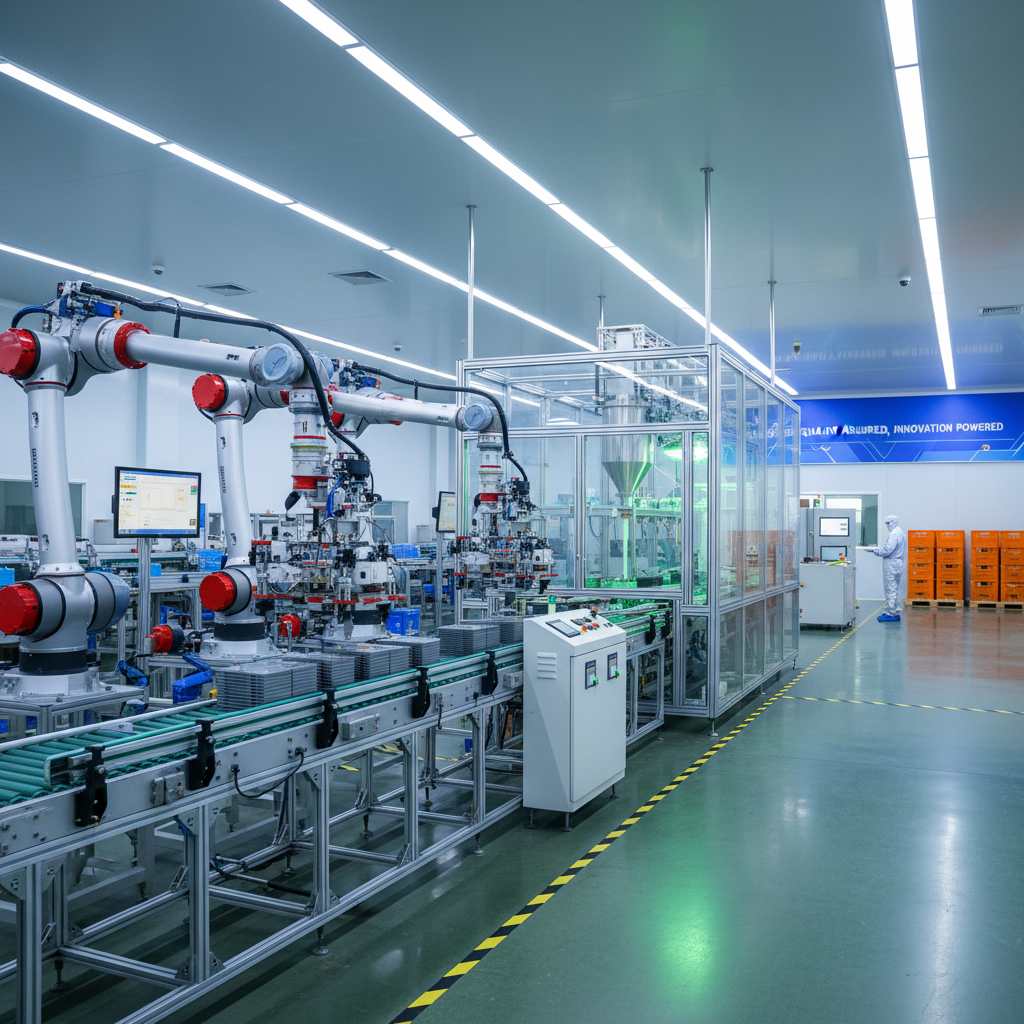
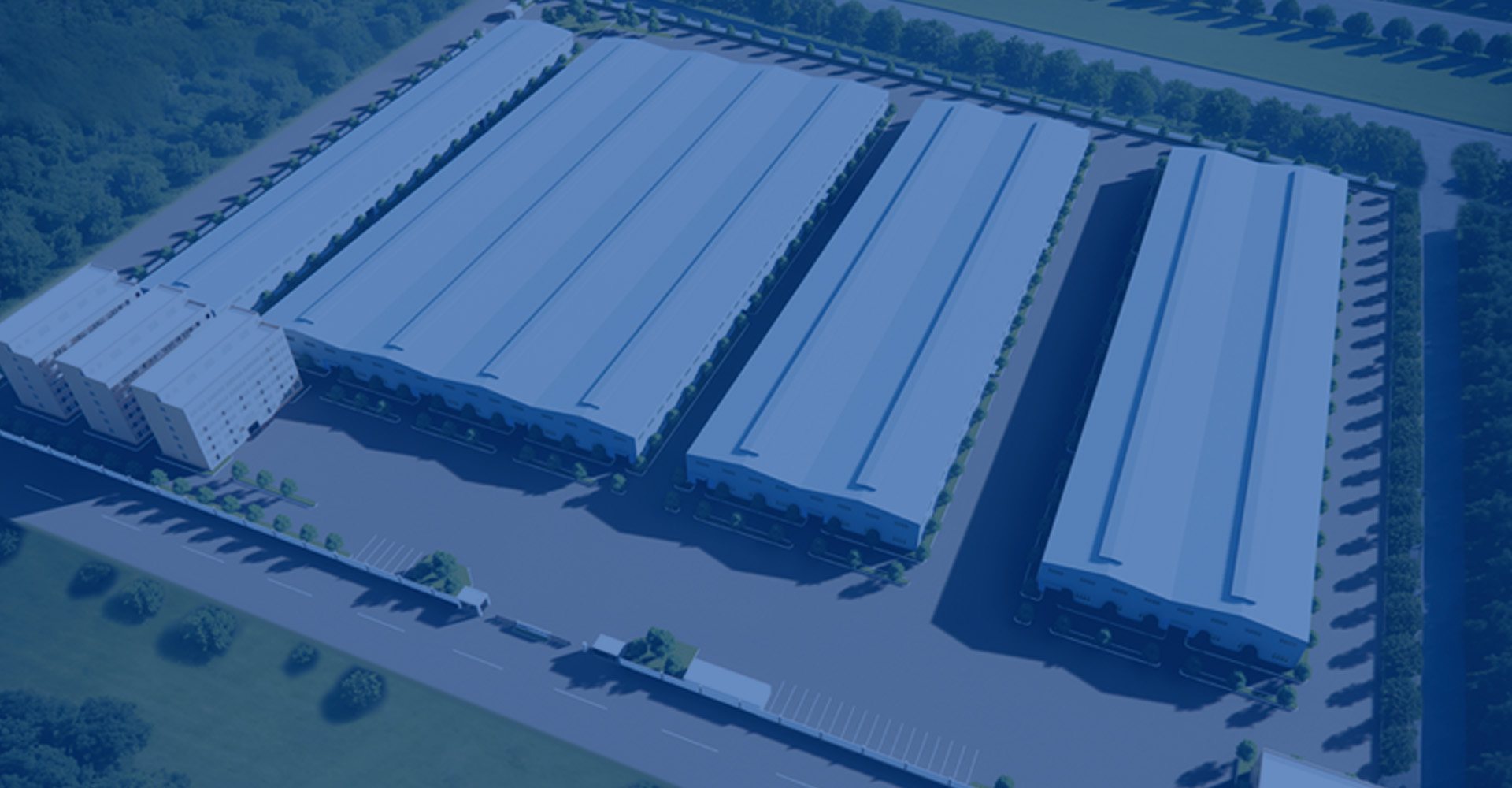
At JYC Battery, we mitigate this through our Punching Grid Technology and fully automated production lines across our 100,000 sqm facility. Our manufacturing process ensures:
Uniform Plate Thickness: Ensuring consistent active material utilization.
Precision Electrolyte Filling: Vacuum filling guarantees no dry spots on the plates.
Stringent QC: Every battery undergoes high-rate discharge testing before shipment to ensure voltage uniformity.
Conclusion: Partnering for Power Reliability
Choosing the correct lead acid battery for inverter applications is a balance of chemistry, capacity sizing, and manufacturing quality. For B2B integrators looking to minimize warranty claims and maximize client satisfaction, JYC Battery offers a proven track record of durability and certification (UL, CE, IEC).
Whether you need robust deep-cycle AGM batteries for a telecom project or specialized GEL batteries for off-grid solar, our engineering team is ready to assist with technical matching. Contact JYC Battery to discuss your specific voltage and amperage requirements.






 en
en  ara
ara  de
de  fra
fra  kor
kor  ru
ru  spa
spa  vie
vie