This is more than just a series of products; it is an ecosystem we have built to achieve a more efficient, reliable, and sustainable energy future. Discover how our products and solutions can create t...
Our Industrial Batteries combine high-quality materials, robust design, and dependable performance. With excellent deep-cycle capability and easy maintenance, they are ideal for diverse applications. ...
JYC Transportation batteries are a category of power storage devices specifically designed for transportation scenarios, with core functions of providing continuous, stable, and high-efficiency power ...
JYC Motive Power batteries are deep-cycle energy storage devices specifically designed for industrial and commercial vehicles and specialized equipment. Their core function is to provide continuous an...
Based on the low-carbon concept, and thanks to the competitiveness of energy storage technology, lithium applications in various systems will be gradually realized globally. JYC Lithium Battery Soluti...
Focus on company news, product updates and market events. We provide continuous updates to bring you first-hand information, helping you stay informed about our development progress at all times.
Atomic Fact: Yes, all Sealed Lead-Acid (SLA) batteries are fundamentally designed as secondary, rechargeable power storage units. Utilizing Valve-Regulated Lead-Acid (VRLA) technology, their internal chemical reaction is completely reversible. When evaluating whether are all sla batteries rechargeable, system integrators must understand that their true ROI relies on optimizing Depth of Discharge (DOD) and utilizing advanced Grid Alloy Technology to maximize cycle life.
Key Takeaways
All SLA batteries are secondary, rechargeable cells utilizing highly reversible electrochemical processes.
Cycle Life @ 80% DOD is the most critical technical metric for determining the long-term ROI of SLA systems in B2B applications.
Advanced Grid Alloy Technology prevents internal corrosion and dramatically extends the operational lifespan of heavy-duty cycle applications.
Understanding the fundamental cost and performance differences between SLA (AGM/Gel) and advanced Lithium-ion (LiFePO4) is essential for modern system integrators.
The Core Chemistry: Why Are All SLA Batteries Rechargeable?
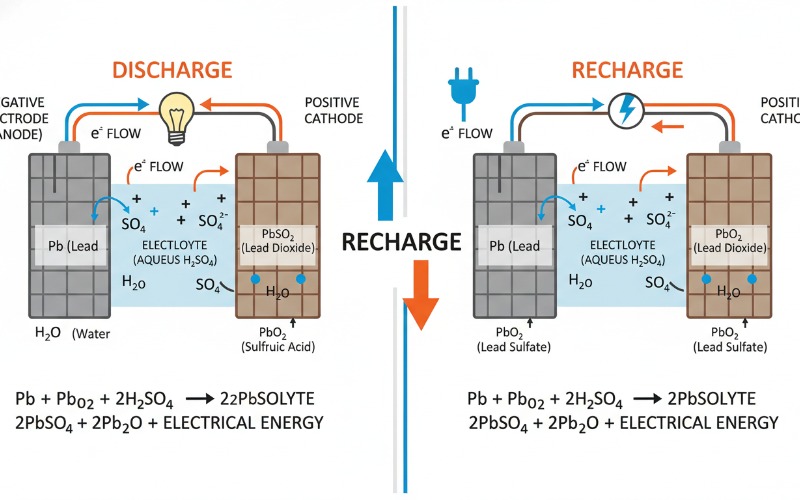
When new engineers enter the energy storage industry, a common question arises: are all sla batteries rechargeable? The definitive answer is yes. In battery terminology, power cells are classified as either primary (single-use) or secondary (rechargeable). Every Sealed Lead-Acid (SLA) battery, also widely known as a Valve-Regulated Lead-Acid (VRLA) battery, is engineered strictly as a secondary cell. The fundamental operating principle relies on a completely reversible electrochemical reaction. During the discharge phase, lead dioxide on the positive plates and sponge lead on the negative plates react with sulfuric acid to form lead sulfate and water. This reaction releases electrons, providing electrical power to the connected load.
Conversely, when a charging voltage is applied across the terminals, this chemical process reverses. The electrical energy forces the lead sulfate and water to convert back into lead dioxide, sponge lead, and sulfuric acid. This specific reversibility is exactly why all SLA batteries are rechargeable. Furthermore, the "sealed" nature of these batteries incorporates a specialized oxygen recombination cycle. During overcharge, oxygen generated at the positive plate migrates through the Absorbent Glass Mat (AGM) or gelled electrolyte to the negative plate, where it recombines with hydrogen to form water. This eliminates the need for external watering, which is a massive operational advantage for large-scale VRLA battery solutions.
Advanced Grid Alloy Technology and Corrosion Resistance
While the basic chemistry proves that all SLA batteries are rechargeable, not all rechargeable batteries perform equally over time. The structural integrity of the internal lead grids dictates the true operational lifespan of the battery. Modern industrial SLA batteries utilize advanced Grid Alloy Technology to enhance performance and durability. Standard lead is too soft for structural use, so manufacturers historically alloyed lead with antimony. However, modern VRLA batteries primarily use lead-calcium-tin alloys. This specific Grid Alloy Technology minimizes gassing rates, reduces internal electrical resistance, and provides superior defense against positive grid corrosion.
Consequently, utilizing robust grid alloys ensures that the battery can endure continuous floating operations or cyclic demands without internal structural failure. When system integrators specify power solutions for critical infrastructure, examining the specific grid alloy composition is just as important as the battery capacity. High-purity lead combined with optimized tin proportions creates a dense, corrosion-resistant framework that maintains excellent conductivity throughout hundreds of charge and discharge cycles. According to studies by Battery University, improving the grid structure directly translates to improved charge acceptance and lower self-discharge rates.
Technical Specification Matrix: AGM vs. Gel vs. LiFePO4
To fully grasp the capabilities of rechargeable storage systems, B2B integrators must compare the leading technologies. Below is a detailed technical matrix comparing standard AGM SLA, Gel SLA, and modern Lithium-ion (LiFePO4) batteries.
Technical Parameter
SLA (AGM VRLA)
SLA (Gel VRLA)
Lithium-ion (LiFePO4)
Rechargeable Nature
Yes (Secondary Cell)
Yes (Secondary Cell)
Yes (Secondary Cell)
Cycle Life @ 80% DOD
300 - 500 Cycles
500 - 800 Cycles
3000 - 6000 Cycles
Grid Alloy Technology
Lead-Calcium-Tin
Lead-Calcium-Tin
N/A (Copper/Aluminum foils)
Optimal Discharge Rate
High Current (Short duration)
Low Current (Long duration)
High Current (Sustained)
Initial Capex (ROI Factor)
Low
Medium
High
Optimizing Depth of Discharge (DOD) for Maximum Longevity
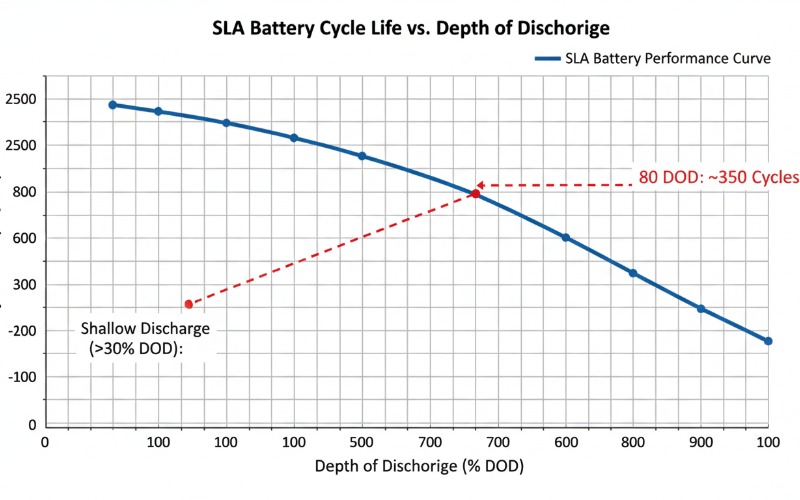
The concept of Depth of Discharge (DOD) is a foundational metric for B2B system integrators. DOD refers to the percentage of the battery's total capacity that has been consumed. Even though we have established that are all sla batteries rechargeable, their lifespan is drastically affected by how deeply they are discharged before being recharged. A standard SLA battery might deliver over 1,500 cycles if it is only discharged by 30% per cycle. However, if the system consistently pushes the battery to a deep discharge, the cycle life drops significantly. Cycle Life @ 80% DOD is the industry-standard benchmark used to evaluate heavy-duty deep cycle batteries.
For optimal Return on Investment (ROI), engineers must properly size the battery bank so that routine operations do not exceed a 50% DOD. Pushing an SLA battery to an 80% or 100% DOD frequently will accelerate the shedding of active materials from the positive plates and encourage hard sulfation on the negative plates. By keeping the DOD shallow, the mechanical stress on the advanced Grid Alloy Technology is minimized. This ensures that the advanced AGM batteries remain healthy, efficient, and ready to deliver reliable backup power during unexpected grid failures or peak load shedding events.
Field Experience: SLA Performance in Telecom Base Stations
To move beyond theoretical chemistry, let us examine a real-world field scenario. During a recent massive infrastructure upgrade for a tier-one telecommunications provider, our engineering team evaluated backup power options for remote, off-grid cellular towers. The client initially questioned the longevity of traditional lead-acid systems compared to newer technologies. We had to demonstrate not just that are all sla batteries rechargeable, but how their robust design withstands harsh environmental conditions. The sites were located in regions experiencing significant temperature fluctuations, which can severely impact battery chemistry and performance.
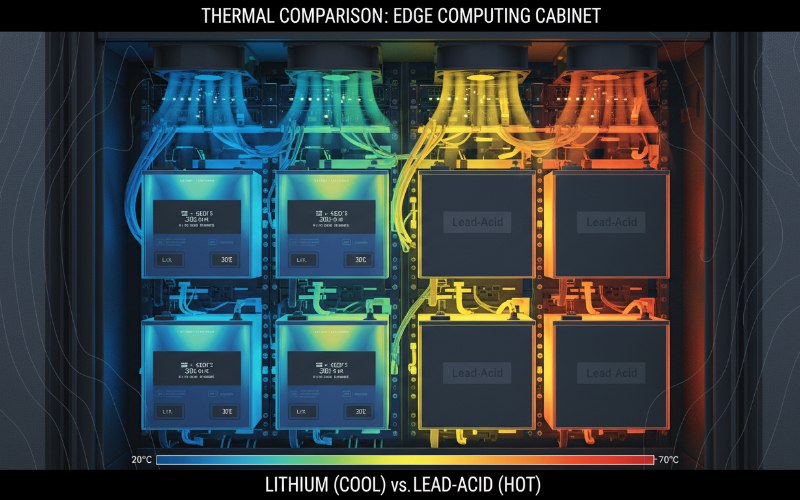
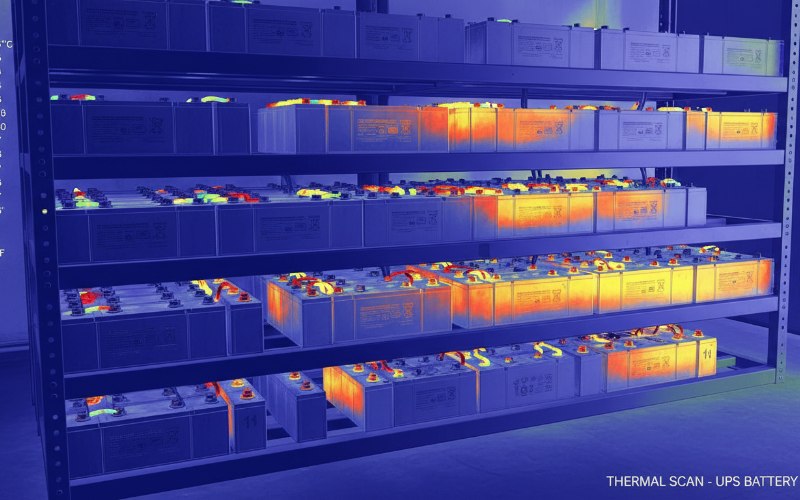
We deployed high-capacity telecom base station batteries featuring specialized heavy-duty Grid Alloy Technology designed explicitly for deep-cycle applications. Over a 24-month monitoring period, the data was conclusive. By strictly managing the charging parameters to prevent thermal runaway and limiting the daily discharge to avoid hitting the extreme Cycle Life @ 80% DOD threshold, the VRLA systems maintained 96% of their original capacity. This field experience proved that with intelligent system integration, traditional SLA technology delivers unparalleled reliability and a highly predictable operational expenditure (OpEx) profile. The sheer weight and theft-deterrent nature of lead-acid also provided an unexpected security benefit at these remote, unmanned locations.
Calculating ROI Differences Between Technology Deployments
System integrators are rarely judged solely on technical prowess; financial metrics dictate procurement. Calculating the ROI differences between SLA and advanced Lithium-ion (LiFePO4) energy storage requires a holistic view of Capital Expenditure (CapEx) versus Operational Expenditure (OpEx). SLA batteries offer a significantly lower initial CapEx. For projects with strict budget constraints or applications where backup power is rarely engaged (such as emergency UPS systems), SLA remains the undisputed champion. The low cost per watt-hour makes it highly attractive for large-scale deployments where the batteries spend 99% of their life in float charge mode.
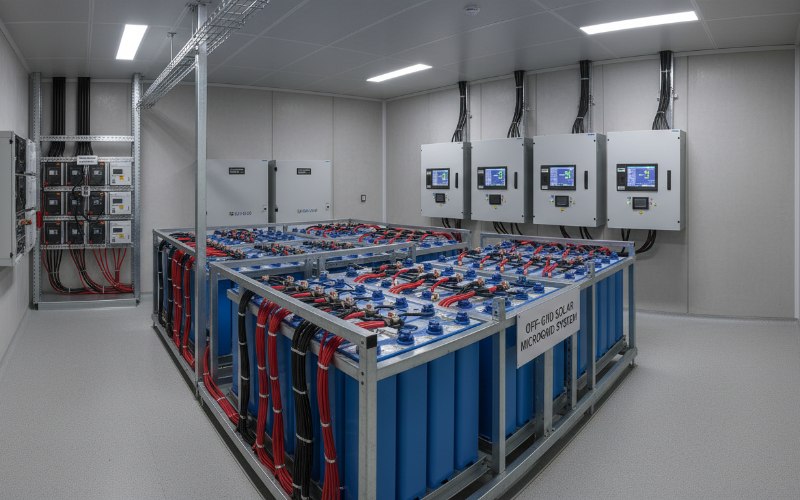
In contrast, LiFePO4 batteries demand a high upfront investment but offer a profoundly lower OpEx for high-frequency cycling applications. If a solar microgrid requires daily charging and discharging, the Cycle Life @ 80% DOD of lithium-ion (often exceeding 4,000 cycles) vastly outpaces SLA. Therefore, the ROI calculation hinges entirely on the application's duty cycle. For standby power, data centers, and traditional telecom infrastructure, the advanced Grid Alloy Technology within modern SLA batteries ensures that they provide the most cost-effective insurance policy against power outages. Organizations like the IEA Grid Storage initiative highlight that diverse storage chemistries will coexist based on these specific economic realities.
Soft CTA: Next Steps for System Integrators
Selecting the correct battery chemistry is a strategic decision that directly impacts system reliability and overall profitability. While knowing that are all sla batteries rechargeable is the fundamental baseline, mastering the nuances of DOD management, grid alloys, and cycle life separates standard installations from world-class engineering. If you are developing a new UPS system, renewable energy microgrid, or telecom backup array, partnering with an experienced manufacturer is vital. We invite you to explore JYC Battery's comprehensive technical specifications and consult with our engineering team to ensure your next deployment achieves maximum efficiency and optimal ROI.
Frequently Asked Questions (FAQ)
Are all SLA batteries rechargeable?
Yes, all Sealed Lead-Acid (SLA) batteries are secondary cells. This means they are engineered specifically to be recharged multiple times. Their internal chemical reaction is completely reversible when an appropriate charging voltage is applied, allowing them to store and release electrical energy repeatedly.
What happens if you over-discharge a rechargeable SLA battery?
Over-discharging an SLA battery beyond its recommended Depth of Discharge (DOD) causes severe internal damage. It leads to heavy sulfation, where lead sulfate crystals harden on the negative plates. This dramatically increases internal resistance, reduces capacity, and permanently shortens the overall lifespan of the battery.
How does Cycle Life @ 80% DOD impact procurement decisions?
Cycle Life @ 80% DOD is a rigorous metric that indicates how many times a battery can be deeply discharged and recharged before its capacity drops below useful levels. Procurement teams use this metric to calculate the true operational cost of the battery over its lifetime, comparing the upfront cost against the expected number of reliable cycles.
Why is Grid Alloy Technology important in modern SLA batteries?
Grid Alloy Technology involves mixing lead with elements like calcium and tin to create robust internal structures. This technology is critical because it prevents positive grid corrosion, reduces internal gassing, lowers self-discharge rates, and ensures the battery maintains high conductivity throughout its operational life.






 en
en  ara
ara  de
de  fra
fra  kor
kor  ru
ru  spa
spa  vie
vie