This is more than just a series of products; it is an ecosystem we have built to achieve a more efficient, reliable, and sustainable energy future. Discover how our products and solutions can create t...
Our Industrial Batteries combine high-quality materials, robust design, and dependable performance. With excellent deep-cycle capability and easy maintenance, they are ideal for diverse applications. ...
JYC Transportation batteries are a category of power storage devices specifically designed for transportation scenarios, with core functions of providing continuous, stable, and high-efficiency power ...
JYC Motive Power batteries are deep-cycle energy storage devices specifically designed for industrial and commercial vehicles and specialized equipment. Their core function is to provide continuous an...
Based on the low-carbon concept, and thanks to the competitiveness of energy storage technology, lithium applications in various systems will be gradually realized globally. JYC Lithium Battery Soluti...
Focus on company news, product updates and market events. We provide continuous updates to bring you first-hand information, helping you stay informed about our development progress at all times.
High-Rate Discharge Physics: Optimizing Data Center UPS Sizing
2026-02-11 14:45:07
In the mission-critical environment of Tier III and Tier IV data centers, the gap between mains failure and generator synchronization typically lasts less than 60 seconds. However, facility managers and UPS engineers must design bridging power for 5 to 15 minutes to account for generator spin-up latencies, parallel switchgear negotiation, and potential start-up failures. This specific time window dictates the necessity for high-rate discharge battery chemistry.
Core Engineering Insight: Standard Amp-hour (Ah) ratings are virtually meaningless for 10-minute run-times due to the Peukert Effect.
Sizing Metric: Optimization relies on Constant Power (Watts/Cell) calculations to specific End of Discharge Voltages (EODV).
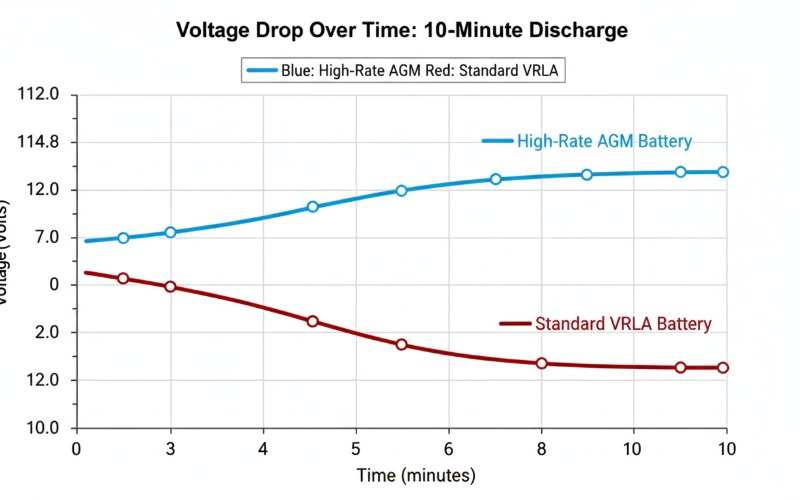
Chemistry Impact: Low internal resistance ($R_i$) is the primary driver of voltage stability during high C-rate extraction.
Key Takeaways for Data Center UPS Sizing
Dynamic Capacity: A battery rated for 100Ah (C10) may only deliver 40Ah effective capacity during a 10-minute discharge.
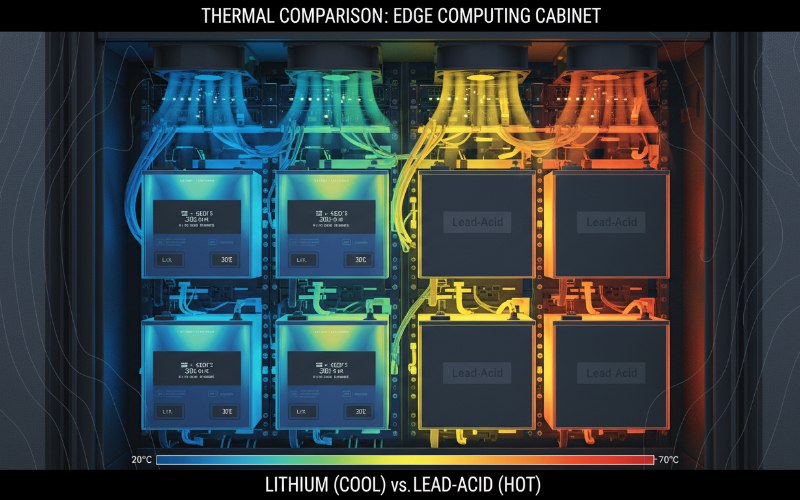
Thermal Management: High current discharge ($>3C$) generates exponential heat ($I^2R$), necessitating robust thermal dissipation design.
Chemistry Selection: High-Rate AGM and LiFePO4 are the only viable candidates; standard deep-cycle GEL cannot sustain the required amperage without voltage collapse.
The Physics of High-Rate Discharge
The fundamental challenge in sizing batteries for 5-15 minute run-times is the electrochemical inefficiency described by Peukert’s Law. As the rate of discharge increases, the battery's available capacity decreases non-linearly. For data centers, this physics is critical.
During a high-rate discharge (often exceeding 1C or 2C), the chemical reaction at the plate surface occurs faster than the electrolyte can diffuse into the active material's pores. This leads to a rapid depletion of ions at the electrode interface, causing a premature voltage drop even though active material remains deep within the plates. This phenomenon renders standard C10 or C20 capacity ratings irrelevant for UPS applications.
Internal Resistance and Voltage Sag
The immediate voltage drop upon load application is defined by Ohm’s Law: $V_{drop} = I imes R_{internal}$. In megawatt-scale UPS systems, currents can reach thousands of Amps. Even a fraction of a milliohm increase in internal resistance leads to significant voltage sag, potentially triggering the UPS low-voltage cutoff before the required runtime is achieved.
High-rate batteries mitigate this through specific construction techniques designed to lower impedance. Engineers looking to optimize systems should explore our specialized Lead-Acid Battery solutions engineered for low impedance.
VRLA High-Rate Series Engineering
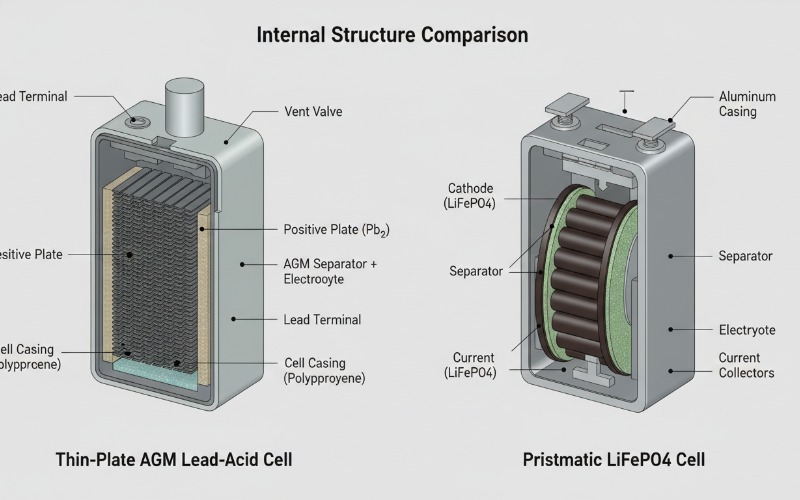
Not all VRLA (Valve Regulated Lead Acid) batteries are created equal. For short-duration, high-amperage demands, High-Rate AGM (Absorbent Glass Mat) batteries are the standard. The physical architecture differs significantly from standard deep-cycle units.
Thin Plate Technology
To maximize surface area and reduce diffusion distances, High-Rate AGM batteries utilize thin-plate technology. By packing more, thinner plates into a cell, manufacturers increase the plate surface area exposed to the electrolyte by up to 30%. This facilitates rapid ion exchange required for 10-minute discharges.
However, this design trade-off means these batteries are less suited for long-duration, low-amp discharges compared to OPzV or Deep Cycle models. Facility managers must ensure the application matches the battery architecture.
Lithium Iron Phosphate Performance at High C-Rates
The introduction of Lithium Iron Phosphate (LiFePO4) has revolutionized data center power density. Unlike lead-acid, LiFePO4 chemistry possesses a Peukert constant very close to 1.0, meaning capacity is almost independent of the discharge rate.
For a 10-minute run-time (approx. 6C rate), a quality Lithium Battery system maintains a high, flat voltage curve. This allows the UPS inverters to operate more efficiently, drawing less current as voltage remains stable compared to the sloping voltage decline of lead-acid.
Sizing Calculations: Watts per Cell vs Amp-Hours
A common error in UPS retrofits is sizing based on Amp-hours. Modern UPS systems present a Constant Power load (CP) to the battery bank. As the battery voltage drops during discharge, the current drawn by the UPS increases to maintain constant power output ($P = V imes I$).
To size correctly, engineers must consult the manufacturer's Constant Power Discharge Data tables. The target metric is Watts per Cell (W/cell) for the specific run-time (e.g., 10 mins) to a specific End of Discharge Voltage (EODV).
Choosing the Correct EODV
The End of Discharge Voltage (EODV) significantly impacts the calculated battery size.
1.67V / Cell: Maximizes short-term power extraction. Allows for smaller battery banks but risks deep discharge damage if not recharged immediately.
1.75V / Cell: A conservative standard. Provides a safety buffer and prolongs battery life but requires a slightly larger bank to deliver the same runtime.
1.80V / Cell: Rarely used for <15 min rates, typically reserved for long-duration telecom applications.
Comparative Analysis: High-Rate AGM vs LiFePO4
The following technical comparison highlights performance metrics specifically for a 4C (15-minute) discharge scenario typical in hyperscale data centers.
Performance Metric
High-Rate AGM (Lead-Acid)
LiFePO4 (Lithium-Ion)
Peukert Efficiency
Low (Approx 1.15 - 1.25)
High (Approx 1.01 - 1.05)
Voltage Sag @ 4C
Significant (Requires oversizing)
Minimal (Flat discharge curve)
Round Trip Efficiency
80-85%
95-98%
Cooling Requirements
Moderate (Heat absorption mass)
High (Requires BMS thermal management)
Footprint (Wh/L)
Baseline
50-70% reduction in floor space
Cost (CapEx)
Low
High (2-3x Lead-Acid)
Cost (TCO 10 Years)
High (Requires replacement @ year 4-5)
Low (Lasts 10-15 years)
Technical comparison of battery chemistries for high-rate UPS applications.
Thermal Runaway and Safety Protocols
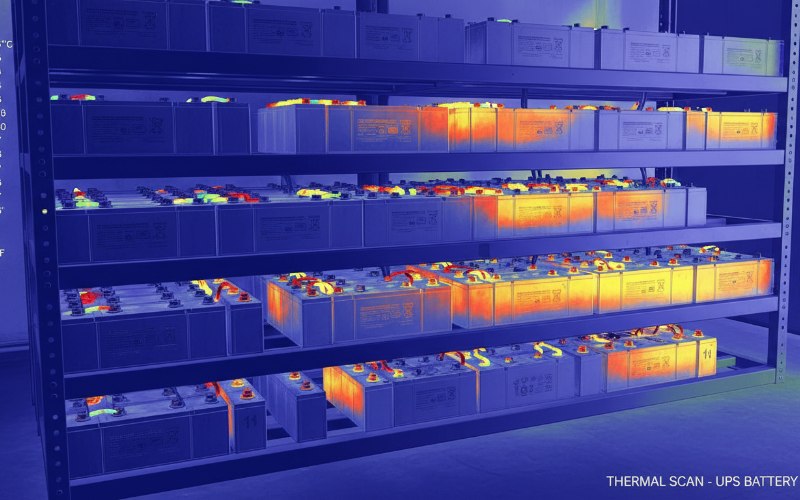
High-rate discharge generates significant joule heating ($Q = I^2 imes R imes t$). In a 10-minute discharge, the internal temperature of a battery cell can rise by 10°C to 20°C. If the battery bank is undersized, the internal resistance causes excessive heating, potentially leading to thermal runaway—especially in lead-acid batteries where the separator can melt, or in lithium batteries without adequate BMS (Battery Management System) cutoff protections.
Facility managers must ensure that the UPS room cooling capacity accounts for the BTU rejection of the battery bank during discharge, not just the inverter heat load. Furthermore, JYC Battery ensures all high-rate series feature flame-retardant ABS cases (UL94 V-0) to mitigate fire propagation risks.
Optimizing TCO with Hybrid Strategies
While Lithium offers superior physics for high-rate discharge, the CapEx barrier remains high. Many data centers are adopting hybrid approaches or optimizing High-Rate AGM lifecycles through better environmental controls. By maintaining ambient temperatures strictly at 20°C-25°C, the service life of high-rate lead-acid batteries can be preserved, maximizing the ROI on the lower upfront cost.
Frequently Asked Questions
Why is C10 rating insufficient for UPS battery sizing?
The C10 rating indicates capacity discharged over 10 hours. Due to the Peukert Effect, a battery discharged in 10 minutes (approx 6C) will only yield 40-50% of its rated C10 capacity. Sizing based on C10 will lead to catastrophic system failure under load.
How does End of Discharge Voltage (EODV) affect battery life?
Setting a lower EODV (e.g., 1.60V/cell) allows for more energy extraction per cycle, reducing the initial bank size. However, frequently discharging to this depth increases sulfation on lead plates and mechanical stress, reducing the total cycle life of the battery bank.
Can I mix Lithium and Lead-Acid batteries in a Data Center?
Directly parallel mixing on the same DC bus is dangerous due to impedance and voltage curve mismatches. However, hybrid topologies where different UPS modules use different chemistries are possible but require sophisticated management.
What is the "Coupe de Fouet" effect?
Also known as the "whiplash" effect, this is a transient voltage dip that occurs in the first few seconds of a lead-acid battery discharge, followed by a slight voltage recovery. UPS engineers must ensure the inverter's low-voltage cut-off is not triggered by this initial transient dip.






 en
en  ara
ara  de
de  fra
fra  kor
kor  ru
ru  spa
spa  vie
vie