This is more than just a series of products; it is an ecosystem we have built to achieve a more efficient, reliable, and sustainable energy future. Discover how our products and solutions can create t...
Our Industrial Batteries combine high-quality materials, robust design, and dependable performance. With excellent deep-cycle capability and easy maintenance, they are ideal for diverse applications. ...
JYC Transportation batteries are a category of power storage devices specifically designed for transportation scenarios, with core functions of providing continuous, stable, and high-efficiency power ...
JYC Motive Power batteries are deep-cycle energy storage devices specifically designed for industrial and commercial vehicles and specialized equipment. Their core function is to provide continuous an...
Based on the low-carbon concept, and thanks to the competitiveness of energy storage technology, lithium applications in various systems will be gradually realized globally. JYC Lithium Battery Soluti...
Focus on company news, product updates and market events. We provide continuous updates to bring you first-hand information, helping you stay informed about our development progress at all times.
Lead-Acid Circular Economy: The World’s Most Recycled Commodity
2026-02-11 14:50:38
Key Takeaways: Lead-Acid Battery Sustainability
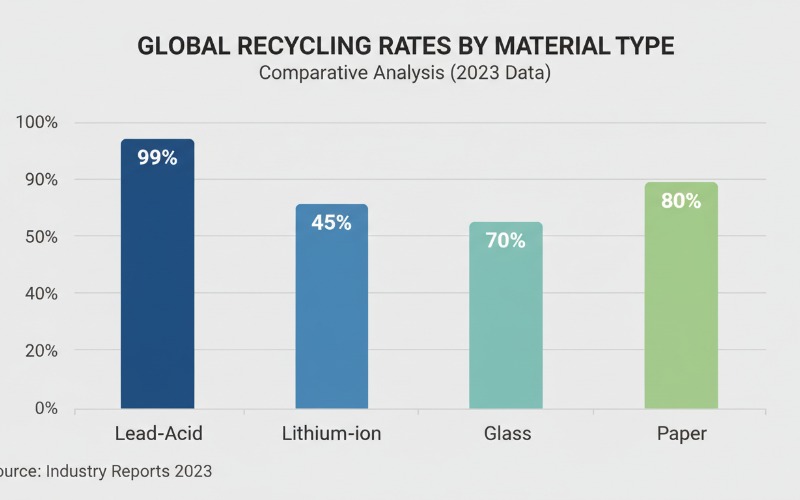
99% Recovery Rate: Lead-acid batteries hold the highest recycling rate of any consumer product globally, surpassing aluminum, glass, and paper.
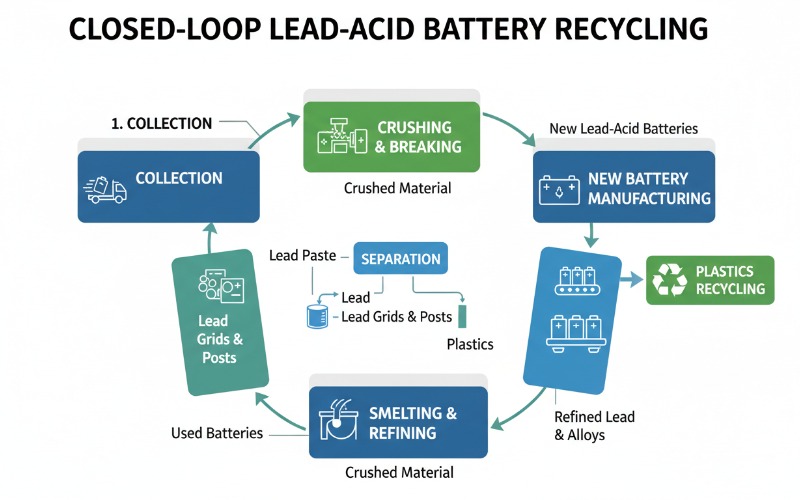
Closed-Loop Ecosystem: The supply chain is nearly 100% circular; a new battery is typically comprised of 80% recycled material.
ESG Compliance: For Sustainability Officers, lead-acid technology offers a documented, mature path to reducing Scope 3 emissions compared to nascent lithium recycling infrastructures.
Economic Viability: Unlike many recyclables requiring subsidies, lead battery recycling is profitable, driving a self-sustaining market.
In the global pursuit of Net Zero emissions, energy storage creates a paradox. While batteries are essential for decarbonization, their production often involves resource-intensive mining. However, one chemistry stands apart as the definitive model for the circular economy: the lead-acid battery. For environmental consultants and sustainability officers, understanding the mature, closed-loop infrastructure of lead-acid technology is crucial when calculating lifecycle environmental impact.
The Architecture of a Closed-Loop Supply Chain
The term "circular economy" is often used theoretically, but the lead-acid battery industry has practiced it operationally for decades. Unlike the linear "take-make-dispose" model, lead-acid batteries operate within a cradle-to-cradle system. This efficiency is driven by the electrochemical properties of lead and the standardized design of VRLA (Valve Regulated Lead-Acid) and flooded batteries.
When a lead-acid battery reaches the end of its service life, nearly 100% of its components are recoverable and reusable. This stands in stark contrast to many modern electronics where component bonding makes separation economically unfeasible.
Component Recovery Breakdown
To understand the depth of this recycling capability, we must analyze the recovery process at a chemical and material level:
Lead (Pb) and Lead Paste: Through smelting and refining, lead is recovered and processed to remove impurities. This secondary lead is chemically identical to primary mined lead, meaning performance does not degrade over recycling generations. It is re-alloyed for new battery grids and oxides.
Polypropylene Case: The plastic housing is shredded, washed, and melted into pellets. These pellets are extruded to form new battery cases, completing the loop for the structural components.
Sulfuric Acid (Electrolyte): The electrolyte is either neutralized into water and sodium sulfate (used in textiles and glass manufacturing) or processed to convert it into fresh battery-grade sulfuric acid.
The Pyrometallurgical and Hydrometallurgical Processes
The recycling success of lead-acid batteries relies on advanced metallurgical processes. Unlike the complex separation required for Li-ion cathodes, lead recycling utilizes established pyrometallurgical techniques.
1. Battery Breaking: Batteries are fed into hammer mills that crush the units into small pieces.
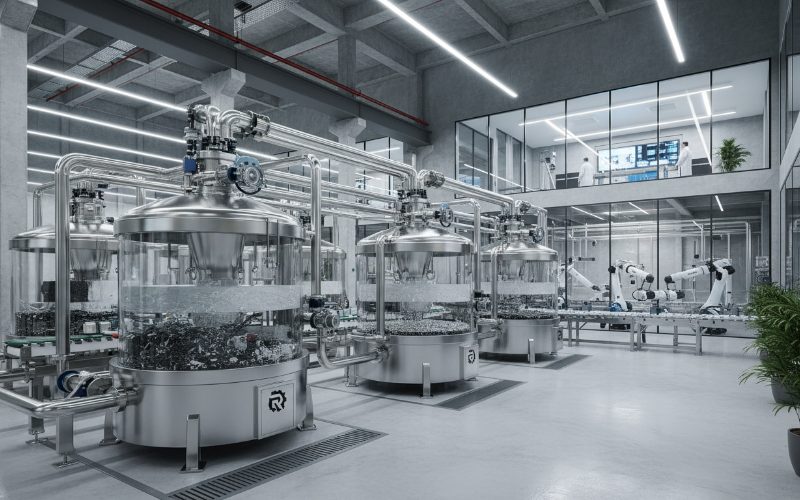
2. Hydrodynamic Separation: The crushed material enters a vat. Lead and heavy metals sink to the bottom, while polypropylene plastics float. The liquid acid is drained for separate treatment. This gravity-based separation is energy-efficient and highly effective.
3. Smelting and Refining: The lead components are melted in blast furnaces. Reducing agents eliminate oxides, and refining kettles allow the removal of trace impurities (copper, tin, antimony) to meet specific alloy requirements for AGM or GEL battery grids.
Comparing Recycling Maturity: Lead-Acid vs Lithium-Ion
For ESG reporting, comparing the end-of-life (EOL) viability of energy storage systems is mandatory. While Lithium-ion technology offers superior energy density, its recycling infrastructure is still in a developmental phase compared to the mature lead network.
Metric
Lead-Acid Battery
Lithium-Ion Battery
Global Recycling Rate
~99% (US/EU Data)
< 5% (Estimated)
Material Recovery
Lead, Plastic, Acid (100% reusable)
Cobalt, Nickel, Lithium (Partial recovery)
Economic Model
Self-Sustaining (Profitable)
Cost-Negative (Requires User Fees/Subsidies)
Process Standard
Standardized Global Protocol
Fragmented (Varies by chemistry: LFP vs NMC)
Transportation Safety
Class 8 (Corrosive) - Established Logistics
Class 9 (Hazmat) - Strict Thermal Runaway Regs
Table 1: Comparative Analysis of Recycling Maturity and Economic Viability
Environmental Impact and Scope 3 Emissions
For Sustainability Officers, Scope 3 emissions (indirect emissions in the value chain) are often the hardest to quantify and reduce. Utilizing lead-acid batteries significantly mitigates these emissions due to the high recycled content.
A typical new lead-acid battery is comprised of 60% to 80% recycled lead. Producing secondary lead (recycled) requires approximately 35-40% of the energy needed to produce primary lead from ore. This drastic reduction in energy consumption directly correlates to a lower carbon footprint per kWh of storage capacity produced. By choosing VRLA systems for UPS or telecom backup, organizations support a supply chain that minimizes virgin resource extraction.
Regulatory Assurance and Supply Chain Security
The geopolitical landscape of battery materials is volatile. Lithium, Cobalt, and Nickel supply chains are subject to significant fluctuation and geopolitical risk. In contrast, lead is a domestic commodity in most developed nations due to the urban mining model of recycling.
Because the lead is constantly cycling through the economy, countries are less dependent on foreign mining operations. For enterprise buyers, this translates to price stability and supply chain security. When you specify a JYC Battery lead-acid system, you are tapping into a resource loop that is insulated from many of the raw material shortages affecting other chemistries.
The Role of Advanced VRLA in Renewable Storage
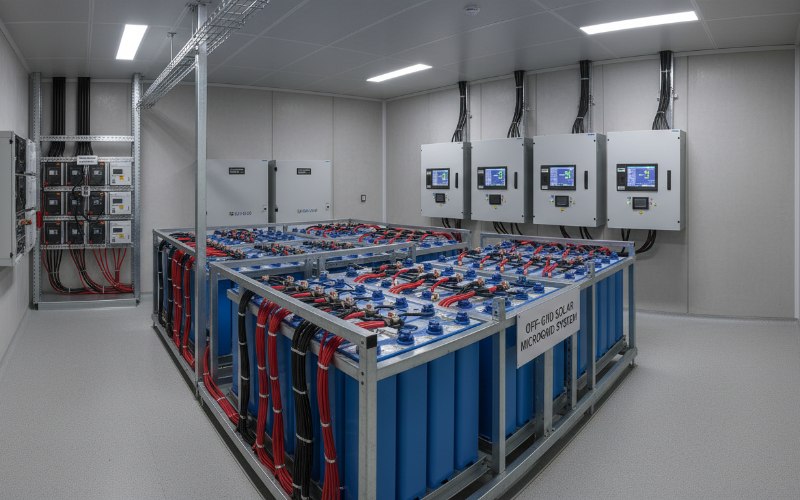
While lithium is dominant in EVs, advanced lead-acid technologies like OPzV (Tubular Gel) and Lead-Carbon are seeing a resurgence in stationary energy storage for renewables. The circular economy advantage plays a massive role here. Solar farms and wind installations have 20-25 year lifespans. Lead-acid batteries can be fully recycled at the end of their cycle life, and the value of the scrap lead often offsets the cost of battery removal and transportation.
This "positive scrap value" is unique to lead chemistry. Currently, disposing of lithium batteries represents a cost liability for operators. This Total Cost of Ownership (TCO) calculation, inclusive of EOL disposal, often tips the scale back toward advanced lead-acid for specific stationary applications.
Frequently Asked Questions
Why is the lead-acid battery recycling rate so high?
The rate is high because lead is infinitely recyclable without degradation, and the recycling process is profitable. The scrap value of the lead creates a natural economic incentive for collection and processing, eliminating the need for government subsidies to drive the recycling loop.
Is recycled lead as good as mined lead?
Yes. Refined secondary lead is chemically indistinguishable from primary mined lead. Through modern refining processes, impurities are removed to meet ASTM and DIN standards, ensuring that batteries made from recycled lead perform exactly the same as those made from virgin material.
How does battery recycling contribute to ESG goals?
Recycling batteries reduces the need for mining, which lowers water usage, land disruption, and carbon emissions. Using lead-acid batteries helps companies meet Scope 3 emission targets by utilizing products with high recycled content and a guaranteed end-of-life processing path.
Can lead-acid and lithium batteries be recycled together?
No. They require completely different processing streams. Mixing lithium batteries into a lead smelter can cause dangerous explosions and fires. Proper sorting at the collection point is critical for safety and process efficiency.





 en
en  ara
ara  de
de  fra
fra  kor
kor  ru
ru  spa
spa  vie
vie