This is more than just a series of products; it is an ecosystem we have built to achieve a more efficient, reliable, and sustainable energy future. Discover how our products and solutions can create t...
Our Industrial Batteries combine high-quality materials, robust design, and dependable performance. With excellent deep-cycle capability and easy maintenance, they are ideal for diverse applications. ...
JYC Transportation batteries are a category of power storage devices specifically designed for transportation scenarios, with core functions of providing continuous, stable, and high-efficiency power ...
JYC Motive Power batteries are deep-cycle energy storage devices specifically designed for industrial and commercial vehicles and specialized equipment. Their core function is to provide continuous an...
Based on the low-carbon concept, and thanks to the competitiveness of energy storage technology, lithium applications in various systems will be gradually realized globally. JYC Lithium Battery Soluti...
Focus on company news, product updates and market events. We provide continuous updates to bring you first-hand information, helping you stay informed about our development progress at all times.
Professional AGM Battery Maintenance Guide: Maximizing ROI & Lifespan
2025-12-22 18:56:44
For professional solar system integrators and energy storage engineers, the calculation of Levelized Cost of Energy (LCOE) relies heavily on the longevity of the battery bank. While Absorbent Glass Mat (AGM) technology is widely marketed as "maintenance-free," this terminology often leads to misconceptions in the B2B sector. In electrochemical terms, "maintenance-free" refers solely to the recombinant nature of the VRLA (Valve Regulated Lead-Acid) design which eliminates the need for water addition. It does not imply that the battery requires no monitoring or management.
As a global leader in energy storage manufacturing, JYC Battery understands that proper maintenance protocols are critical for preventing premature capacity loss (PCL) and ensuring the reliability of large-scale solar installations. This guide details the technical maintenance strategies required to maximize the cycle life of AGM batteries in solar applications.
The Electrochemical Reality: VRLA-AGM Mechanisms
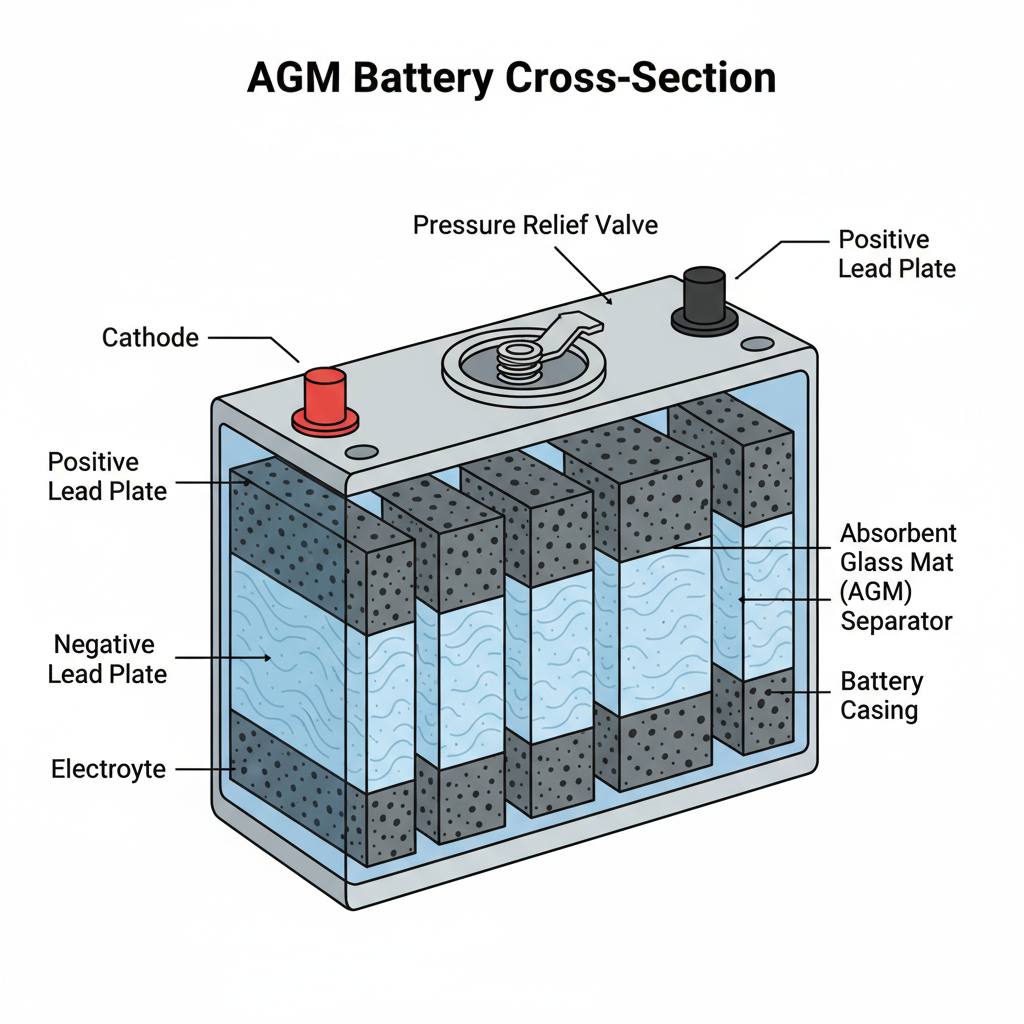
To maintain an AGM battery effectively, one must understand its internal chemistry. Unlike flooded lead-acid batteries, AGM batteries utilize a fiberglass mat to immobilize the electrolyte. This design facilitates the Oxygen Recombination Cycle, where oxygen generated at the positive plate diffuses through the separator to the negative plate, reacting to form water. This closed-loop system is vital for the battery's health.
However, this sealed design introduces specific maintenance sensitivities, particularly regarding thermal management and charging precision. Neglecting these factors can lead to thermal runaway or sulfation—the two primary causes of VRLA failure.
Improper charging is the leading cause of warranty claims in the solar sector. For JYC Lead-Acid Batteries, adherence to specific voltage thresholds is non-negotiable.
Voltage Regulation and Settings
Solar charge controllers must be programmed with precision. Unlike lithium-ion chemistries found in our LiFePO4 series, AGM batteries are intolerant of significant overcharging.
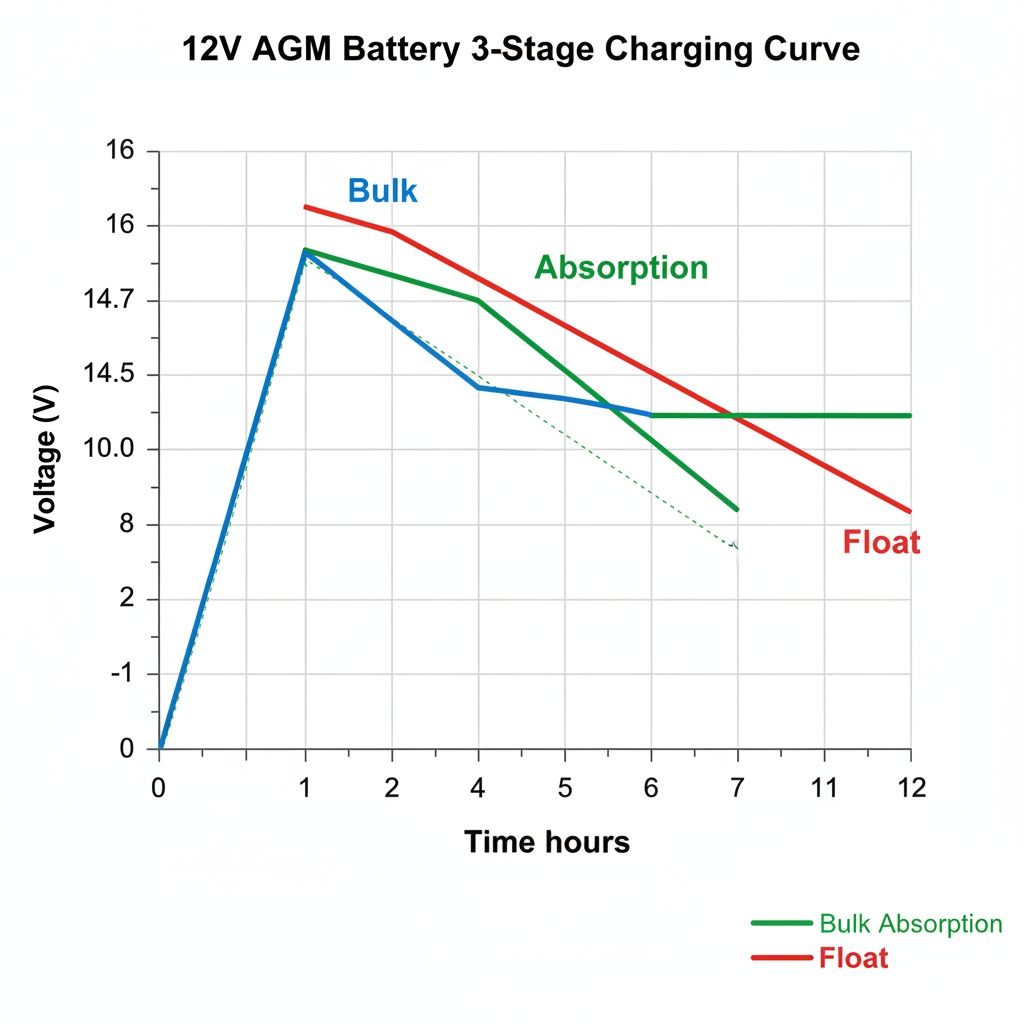
Float Charge: Typically 2.25V to 2.30V per cell (13.5V to 13.8V for a 12V monoblock) at 25°C. Excessive float voltage causes grid corrosion and electrolyte drying.
Cycle Use (Absorption): Typically 2.40V to 2.45V per cell. Exceeding this limit promotes excessive gassing that the recombination valve cannot handle, leading to permanent water loss.
Equalization:WARNING: Standard high-voltage equalization (used for flooded cells) must be disabled for AGM batteries. Applying 15.5V+ to an AGM battery will cause immediate valve venting and irreversible damage.
Temperature Compensation
Electrochemical reactions are temperature-dependent. A static charging voltage is insufficient for outdoor solar cabinets exposed to seasonal fluctuations. System integrators must enable temperature compensation on charge controllers, typically set to -3mV/°C/cell or -4mV/°C/cell. Without this, a battery will be chronically undercharged in winter (leading to sulfation) and overcharged in summer (leading to thermal runaway).
Critical Maintenance Protocol 2: Managing Depth of Discharge (DOD)
While JYC's deep-cycle AGM series utilizes robust Pb-Ca-Sn alloy grids to resist corrosion, the physics of lead-acid chemistry dictates a correlation between DOD and cycle life. To ensure the projected ROI for your B2B clients:
Limit DOD to 50%: Regularly discharging beyond 50% significantly reduces the total energy throughput over the battery's life.
Immediate Recharging: Never leave AGM batteries in a partial state of charge (PSoC) for extended periods. This causes hard lead sulfate crystals to form on the plates, which are electrically insulating and difficult to reverse.
Protocol 3: Inspection and Environment Control
Although you cannot open an AGM battery to check specific gravity, professional maintenance involves rigorous external diagnostics.
Inspection Point
Frequency
Action Item
Terminal Torque
Every 6 Months
Retorque connections to JYC specifications to prevent high-resistance heating.
Open Circuit Voltage (OCV)
Quarterly
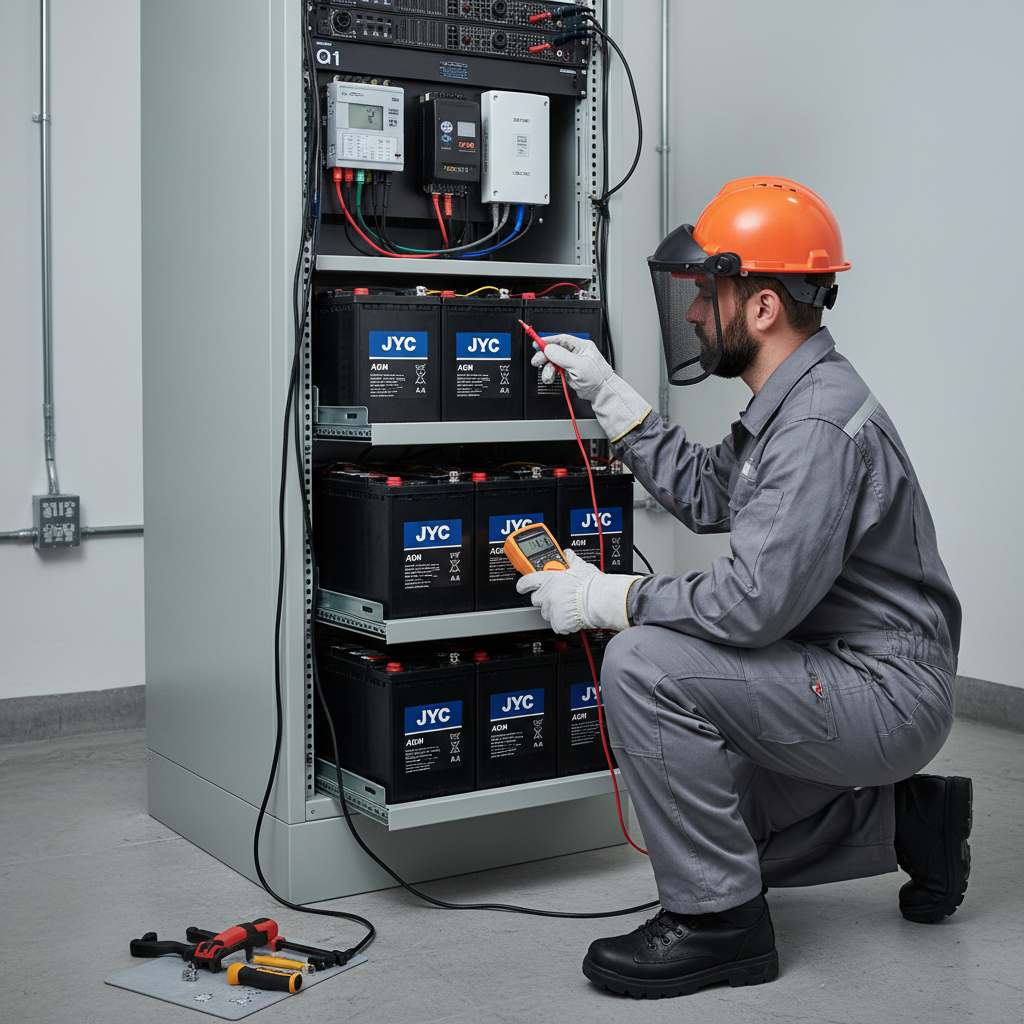
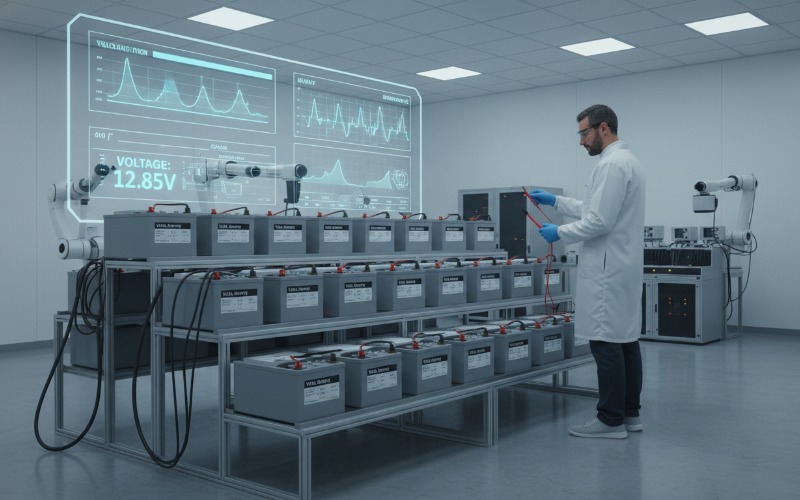
Measure individual blocks. A deviation >0.1V between blocks in a series string indicates imbalance.
Ambient Temperature
Monthly Log
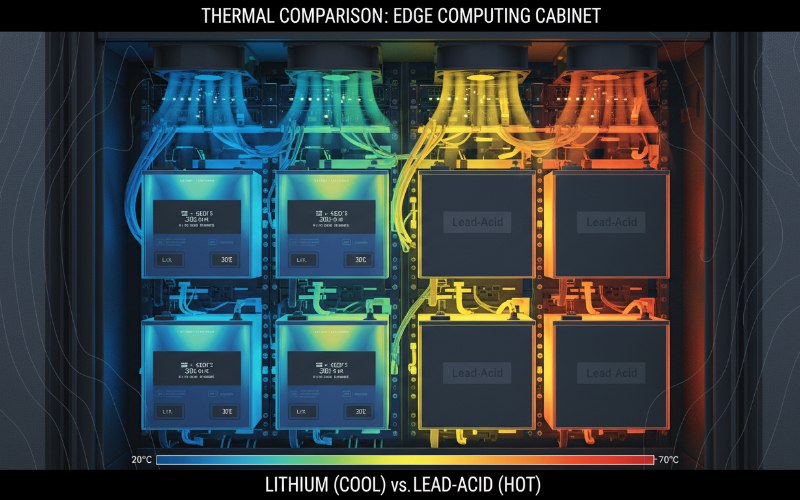
Ensure environment is near 25°C. Remember: Every 10°C rise above 25°C cuts lead-acid battery life in half.
Table 1: Recommended Maintenance Schedule for Solar Storage Systems
For critical infrastructure, such as UPS and Data Centers, conductance testing is recommended annually to track the State of Health (SoH) by measuring internal resistance.
The JYC Advantage: Manufacturing Quality Reduces Maintenance
The efficacy of a maintenance program is limited by the inherent quality of the battery. At JYC Battery, we operate a 100,000 square meter manufacturing base featuring fully automated production lines. Our strict control over the grid casting and paste mixing processes ensures high uniformity between cells.
This consistency is vital for solar system integrators connecting batteries in series (48V, 96V systems). Inconsistent internal resistance between blocks leads to voltage divergence, where one battery overcharges while another sulfating. JYC's high-precision manufacturing minimizes this variance, reducing the frequency of balancing issues.
Conclusion: Securing Your Solar Investment
Effective AGM battery maintenance is a blend of precise system configuration and periodic inspection. By controlling voltage parameters, managing temperatures, and selecting high-quality storage solutions from a certified manufacturer like JYC, integrators can guarantee reliable power and extended service life.
Do you have a large-scale solar project requiring specific energy storage dimensioning? Contact JYC Battery's engineering team today for a consultation on optimal battery selection and maintenance planning.







 en
en  ara
ara  de
de  fra
fra  kor
kor  ru
ru  spa
spa  vie
vie