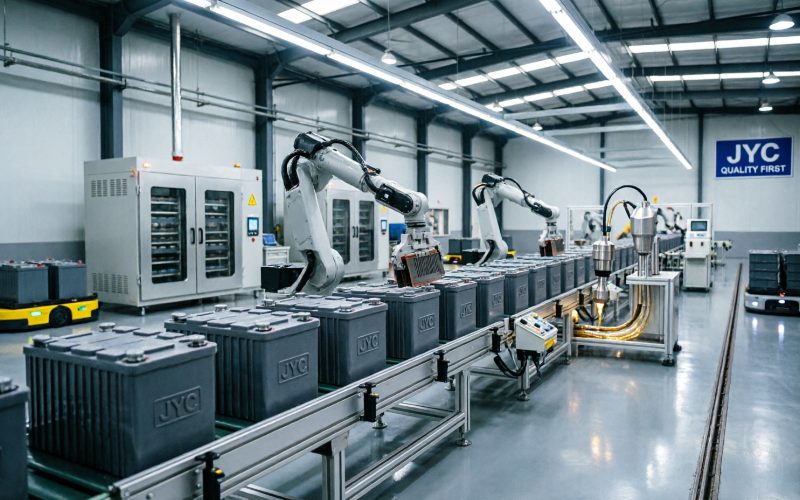
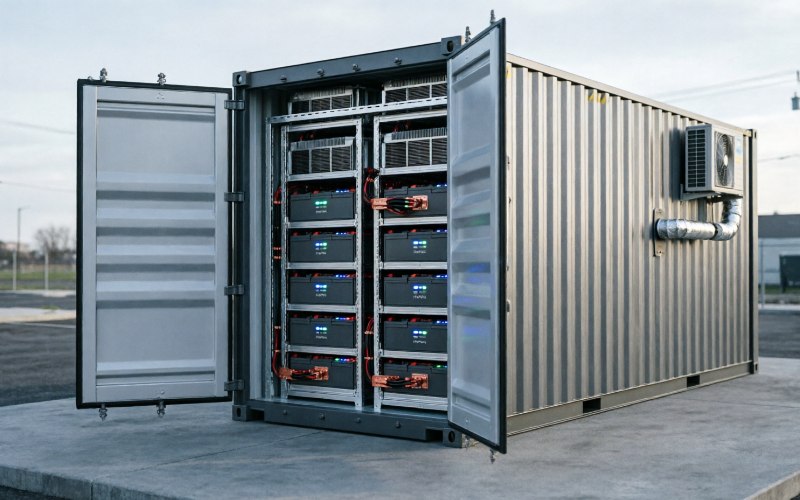
This is more than just a series of products; it is an ecosystem we have built to achieve a more efficient, reliable, and sustainable energy future. Discover how our products and solutions can create t...
Our Industrial Batteries combine high-quality materials, robust design, and dependable performance. With excellent deep-cycle capability and easy maintenance, they are ideal for diverse applications. ...
JYC Transportation batteries are a category of power storage devices specifically designed for transportation scenarios, with core functions of providing continuous, stable, and high-efficiency power ...
JYC Motive Power batteries are deep-cycle energy storage devices specifically designed for industrial and commercial vehicles and specialized equipment. Their core function is to provide continuous an...
Focus on company news, product updates and market events. We provide continuous updates to bring you first-hand information, helping you stay informed about our development progress at all times.
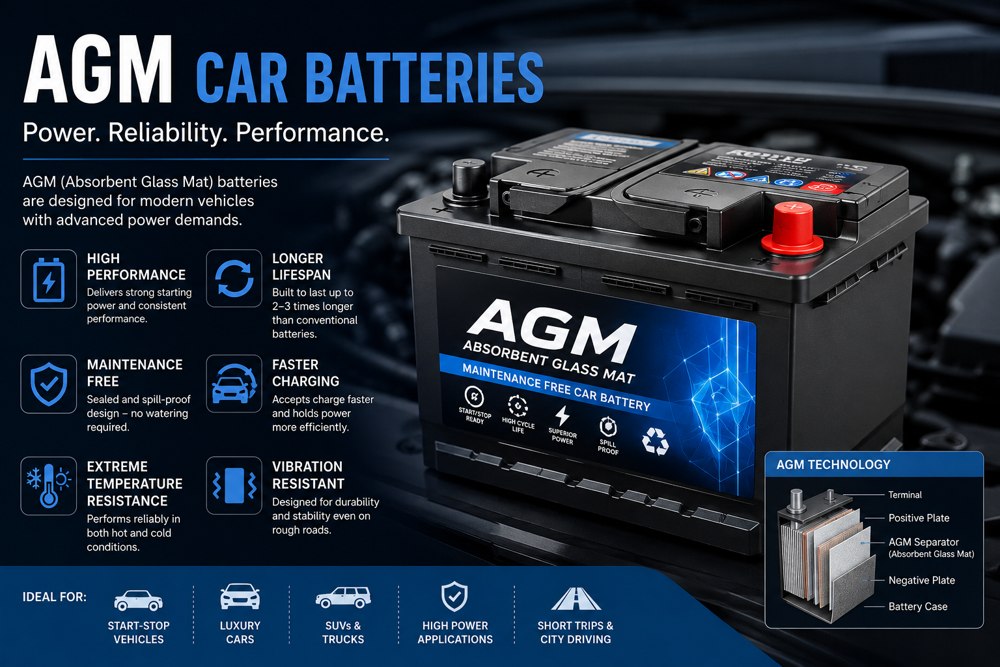
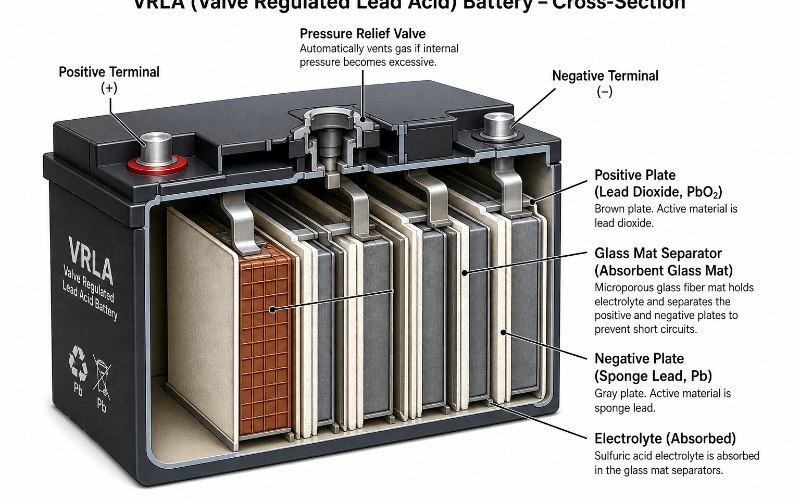
When determining what is the difference between AGM and SLA batteries, it is critical to understand that SLA (Sealed Lead-Acid) is the overarching parent category, whereas AGM (Absorbent Glass Mat) is an advanced, high-performance sub-type. AGM batteries utilize specialized ultra-fine fiberglass separators to absorb and suspend the electrolyte. This advanced construction yields significantly lower internal resistance, faster recharge capabilities, and a drastically superior Cycle Life @ 80% DOD compared to standard SLA configurations. For demanding B2B system integrations, AGM delivers maximum long-term Return on Investment (ROI).
Key Takeaways
Hierarchical Definition: All AGM batteries are classified as SLA batteries, but not all SLA batteries utilize AGM technology. In commercial sourcing, "Standard SLA" typically denotes basic VRLA structures without glass mat separators.
Performance Excellence: Advanced Grid Alloy Technology found in modern AGM designs mitigates plate corrosion, providing unmatched cyclic performance and tolerance against severe Depth of Discharge (DOD).
Economic Viability: While basic SLA configurations provide a lower initial capital expenditure, AGM arrays secure superior long-term ROI by drastically reducing replacement cycles, minimizing maintenance costs, and ensuring higher reliability in critical power infrastructure.
Resolving the Categorical Confusion: SLA, VRLA, and AGM Terminology
System integrators frequently ask what is the difference between agm and sla batteries when designing complex power architectures. The confusion stems from overlapping commercial terminology rather than distinctly separate chemical properties. Standard Sealed Lead-Acid (SLA) and Valve-Regulated Lead-Acid (VRLA) are essentially synonymous terms describing a battery that does not require regular water topping and is completely sealed against electrolyte leakage. Therefore, SLA represents the entire technological family of maintenance-free lead-based energy storage.
Within this SLA family, there are two primary sub-categories engineered for different thermal and discharge profiles: AGM (Absorbent Glass Mat) and Gel. When procurement engineers compare "SLA vs AGM," they are typically comparing a basic, standard-grade VRLA battery against a premium, highly engineered AGM battery. Understanding this technological distinction is the first step in optimizing capital expenditure for backup power, renewable energy storage, and industrial automation deployments.
Core Engineering Differences Between Standard SLA and Advanced AGM
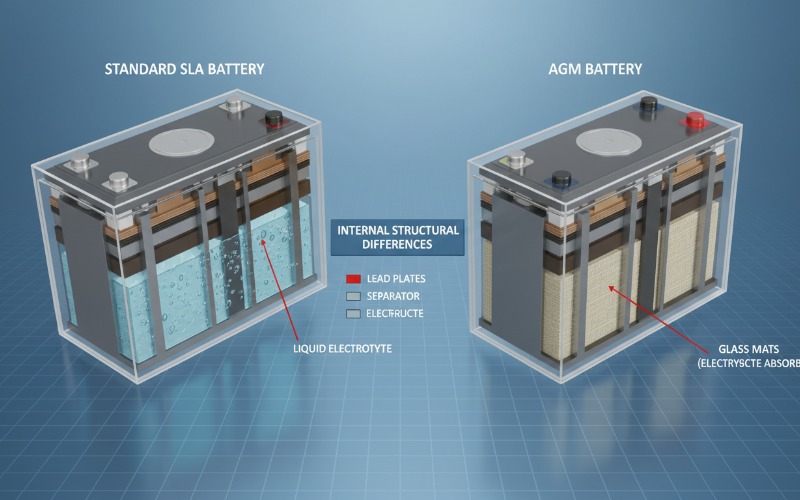
The fundamental divide between these two power solutions lies within their internal architecture and electrolyte management systems. In a standard SLA battery, the liquid electrolyte (sulfuric acid) is either freely flowing within a sealed casing (rare in modern high-end B2B apps) or stabilized using basic silica additives. This basic construction suffices for low-drain, steady-state applications but introduces significant limitations under heavy cyclic strain.
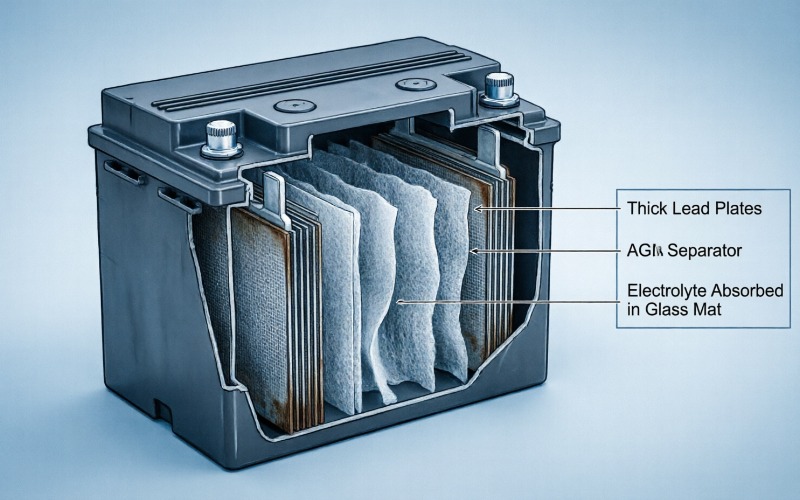
Conversely, AGM technology employs ultra-fine boron silicate glass fiber mats precisely compressed between the lead plates. These mats act as a highly efficient sponge, holding the electrolyte in a suspended state while maintaining direct, constant contact with the active plate material. This capillary action prevents acid stratification—a common failure mode in standard SLA batteries where acid concentration becomes uneven, leading to premature plate sulfation and catastrophic capacity loss.
Gas Recombination Efficiency and Internal Resistance
During the charging phase, lead-acid batteries naturally generate oxygen and hydrogen gases. Advanced AGM batteries are engineered to facilitate an internal oxygen recombination cycle. The porous nature of the glass mat allows oxygen generated at the positive plate to rapidly migrate to the negative plate, where it recombines with hydrogen to form water. Premium AGM units, such as those engineered by JYC Battery, achieve recombination efficiencies exceeding 99%. This nearly eliminates water loss over the operational lifespan.
Furthermore, the tight compression of the AGM cell drastically lowers the internal resistance (often measured in milliohms). Lower internal resistance enables the battery to deliver massive surges of current on demand, making AGM the undisputed choice for uninterruptible power supply (UPS) systems and high-torque motor starting. Standard SLA units possess higher internal resistance, which manifests as wasted heat energy during rapid discharge and restricts their utility in high-amperage scenarios.
To rigorously evaluate what is the difference between agm and sla batteries, system integrators must benchmark their quantitative performance metrics. The following matrix illustrates the standard operational envelopes for both technologies under industrial load conditions.
Technical Parameter
Standard SLA (Basic VRLA)
Advanced AGM Technology
Internal Resistance
Moderate to High
Extremely Low
Cycle Life @ 80% DOD
200 - 300 Cycles
400 - 600+ Cycles
Recharge Speed
Standard (0.1C to 0.2C limit)
Rapid (Up to 0.3C acceptance)
Vibration Tolerance
Moderate
Exceptional (High compression)
Self-Discharge Rate
~3% to 5% per month
< 2% per month
High-Rate Discharge
Prone to voltage sag
Highly stable voltage curve
Deep-Dive: The Role of Grid Alloy Technology in AGM Durability
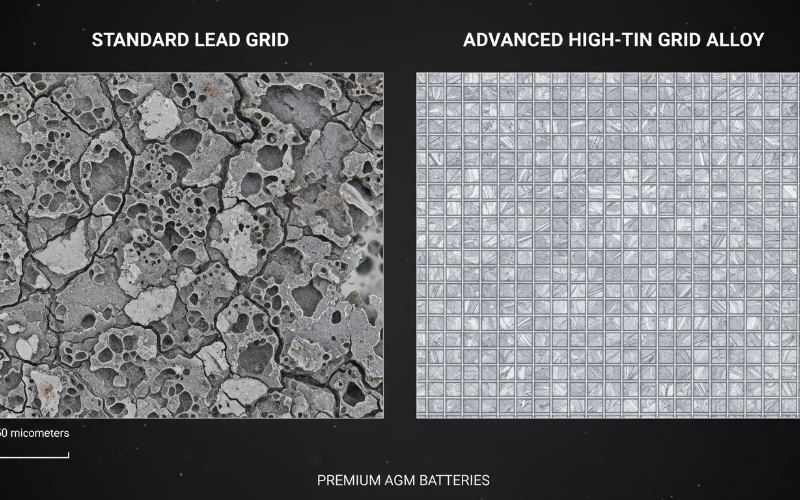
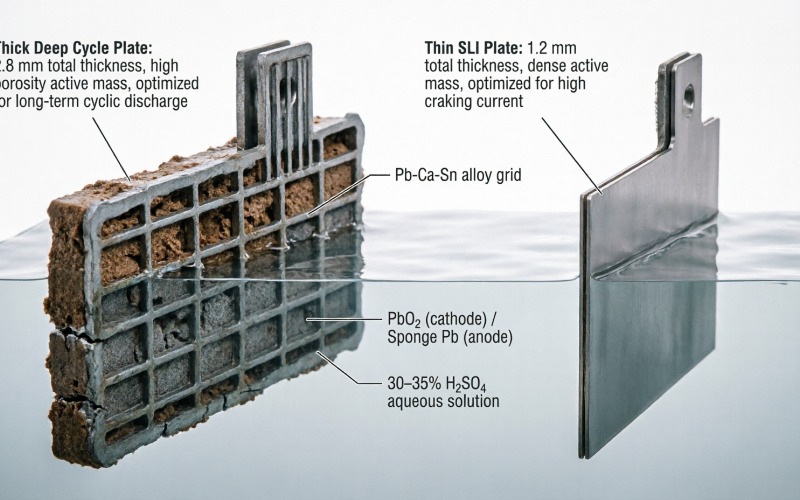
One of the most critical elements differentiating enterprise-grade AGM from commodity SLA is the deployment of sophisticated Grid Alloy Technology. The internal lead grid acts as both the structural framework for the active material and the primary current conductor. In basic SLA designs, the grid is often cast from standard lead-calcium alloys. While adequate for standby float applications, these basic grids are highly susceptible to anodic corrosion and physical expansion under heavy cycling.
Modern AGM engineering leverages high-tin, heavy-duty lead-calcium-tin alloys. The addition of precise tin ratios fortifies the grid structure, drastically enhancing its tensile strength and resistance to corrosive degradation. Furthermore, advanced continuous punching technology produces highly uniform grid structures with optimized grain alignments. This specialized Grid Alloy Technology ensures that the AGM battery maintains exceptional structural integrity even when subjected to extreme high-temperature environments or continuous Deep Cycle applications.
Understanding Depth of Discharge (DOD) and Cycle Life Dynamics
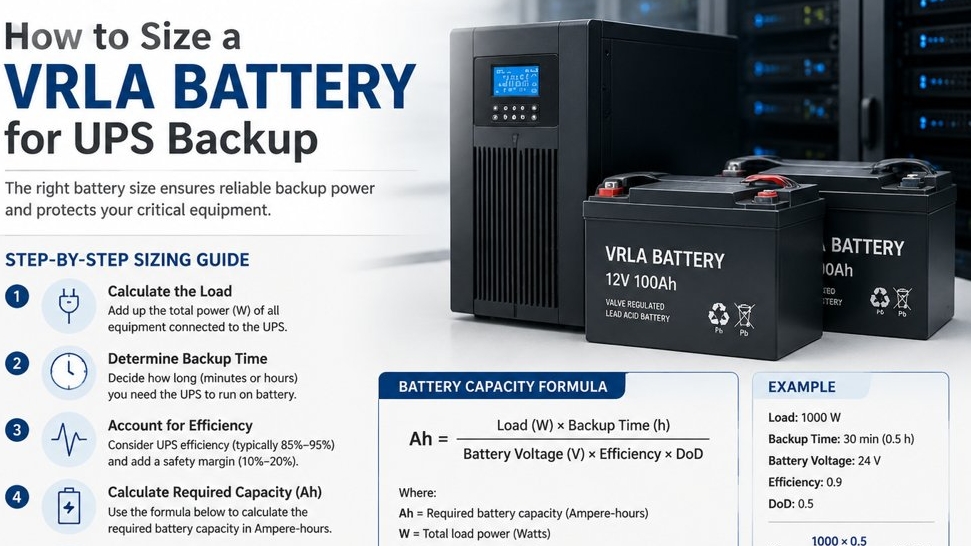
The concept of Depth of Discharge (DOD) is fundamental to total cost of ownership (TCO) calculations. DOD refers to the percentage of the battery's total capacity that has been consumed during a given discharge event. For example, discharging a 100Ah battery by 80Ah translates to an 80% DOD. The relationship between DOD and cycle life is inversely proportional: the deeper the discharge, the shorter the total cycle life.
Maximizing Cycle Life @ 80% DOD
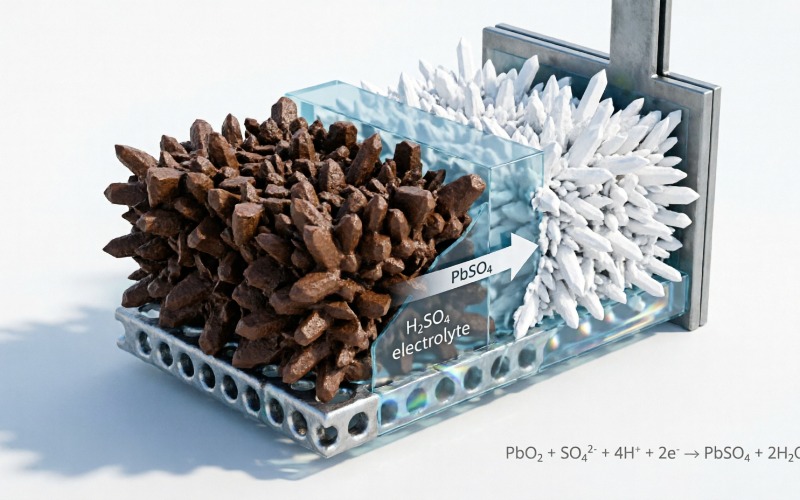
Standard SLA batteries struggle significantly under deep discharge profiles. Pushing a basic SLA to an 80% DOD frequently causes irreversible sulfation, wherein dense lead sulfate crystals permanently bind to the plates, permanently reducing capacity. In standard SLA, a regular Cycle Life @ 80% DOD might yield barely 200 cycles before total failure.
By contrast, AGM architecture is specifically engineered to endure severe depletion. The tightly compressed glass mats maintain physical pressure on the active paste, preventing it from shedding off the plates during the violent chemical expansions associated with deep discharging. Consequently, premium AGM systems routinely deliver over 500 cycles at a rigorous Cycle Life @ 80% DOD, effectively doubling or tripling the operational lifespan compared to baseline SLA. This makes AGM indispensable for off-grid solar arrays and rugged telecommunications infrastructure.
Field Experience: System Integration and ROI Optimization
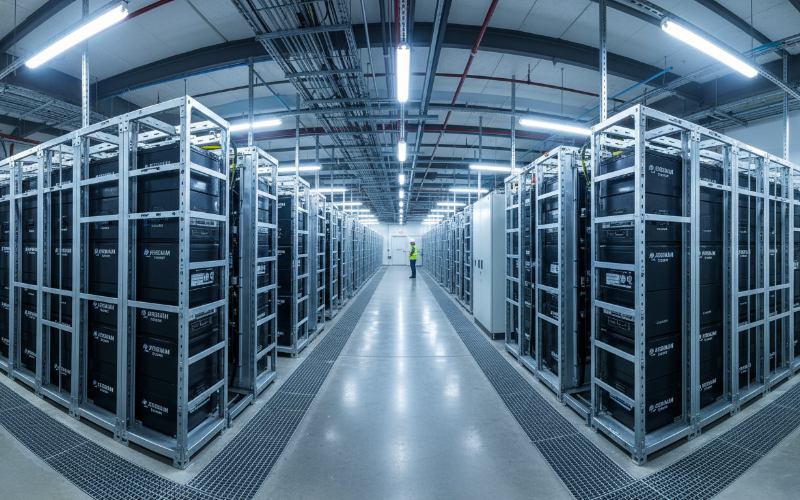
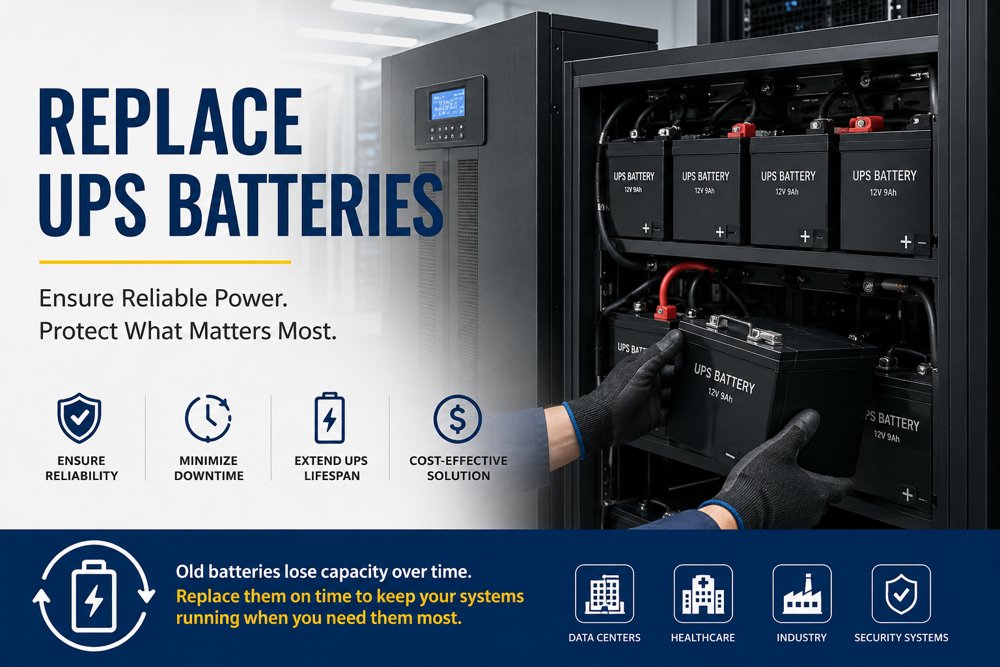
During a recent large-scale data center upgrade in Frankfurt, our engineering team encountered a critical junction requiring a definitive choice between deploying traditional SLA arrays or investing in an advanced AGM topology. The facility required a massive uninterruptible power supply capable of holding multi-megawatt IT loads for a 15-minute bridging period before generator synchronization.
Initially, standard SLA batteries appeared attractive due to a 20% lower upfront procurement cost. However, upon calculating the necessary footprint and factoring in Peukert's Law—which dictates that battery capacity decreases as the rate of discharge increases—the limitations of basic SLA became glaringly apparent. To meet the high-rate discharge demands without experiencing critical voltage sag, we would have needed to over-provision the SLA bank by nearly 35%.
By pivoting to high-density AGM technology featuring ultra-low internal resistance, we met the exact power specifications using a significantly smaller physical footprint. Furthermore, the resilient Grid Alloy Technology ensured that the AGM units would require replacement every 5 to 7 years, as opposed to the standard SLA lifecycle of 3 to 4 years in high-thermal environments. The advanced engineering of the AGM solution transformed a higher initial capital expenditure into a vastly superior operational ROI, proving that material science dictates financial outcomes. For integrators looking to push boundaries further, exploring high-end VRLA battery lines is essential.
Application Suitability: Matching Technology to Deployment
Selecting the correct chemistry requires aligning the operational parameters with the inherent strengths of the battery type. While AGM dominates high-tier requirements, standard SLA still holds logistical value in specific low-demand sectors.
When to Deploy Standard SLA Networks
Basic SLA configurations are highly suited for non-mission-critical applications characterized by steady, low-current drains and shallow cycling. Ideal deployment scenarios include standard emergency lighting circuits, low-voltage security alarm panels, and consumer-grade backup peripherals. In these environments, the battery is held in a continuous float charge state and rarely experiences a DOD exceeding 10%. Consequently, the sophisticated features of an AGM battery would be underutilized, making standard SLA the most economically viable choice.
When to Mandate Premium AGM Integration
AGM is the mandatory specification whenever the system demands high-rate power delivery, extreme environmental resilience, or frequent deep cycling. Integrators must specify AGM for hospital-grade UPS systems, remote telecom towers subjected to extreme temperature fluctuations, heavy-duty mobility equipment, and renewable energy integration. Organizations reliant on specialized power should reference guidelines from authoritative bodies like the IEEE when formulating their disaster recovery and power redundancy compliance standards. For highly detailed chemical insights, resources like Battery University provide excellent supplementary data.
Strategic Procurement and Final Considerations
Ultimately, determining what is the difference between agm and sla batteries comes down to evaluating internal chemistry against commercial expectations. System integrators must move beyond simple Ah (Ampere-hour) ratings and evaluate internal resistance, the robustness of the Grid Alloy Technology, and verifiable test data concerning Cycle Life @ 80% DOD. By prioritizing total cost of ownership and reliability over baseline procurement costs, engineers can design power infrastructures that are genuinely fail-safe.
Ready to upgrade your enterprise power architecture with industry-leading AGM technology? Partner with JYC Battery, a global pioneer in advanced energy storage manufacturing. Our engineering teams leverage cutting-edge manufacturing protocols to deliver batteries that redefine industry standards for durability and high-rate discharge performance.
Frequently Asked Questions
Can I use a standard SLA charger to charge an AGM battery?
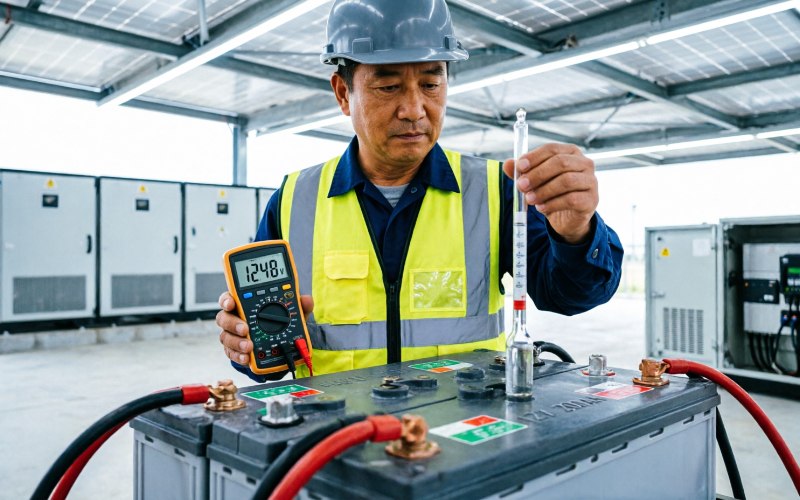
Yes, most standard SLA chargers are compatible with AGM batteries because both share a similar fundamental lead-acid chemistry. However, AGM batteries possess a highly efficient charge acceptance rate and ultra-low internal resistance, meaning they can safely handle much higher charging currents. Utilizing a smart charger specifically calibrated with a dedicated AGM charging profile will ensure optimal float voltage regulation, preventing thermal runaway and maximizing the battery's overall operational lifespan.
Does an AGM battery have a better Cycle Life @ 80% DOD than standard SLA?
Absolutely. Due to the tight physical compression of the glass mat separators and the integration of advanced Grid Alloy Technology, an AGM battery inherently minimizes the physical shedding of active lead materials from its plates. This unique structural stability translates directly to a drastically superior Cycle Life @ 80% DOD, often yielding between 400 and 600 complete cycles. Conversely, a basic standard SLA battery will rapidly degrade, suffer from severe sulfation, and ultimately fail under similar repeated deep discharge strain.
Why are AGM batteries heavier than standard SLA batteries of the same physical size?
AGM batteries often utilize thicker, high-purity lead plates packed extremely tightly together, alongside the heavily saturated boron silicate fiberglass mats. This highly optimized, dense internal construction leaves virtually no wasted void space inside the ABS casing, resulting in a higher specific gravity and increased overall physical mass. This impressive material density directly correlates with their enhanced capacity, superior high-rate power output, and exceptional long-term structural durability.






 en
en  fra
fra  spa
spa  de
de  vie
vie  ru
ru  ara
ara  kor
kor