This is more than just a series of products; it is an ecosystem we have built to achieve a more efficient, reliable, and sustainable energy future. Discover how our products and solutions can create t...
Our Industrial Batteries combine high-quality materials, robust design, and dependable performance. With excellent deep-cycle capability and easy maintenance, they are ideal for diverse applications. ...
JYC Transportation batteries are a category of power storage devices specifically designed for transportation scenarios, with core functions of providing continuous, stable, and high-efficiency power ...
JYC Motive Power batteries are deep-cycle energy storage devices specifically designed for industrial and commercial vehicles and specialized equipment. Their core function is to provide continuous an...
Focus on company news, product updates and market events. We provide continuous updates to bring you first-hand information, helping you stay informed about our development progress at all times.
Sealed Lead-Acid (SLA) batteries, operating on VRLA technology, are maintenance-free energy storage systems utilized primarily for stationary backup power. For B2B system integrators, they deliver unparalleled upfront Return on Investment (ROI) and reliable high-rate discharge for Uninterruptible Power Supplies (UPS), security grids, and critical data center infrastructure.
Key Takeaways
Core Applications: System integrators primarily deploy SLA batteries in stationary applications like UPS data center backups, telecommunications, and emergency lighting grids.
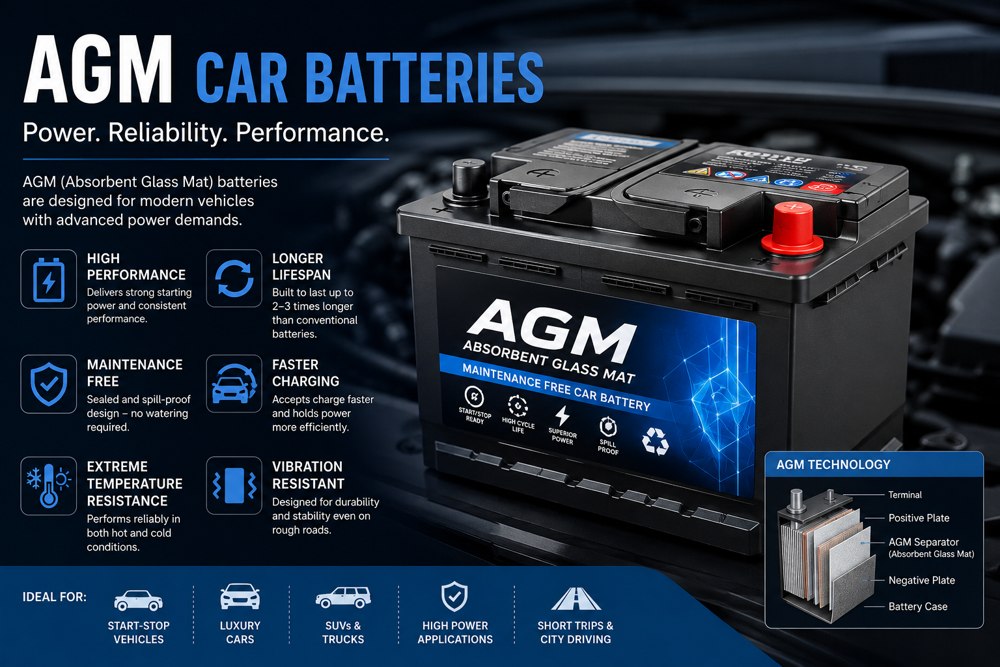
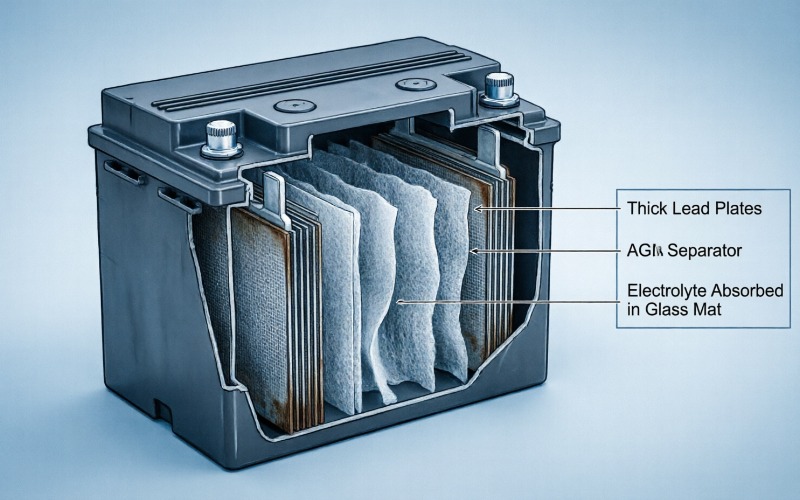
Technological Variants: They are available in Absorbent Glass Mat (AGM) and Gel configurations, each tailored for specific thermal environments and discharge profiles.
ROI vs. Performance Logic: While advanced Lithium-ion offers superior Cycle Life @ 80% DOD, SLA provides unmatched cost-efficiency for pure standby power scenarios where daily cycling is not required.
Maintenance & Integration: The sealed VRLA design eliminates water topping requirements, simplifying rack integration and ensuring zero acid spills.
If you are engineering a high-stakes power infrastructure, understanding exactly what are SLA batteries used for is critical to your project's success. As a system integrator, your primary goal is balancing performance reliability against upfront capital expenditure. Sealed Lead-Acid (SLA) batteries have remained the dominant force in the industrial power storage sector for decades. This comprehensive guide will explore the precise applications, electrochemical limitations, and integration strategies for these robust energy storage units.
Core Engineering Principles of Sealed Lead-Acid (SLA) Technology
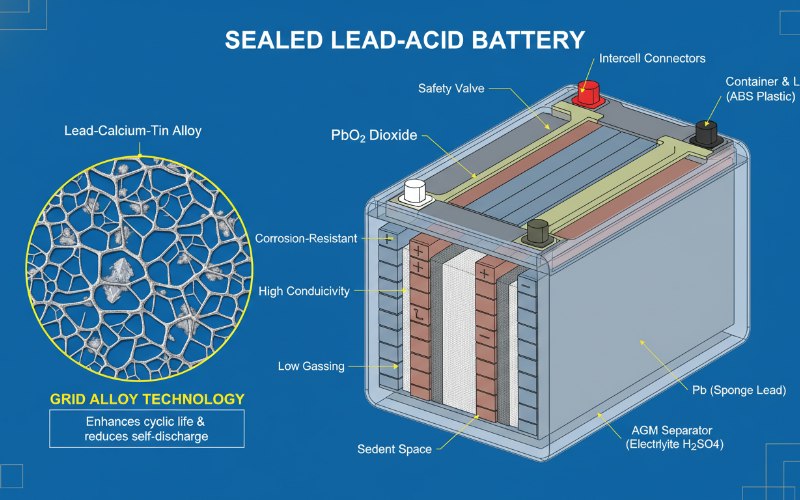
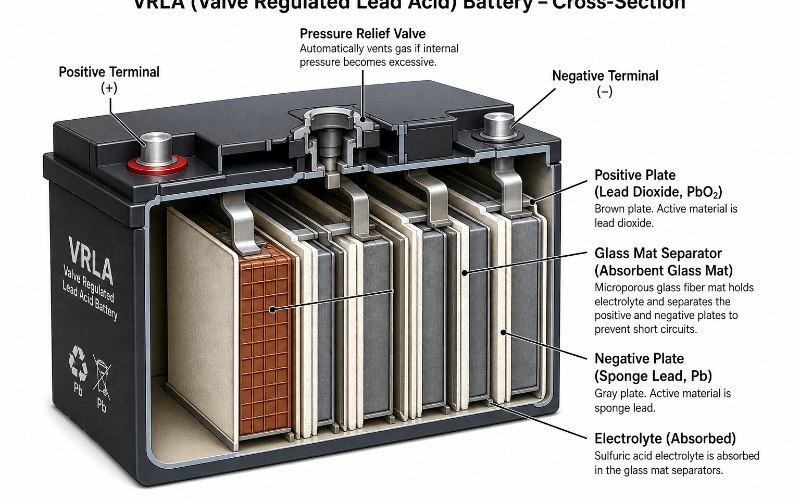
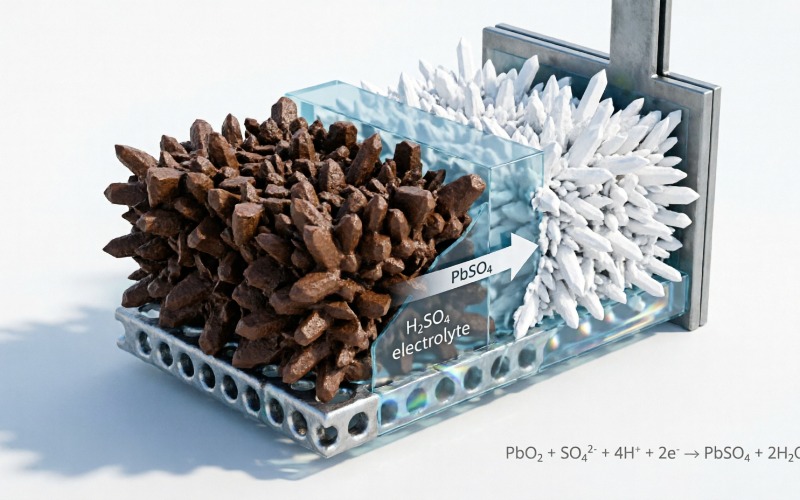
Before exploring what are SLA batteries used for, we must understand the fundamental engineering behind them. SLA batteries, interchangeably referred to as VRLA Lead-Acid battery systems, represent a massive leap over traditional flooded lead-acid variants. They are hermetically sealed and utilize a precise one-way pressure relief valve. Consequently, oxygen generated at the positive plate recombines with hydrogen at the negative plate. This internal recombination cycle produces water, effectively eliminating the need for routine maintenance.
Grid Alloy Technology and Charge Acceptance
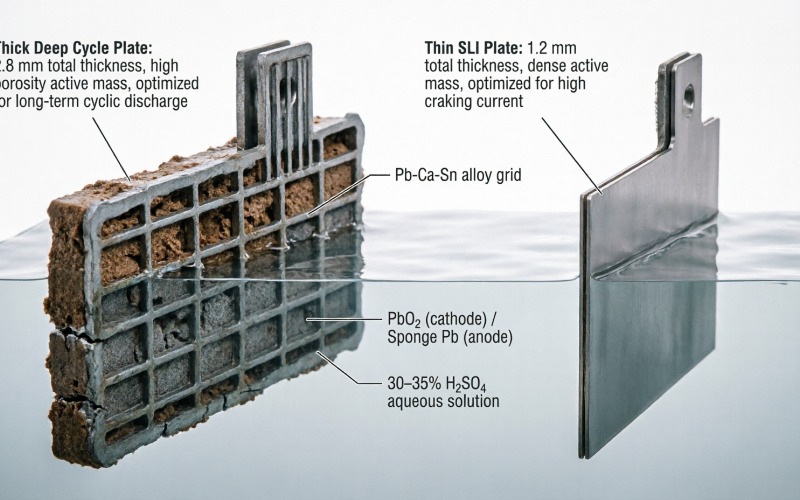
The performance of any industrial battery heavily relies on its internal architecture. Modern SLA batteries utilize advanced Grid Alloy Technology. By incorporating heavy-duty calcium-lead grids, manufacturers significantly minimize internal resistance. This engineering choice dramatically enhances charge acceptance. Furthermore, it lowers the self-discharge rate to less than 3% per month at optimal temperatures. Therefore, SLA units can sit in standby mode for extended durations without losing critical capacity.
Primary Industrial Applications: What Are SLA Batteries Used For?
System integrators deploy SLA technology across a vast array of mission-critical sectors. The unique electrochemical properties of VRLA systems make them perfectly suited for environments requiring massive bursts of energy rather than continuous deep cycling.
Uninterruptible Power Supplies (UPS) and Data Centers
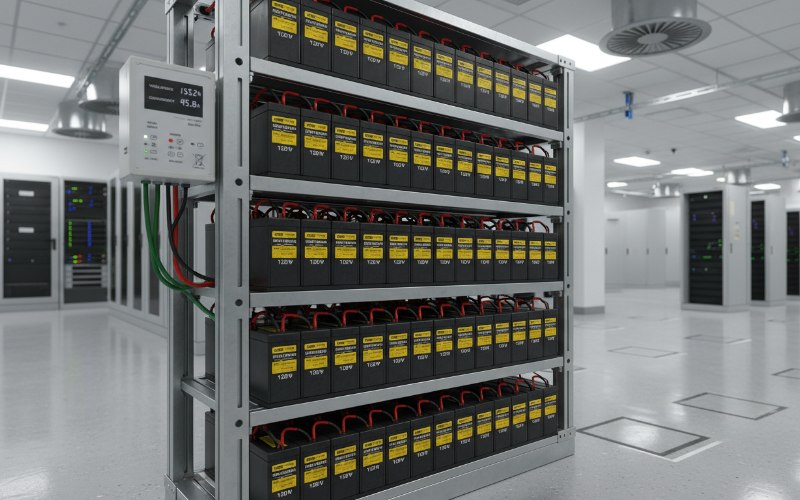
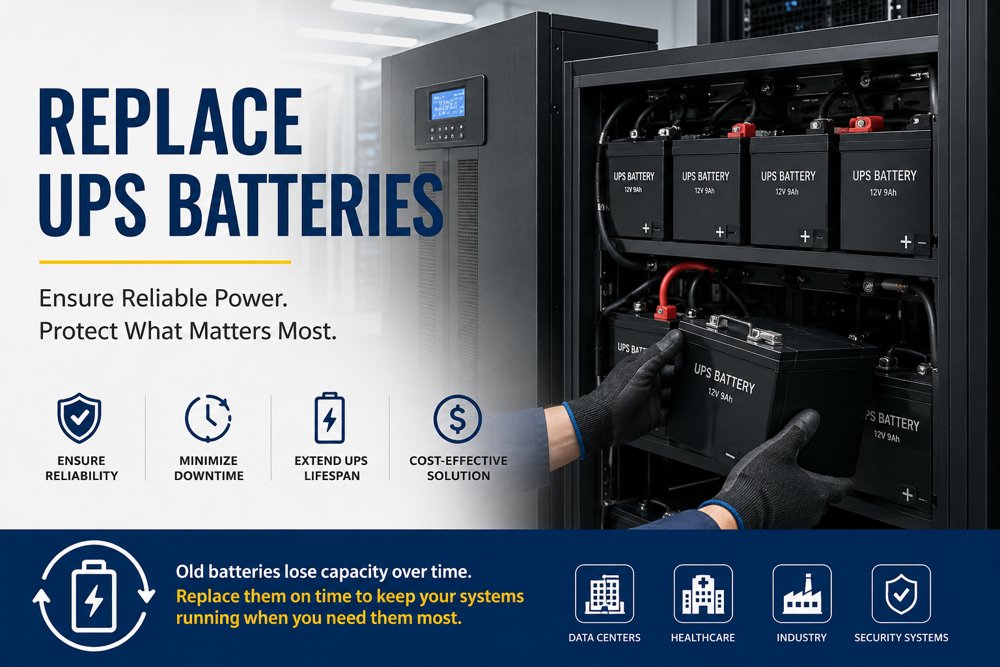
When asked what are SLA batteries used for, the most prominent answer is Uninterruptible Power Supplies (UPS). Data centers run the modern digital economy. When the main utility grid fails, these facilities rely entirely on their UPS systems to bridge the power gap until diesel generators spool up. This critical transition requires an instantaneous surge of high-rate discharge current. SLA batteries excel at this specific task. Their low internal resistance allows for massive power delivery over a short 5 to 15-minute window. This makes them the undisputed champions of short-duration backup power. View our UPS lead acid battery
Telecommunications and Network Infrastructure
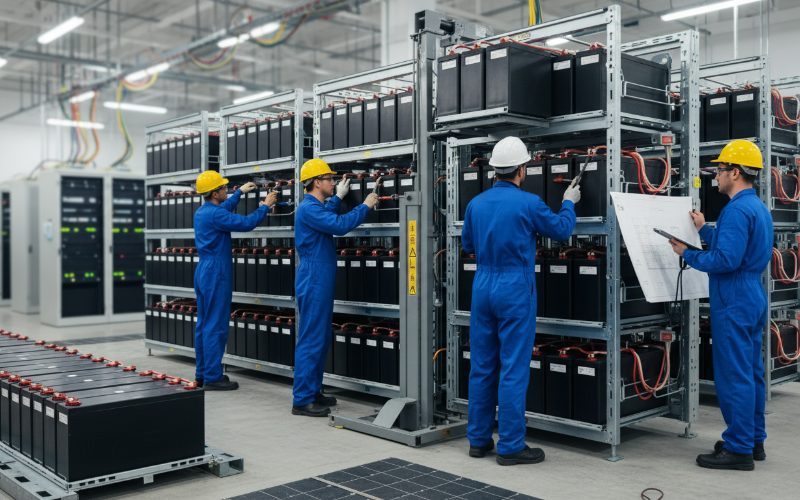
Telecommunication towers and broadband hubs require consistent 48V DC power to maintain signal integrity during rolling blackouts. Integrators frequently stack 12V SLA front-terminal batteries in specialized 19-inch telecom racks. The sealed nature of VRLA technology ensures that these unmanned, remote cellular sites remain operational without the need for monthly technician visits. The rugged casing also protects the internal plates from the minor seismic vibrations often experienced on elevated platforms. View our lead acid battery for telecom.
Security Systems and Emergency Lighting Grids
Life safety systems cannot afford a millisecond of downtime. Fire alarms, access control matrices, and emergency egress lighting universally rely on small-scale SLA batteries. Because these systems draw minimal current during standby but require absolute certainty of power during an emergency, the high shelf-life and reliability of the VRLA Lead-Acid battery make it the only logical choice mandated by strict life-safety codes globally.
Renewable Energy Storage Systems
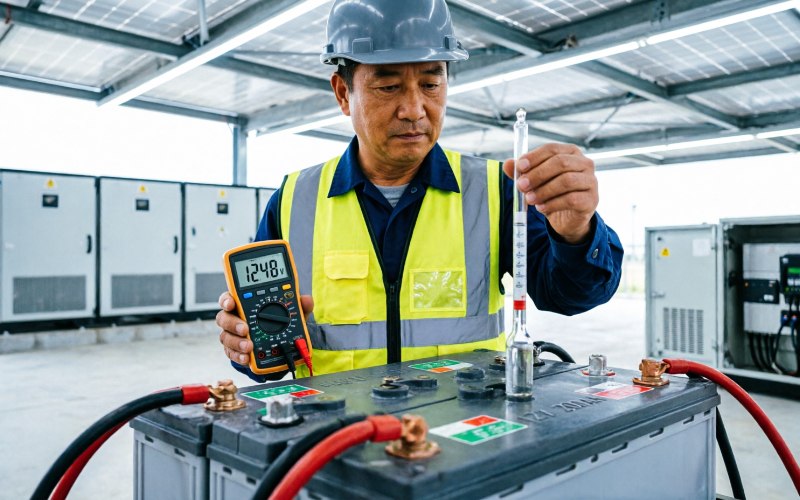
While the industry is shifting toward advanced Lithium-ion (LiFePO4) energy storage battery systems for daily solar cycling, SLA still holds a place in renewable energy. Specifically, in remote off-grid cabins, rural telemetry stations, and solar street lighting, SLA batteries provide a highly cost-effective energy buffer. Gel-based SLA variants are particularly effective here, as the silica-thickened electrolyte prevents acid stratification during the slow charging cycles typical of photovoltaic panels.
Technical Specification Matrix: SLA vs. LiFePO4
To truly master what are SLA batteries used for, integrators must understand how they compare to modern alternatives. The following matrix outlines the critical engineering differences that dictate return on investment and system architecture.
Technical Parameter
SLA (VRLA Lead-Acid)
Advanced LiFePO4
Primary Application focus
Standby / Float Backup
Daily Deep Cycling
Cycle Life @ 80% DOD
300 - 500 Cycles
4000+ Cycles
Initial CAPEX (ROI Factor)
Very Low (Excellent upfront ROI)
High (Long-term ROI)
Charge Acceptance Rate
Moderate (0.1C to 0.3C)
High (0.5C to 1C)
Maintenance Requirement
Zero (Visual inspection only)
Zero (BMS required)
Optimal Operating Temp
20°C to 25°C
15°C to 35°C
Field Experience: A Real-World Data Center Deployment
To move beyond theory, let us examine a specific field scenario. During a recent 5-megawatt data center upgrade in Frankfurt, our integration team faced a critical choice. The client demanded Tier IV reliability but had a strictly restricted initial capital budget. The facility experienced utility grid fluctuations approximately twice a year, meaning daily cycling was entirely unnecessary. We needed to guarantee 10 minutes of runtime at full load to allow the automated transfer switches to engage the backup turbines.
By selecting high-rate discharge AGM SLA batteries with advanced Grid Alloy Technology, we successfully reduced the upfront energy storage costs by 40% compared to a proposed lithium alternative. We meticulously mapped out the thermal characteristics of the server containment aisles. Consequently, we ensured the battery racks maintained an optimal 25 degrees Celsius, protecting the lifespan of the VRLA cells. This deployment perfectly highlighted exactly what SLA batteries are used for: maximizing instantaneous reliability while maintaining strict budgetary compliance for standby power applications.
Sizing and Designing SLA Battery Banks for System Integrators
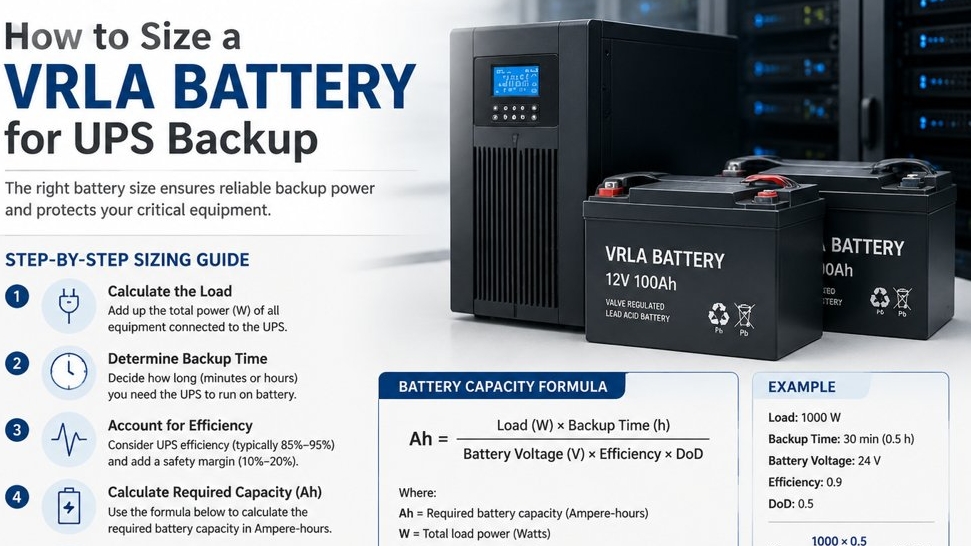
Designing an SLA battery bank requires rigorous adherence to load profiling. Integrators must account for Peukert's Law, which states that as the rate of discharge increases, the available capacity of the battery decreases. When specifying an SLA system for a UPS, you cannot simply divide the total watt-hours by the load. A battery rated for 100 Amp-hours at a 20-hour rate will deliver significantly less total energy if drained completely in 15 minutes.
Furthermore, temperature compensation is non-negotiable. For every 8 degrees Celsius above the optimal 25 degrees baseline, the expected service life of an SLA battery is effectively halved. Integrators must utilize sophisticated battery management monitors and active cooling systems to protect their investment. To ensure compliance with global standards, integrators should reference guidelines published by Battery Council International and relevant IEEE standards for stationary battery installations.
Depth of Discharge (DOD) and Cycle Life Dynamics
Understanding Depth of Discharge (DOD) is crucial when evaluating what are SLA batteries used for. If an application requires draining the battery completely every single day, SLA is the wrong technology. However, in standby applications, the battery sits at a 100% state of charge on a continuous float voltage. When a grid failure occurs, the battery might only discharge to 50% DOD before power is restored. In these shallow discharge scenarios, high-quality VRLA units can last anywhere from 5 to 10 years, depending on environmental controls and plate thickness.
Strategic Integration and Conclusion
In conclusion, when determining what are SLA batteries used for, the answer revolves entirely around standby reliability, surge power delivery, and cost-effectiveness. As B2B system integrators, your ability to specify the exact energy storage chemistry for the right application dictates your overall project success. While advanced Lithium-ion (LiFePO4) energy storage battery systems dominate the heavy cycling market, the VRLA Lead-Acid battery remains the undisputed king of Uninterruptible Power Supplies and emergency grid infrastructure. If you are looking to secure a robust, maintenance-free, and highly economical power backup system, high-performance SLA batteries represent your optimal engineering choice. Connect with our technical team today to discuss your next grid-scale integration project.
Frequently Asked Questions
What are SLA batteries used for in renewable energy?
They are primarily used as cost-effective, short-term energy storage buffers in off-grid solar and wind systems. While they do not offer the daily deep cycling longevity of lithium systems, they are frequently deployed in remote telecom solar arrays and rural lighting projects where initial budget constraints outweigh the need for extended high cycle life.
How does the cycle life of SLA compare to advanced Lithium-ion?
SLA batteries typically offer 300 to 500 cycles at a 50% Depth of Discharge (DOD). In stark contrast, an advanced Lithium-ion (LiFePO4) energy storage battery can easily exceed 4000 cycles at 80% DOD. This makes Lithium vastly superior for daily cycling applications, but SLA remains the more economical choice for pure standby operations.
What is the ideal operating temperature for VRLA Lead-Acid batteries?
The optimal operating temperature for almost all VRLA Lead-Acid batteries is strictly 25 degrees Celsius (77 degrees Fahrenheit). Thermal management is critical; every 8-degree Celsius increase above this baseline generally halves the expected service life of the battery due to accelerated internal grid corrosion.
Can SLA batteries be mounted in any orientation?
Yes, due to their entirely sealed design and immobilized electrolyte structure (utilizing either Absorbent Glass Mat or silica Gel), SLA batteries can be safely installed in multiple orientations without the risk of acid leakage. However, continuous inverted mounting (upside down) is generally discouraged by manufacturers to protect the integrity of the pressure relief valves over time.




 en
en  fra
fra  spa
spa  de
de  vie
vie  ru
ru  ara
ara  kor
kor