This is more than just a series of products; it is an ecosystem we have built to achieve a more efficient, reliable, and sustainable energy future. Discover how our products and solutions can create t...
Our Industrial Batteries combine high-quality materials, robust design, and dependable performance. With excellent deep-cycle capability and easy maintenance, they are ideal for diverse applications. ...
JYC Transportation batteries are a category of power storage devices specifically designed for transportation scenarios, with core functions of providing continuous, stable, and high-efficiency power ...
JYC Motive Power batteries are deep-cycle energy storage devices specifically designed for industrial and commercial vehicles and specialized equipment. Their core function is to provide continuous an...
Focus on company news, product updates and market events. We provide continuous updates to bring you first-hand information, helping you stay informed about our development progress at all times.
When deploying critical power infrastructure, system engineers and B2B integrators frequently ask: how do you charge a sla battery effectively to maximize its operational lifespan? Sealed Lead-Acid (SLA) batteries, a subset of VRLA Lead-Acid battery technology, require highly precise charging profiles. Unlike forgiving legacy flooded batteries, SLA batteries utilize a closed, recombinant chemistry. Any deviation from optimal charging voltages can lead to catastrophic dry-out, thermal runaway, or irreversible plate sulfation. This comprehensive guide breaks down the essential technical protocols, optimal charging architectures, and field-tested strategies necessary for managing large-scale SLA battery banks.
Bottom Line Up Front: To properly charge an SLA battery, you must implement a smart three-stage charging profile: Bulk (constant current limited to 0.3C), Absorption (constant voltage around 14.4V), and Float (maintenance voltage around 13.6V). Precise temperature compensation (-3mV/°C/cell) is absolutely critical to maximize Cycle Life @ 80% DOD and prevent thermal runaway.
Key Takeaways
Implement a precise three-stage charging regimen to ensure optimal Return on Investment (ROI) and performance.
Strictly regulate initial charging currents, keeping them between 0.1C and 0.3C of the battery's total amp-hour rating.
Always apply precise temperature compensation to prevent overcharging in warm environments and undercharging in cold ones.
Understand how Depth of Discharge (DOD) affects your charging frequency and overall system cycle life.
Utilize advanced chargers with low AC ripple current to protect internal Grid Alloy Technology.
The Core Chemistry Behind SLA Battery Charging
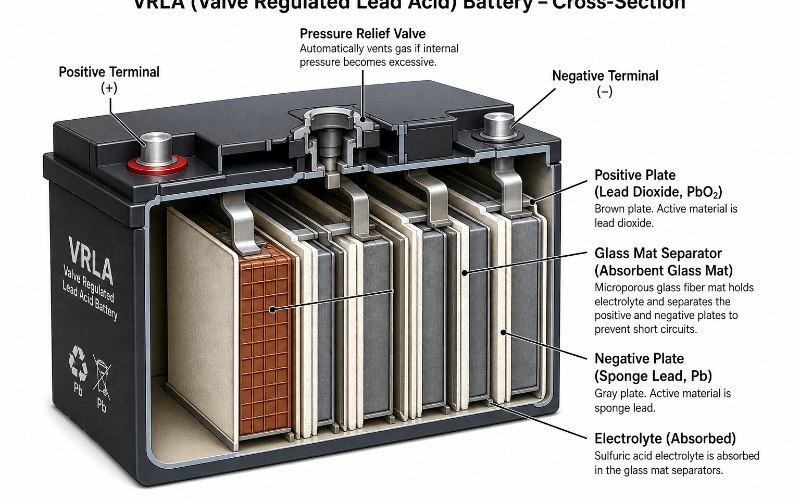
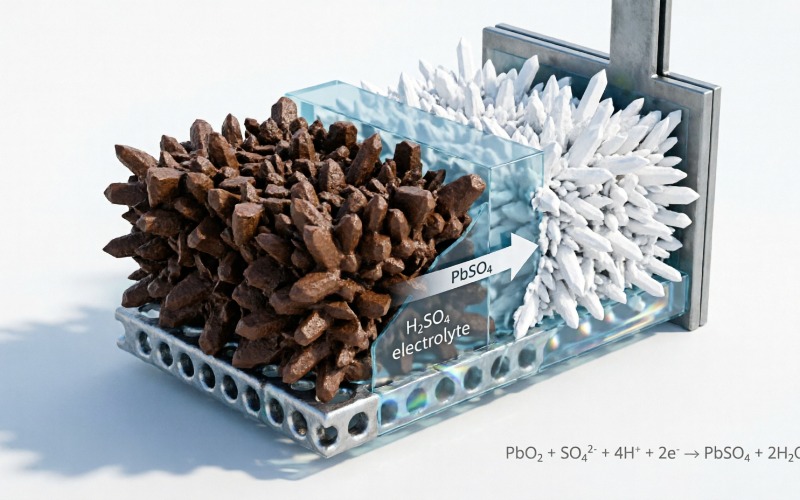
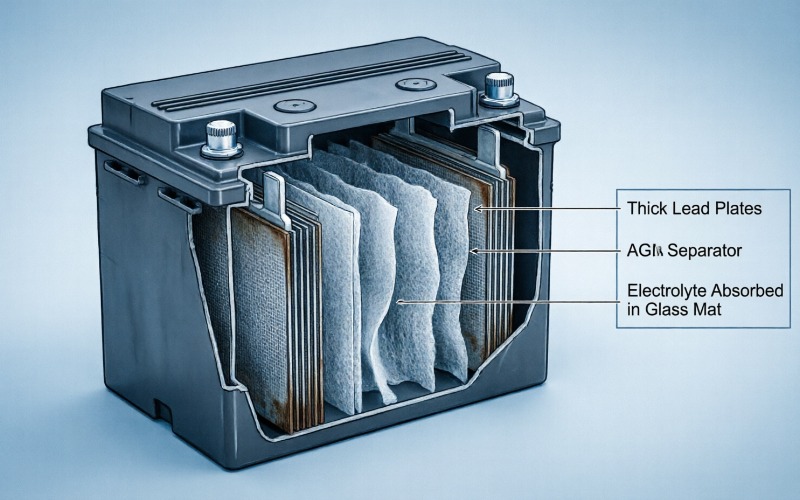
Understanding how do you charge a sla battery begins with understanding its internal VRLA (Valve-Regulated Lead-Acid) chemistry. Unlike standard flooded lead-acid batteries, SLA batteries operate on an oxygen recombination principle. During the charging process, oxygen is generated at the positive plate. Instead of venting out into the atmosphere, this oxygen migrates through the Absorbent Glass Mat (AGM) or gelled electrolyte to the negative plate, where it recombines with hydrogen to form water.
This closed-loop system makes SLA batteries virtually maintenance-free, but it also makes them highly sensitive to overcharging. If the charging voltage exceeds the internal recombination rate, the battery will build up excess gas pressure. The safety valves will then open, venting valuable moisture. Once an SLA battery dries out, its capacity drops permanently. Therefore, selecting the correct JYC Battery charging profile is a fundamental requirement for system longevity.
The Three-Stage Charging Architecture Explained
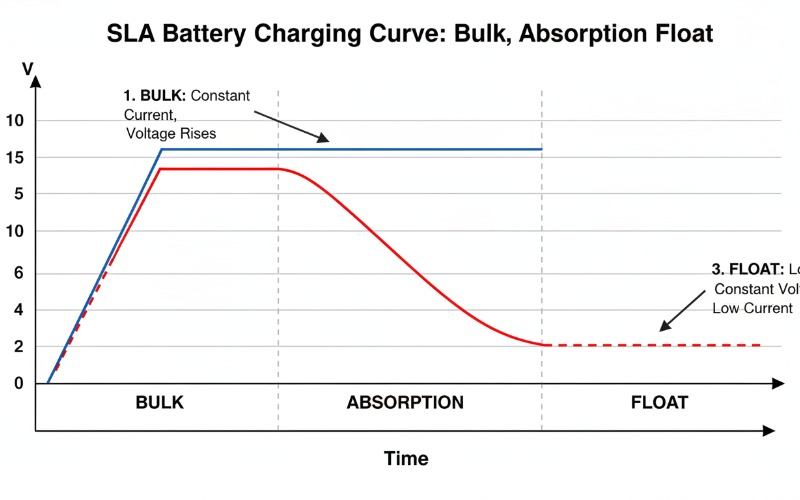
For B2B system integrators designing Uninterruptible Power Supplies (UPS), solar storage, or telecom backup networks, a single-stage "dumb" charger is unacceptable. The definitive answer to how do you charge a sla battery lies in the sophisticated three-stage charging algorithm. This method rapidly restores capacity while protecting the integrity of the battery plates.
Phase 1: The Bulk Charge (Constant Current)
The first stage of the process is the Bulk phase. During this stage, the charger delivers a constant current to the battery while the voltage naturally rises. The primary goal here is to quickly return the battery to about 70% to 80% of its State of Charge (SOC). It is vital to limit this initial current. Industry standards dictate that the bulk charge current should be limited to roughly 0.1C to 0.3C (where C is the battery's Amp-Hour capacity). For example, a 100Ah SLA battery should ideally be charged at 10 to 30 Amps. Pushing higher currents can cause excessive heat generation, warping the internal plates and compromising the Grid Alloy Technology.
Phase 2: The Absorption Charge (Constant Voltage)
Once the battery voltage reaches the predefined maximum limit (typically between 14.4V and 14.7V for a 12V system at 25°C), the charger switches to the Absorption phase. The voltage is held perfectly constant while the current gradually declines as the battery's internal resistance increases. This phase is crucial for topping off the remaining 20% to 30% of the battery's capacity. Skipping this phase will result in chronic undercharging, leading to progressive plate sulfation. The absorption phase usually lasts until the charging current drops to approximately 0.01C.
Phase 3: The Float Charge (Maintenance)
The final stage is the Float phase. How do you charge a sla battery once it is fully saturated? You lower the voltage to a safe, continuous maintenance level. For a standard 12V SLA battery, this is typically set between 13.5V and 13.8V at room temperature. The float charge provides just enough trickle current (often a few milliamps) to counteract the battery's natural self-discharge rate. In standby applications like telecom or UPS systems, batteries spend 99% of their lives in the float stage, making extreme precision at this voltage level critical for maximizing ROI.
Charging Stage
Target Voltage (12V System @ 25°C)
Current Regulation
Purpose & System Impact
Bulk (Stage 1)
Rising steadily to 14.4V
Constant (Limited to 0.1C - 0.3C)
Restores 80% capacity quickly; high heat generation risk.
Absorption (Stage 2)
Held Constant at 14.4V - 14.7V
Declining to ~0.01C
Saturates the plates; prevents internal lead sulfation.
Float (Stage 3)
Held Constant at 13.5V - 13.8V
Trickle (mAs) only
Maintains 100% SOC; vital for standby power operations.
Equalization
Not Recommended for standard SLA
N/A
Risk of severe off-gassing and permanent dry-out.
Technical Specification Matrix: Standard SLA Charging Architecture
Thermal Management and Temperature Compensation
One of the most frequent points of failure in industrial power storage applications is ignoring ambient temperature. Battery chemistry is fundamentally governed by thermodynamics. The standard charging voltages listed on specification sheets are strictly calculated for a baseline temperature of 25°C (77°F). If the environment deviates from this baseline, the charging voltage must be actively compensated.
The universal temperature compensation coefficient for SLA batteries is typically -3mV to -4mV per degree Celsius, per cell. Since a 12V battery contains 6 cells, the total compensation is roughly -18mV to -24mV per degree Celsius for the entire block. If a system integrator installs a battery bank in a hot environment without temperature-compensated charging, the standard float voltage will act as a devastating overcharge. This accelerates positive grid corrosion and invites thermal runaway. Conversely, in freezing environments, failing to increase the charge voltage will result in chronic undercharging and sulfation. Organizations like Battery University consistently highlight proper thermal management as the cornerstone of battery longevity.
First-Hand Engineering Experience in the Field
In my 20+ years of deploying enterprise-grade power storage systems, I have witnessed countless failures stemming from improper charging configurations. During a massive deployment of industrial UPS systems for a data center in Nevada, the local electrical contractors asked: how do you charge a sla battery bank in an unconditioned, hot-aisle environment? They had initially hooked up standard commercial chargers with rigid float voltages set to 13.8V.
Within six months, the batteries were dangerously hot to the touch and exhibiting severe case swelling. The lack of thermal compensation, combined with high ambient heat, was actively boiling the internal gel. We immediately retrofitted the system with smart Battery Management Systems (BMS) equipped with external thermistor probes attached directly to the battery casings. By dynamically throttling the float voltage down during peak heat hours, we completely arrested the thermal runaway process, saving the client tens of thousands of dollars in premature replacement costs. Experience proves that smart charging is not an optional upgrade; it is an absolute necessity.
Depth of Discharge (DOD) and Its Impact on Charging
The way you approach charging must be heavily influenced by the system's Depth of Discharge (DOD). DOD refers to the percentage of the battery's total capacity that has been consumed. An SLA battery's cycle life is inversely proportional to its DOD. For instance, a high-quality SLA battery might deliver 1,200 cycles if discharged to only 30% DOD. However, if that same battery is pushed to a Cycle Life @ 80% DOD, it may only yield 300 to 400 total cycles.
When addressing how do you charge a sla battery after a deep discharge event, time is the critical factor. SLA batteries must not be left in a deeply discharged state. Lead sulfate crystals begin forming on the negative plates almost immediately. If left uncharged for more than 24 hours, these crystals harden, reducing the active surface area of the plate and permanently crippling the battery's capacity. System integrators must ensure that their automated charging systems initiate the bulk charging phase immediately upon the return of AC power.
The Role of Advanced Grid Alloy Technology
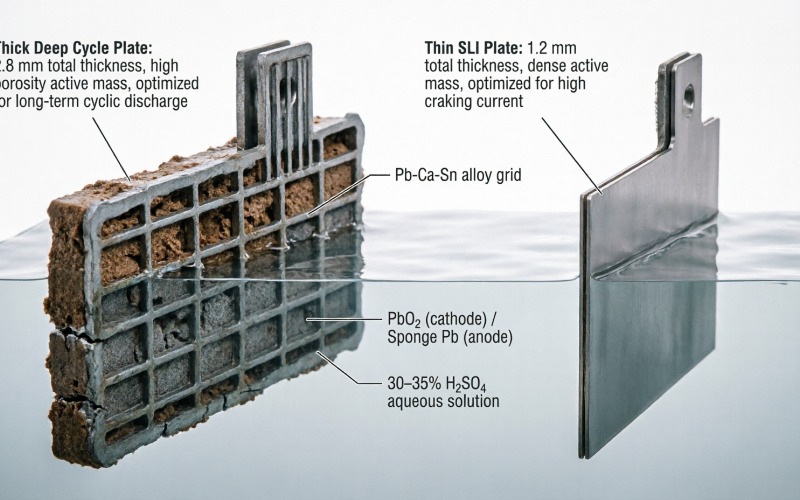
Modern VRLA Lead-Acid battery solutions utilize sophisticated Grid Alloy Technology to enhance both charge acceptance and overall durability. Manufacturers incorporate precise blends of lead, calcium, and tin to form the internal grids. This advanced metallurgical approach significantly reduces the internal electrical resistance, allowing the battery to absorb charge more efficiently while minimizing waste heat. Furthermore, these heavy-duty alloys are specifically engineered to resist the slow corrosion that naturally occurs during long-term float charging. By pairing advanced grid technology with a ripple-free, three-stage charger, integrators can extract maximum ROI from their energy storage investments.
Comparing Charging: SLA vs. Advanced Lithium-ion (LiFePO4)
As the power storage industry evolves, B2B integrators often weigh SLA technology against advanced Lithium-ion (LiFePO4) energy storage batteries. While both require strict charging regimens, the logic differs significantly. SLA batteries are highly sensitive to undercharging and require a prolonged absorption phase to dissolve sulfation. They also mandate a continuous float charge to combat self-discharge.
Conversely, LiFePO4 batteries actually prefer not to be stored at 100% SOC. They do not require a float charge and do not suffer from sulfation. However, lithium systems require highly complex electronic Battery Management Systems (BMS) to perfectly balance individual cell voltages. According to the latest IEEE standards, while lithium offers superior cycle life and weight advantages, SLA remains unparalleled in terms of upfront cost-efficiency, reliability in harsh temperatures, and simplified safety profiles for massive standby applications.
Common SLA Charging Mistakes to Avoid
To guarantee peak performance, system operators must rigorously avoid several common charging errors:
Using Automotive Alternators Direct to SLA: Vehicle alternators provide a single, high-voltage output that can easily overcharge a deep-cycle SLA battery. Always use a proper DC-to-DC smart charger in mobile applications.
High AC Ripple Current: Cheap chargers often leak AC ripple current into the DC output. This micro-cycling causes excess heat and significantly degrades battery lifespan. Ensure your charger guarantees less than 1% AC ripple.
Applying Equalization Charges: While flooded batteries benefit from high-voltage equalization to mix the electrolyte, applying an equalization charge to a sealed VRLA battery will force it to vent gas, permanently drying it out.
Conclusion: Maximizing Your Power Storage ROI
Answering the complex question of how do you charge a sla battery ultimately comes down to precise control. By mastering the three-stage charging algorithm, strictly enforcing temperature compensation, and respecting the limits of your Depth of Discharge, you can dramatically extend the life of your battery banks. Whether you are managing telecom towers, medical facility UPS systems, or off-grid solar arrays, treating your SLA batteries with exacting technical care ensures seamless power delivery and maximizes your operational ROI. For specialized, high-performance battery systems built with advanced Grid Alloy Technology, partnering with top-tier manufacturers like JYC Battery is the most reliable strategy for long-term success.
Frequently Asked Questions (FAQ)
How long does it take to fully charge an SLA battery?
The total charging time depends entirely on the Depth of Discharge (DOD) and the charger's current output. Typically, a fully depleted SLA battery takes between 12 to 16 hours to reach a true 100% State of Charge. The Bulk phase restores the first 80% relatively quickly (within 4 to 6 hours), but the crucial Absorption phase requires an extended period at a lower current to fully saturate the lead plates.
Can you leave an SLA battery on a charger indefinitely?
Yes, but only if you are using a smart charger equipped with an automatic Float (maintenance) stage. A high-quality float charger will drop the voltage to a safe 13.5V-13.8V, preventing overcharging while offsetting natural self-discharge. Leaving an SLA battery on a cheap, single-stage charger indefinitely will boil the electrolyte and destroy the battery.
How do you charge an SLA battery after a severe deep discharge?
If an SLA battery has been severely over-discharged (e.g., dropped below 10.5V), many smart chargers will fail to recognize the battery and refuse to start. You must parallel the dead battery with a healthy battery of the same voltage for a few hours to trick the smart charger into engaging. Once the voltage creeps up, disconnect the healthy battery and allow the three-stage charger to complete a full cycle. Do this immediately to prevent fatal plate sulfation.
What is the optimal charging current for VRLA Lead-Acid batteries?
The globally recognized optimal charging current for VRLA and SLA batteries is between 10% and 30% of the battery's total Amp-Hour capacity (0.1C to 0.3C). For a 50Ah battery, the ideal charger should output between 5 Amps and 15 Amps. Going below 0.1C may not adequately break up lead sulfate, while exceeding 0.3C will cause severe thermal stress.






 en
en  fra
fra  spa
spa  de
de  vie
vie  ru
ru  ara
ara  kor
kor