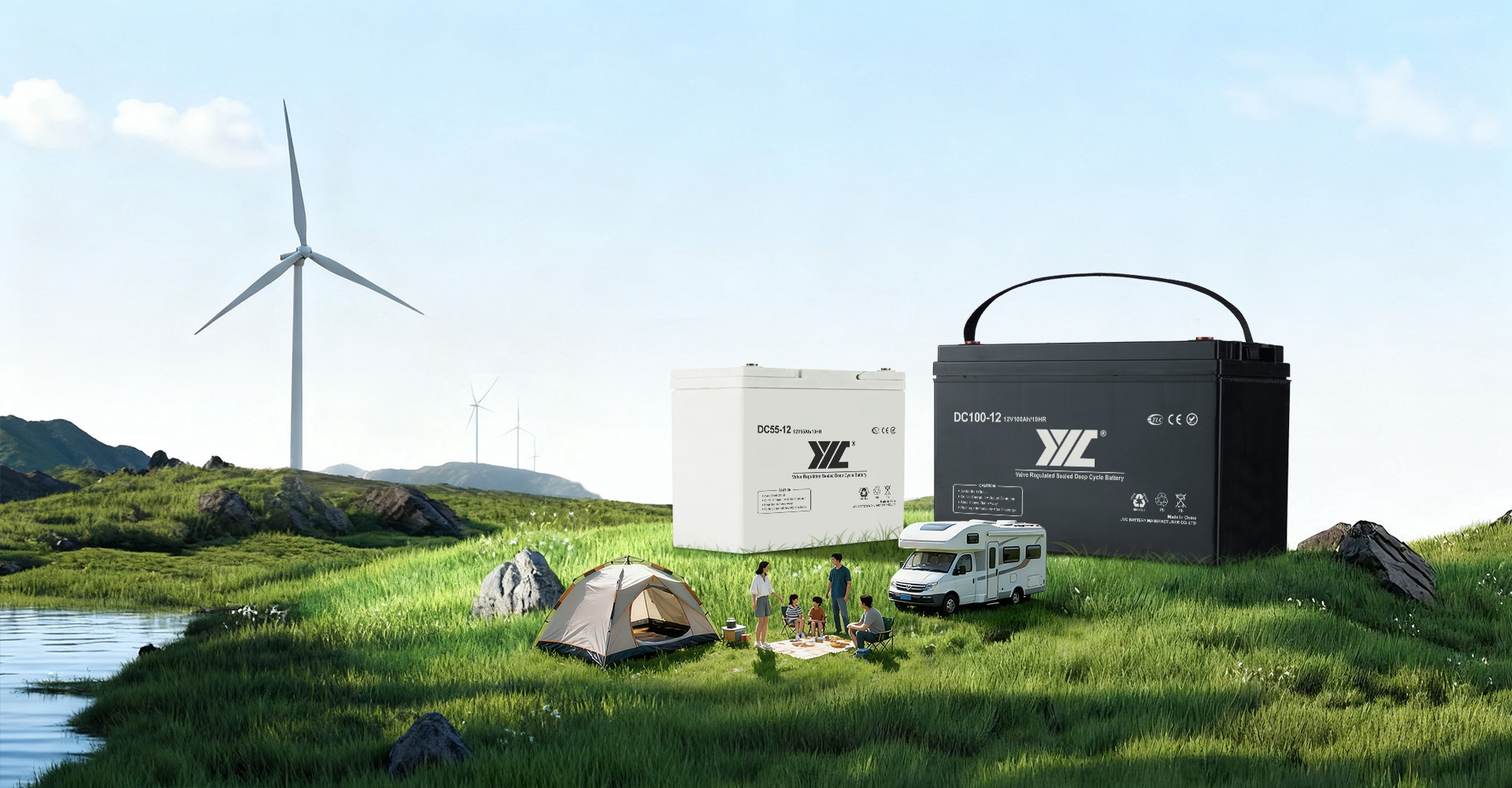
This is more than just a series of products; it is an ecosystem we have built to achieve a more efficient, reliable, and sustainable energy future. Discover how our products and solutions can create t...
Our Industrial Batteries combine high-quality materials, robust design, and dependable performance. With excellent deep-cycle capability and easy maintenance, they are ideal for diverse applications. ...
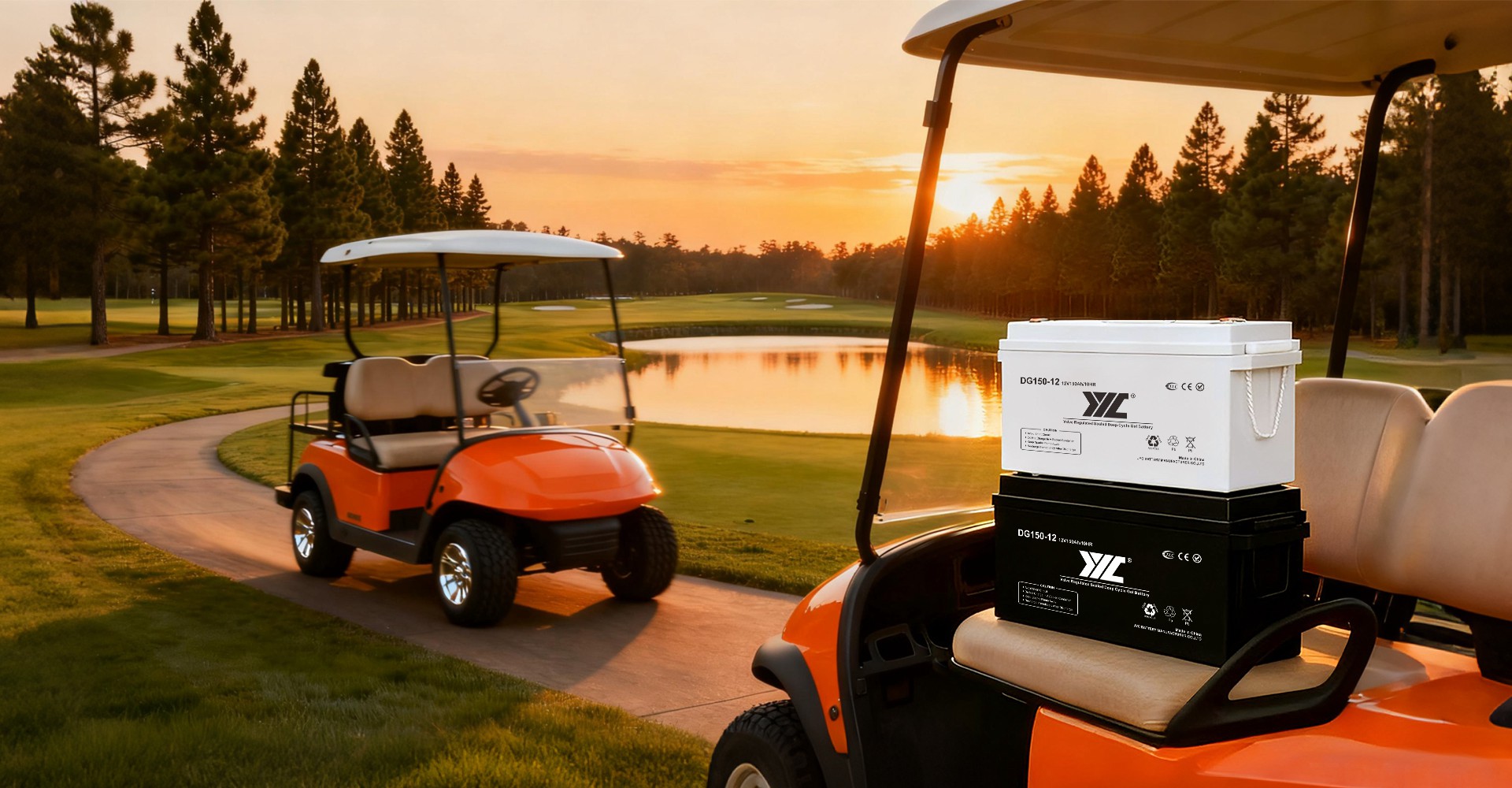
JYC Transportation batteries are a category of power storage devices specifically designed for transportation scenarios, with core functions of providing continuous, stable, and high-efficiency power ...
JYC Motive Power batteries are deep-cycle energy storage devices specifically designed for industrial and commercial vehicles and specialized equipment. Their core function is to provide continuous an...
Focus on company news, product updates and market events. We provide continuous updates to bring you first-hand information, helping you stay informed about our development progress at all times.
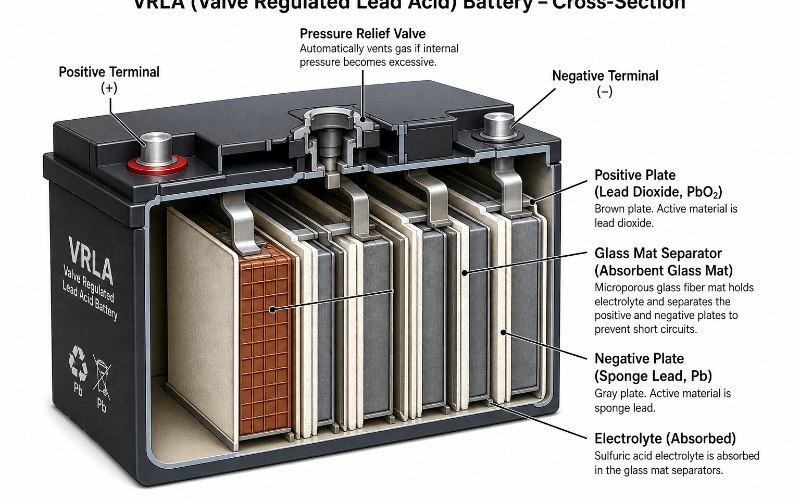
When engineering critical power systems, understanding how long does an SLA battery last is paramount for system integrators. Sealed Lead-Acid (SLA) batteries, a sophisticated subset of Valve-Regulated Lead-Acid (VRLA) technology, remain the undisputed backbone of global backup power architecture. From massive telecommunications data centers to medical facility uninterruptible power supplies, accurate lifespan forecasting directly drives capital expenditure efficiency and operational reliability.
Sealed Lead-Acid (SLA) batteries typically last 3 to 5 years in standard standby applications and deliver 300 to 500 charge cycles in deep-cycle usage at a 50% Depth of Discharge (DOD). Ultimate operational lifespan heavily depends on precise thermal management, advanced grid alloy technology, and rigorous charging protocols.
Key Takeaways
Standard SLA battery lifespan ranges from 3-5 years (standby) to 10+ years for premium VRLA telecom batteries.
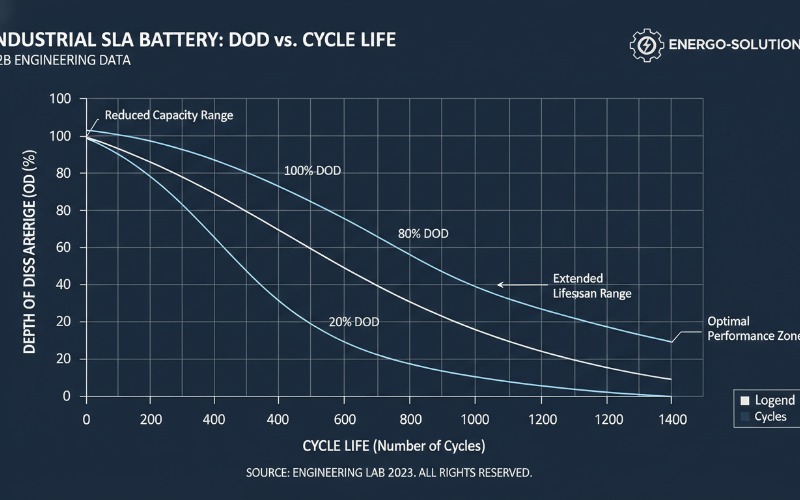
Cycle Life @ 80% DOD is significantly lower than at 30% DOD, directly impacting system ROI.
Operating temperatures above 25°C (77°F) halve battery life expectancy for every 8.3°C increase.
Lithium-ion (LiFePO4) offers superior deep-cycle lifespan but SLA remains unbeatable for cold-weather standby value.
Core Factors Dictating How Long an SLA Battery Lasts
System integrators frequently ask how long does an SLA battery last under specific and demanding field conditions. The true answer requires analyzing multiple interconnected electrochemical and environmental variables. Unlike advanced Lithium-ion (LiFePO4) energy storage systems that feature built-in electronic management, SLA batteries are inherently sensitive to their physical discharge profiles and external environmental stresses. Therefore, understanding the electrochemical limits is critical for system architects.
Depth of Discharge (DOD) and Cycle Life
For rigorous technical data on lead-acid chemistry and lifecycle limits, professionals often consult authoritative resources like Battery University. The most fundamental metric for evaluating cyclic applications is the Depth of Discharge. DOD refers to the exact percentage of total battery capacity utilized before the recharging sequence initiates. When a battery undergoes repeated deep discharges, the active paste material on the internal lead plates degrades and sheds faster.
Consequently, a battery bank operating conservatively at 30% DOD will significantly outlast one pushed repeatedly to 80% DOD. This inverse electrochemical relationship defines the total lifetime energy throughput of the entire storage system. Integrators must size their battery arrays to prevent excessive daily discharge depths.
Depth of Discharge (DOD)
Estimated Cycle Life
Recommended B2B Application
30% DOD
1000 - 1200 Cycles
Telecom Backup, Light Solar Standby
50% DOD
400 - 600 Cycles
Medical Equipment, Motive Power Logistics
80% DOD
200 - 300 Cycles
Emergency Deep Cycle Only (Rare Outages)
100% DOD
150 - 200 Cycles
Not Recommended (Severe Permanent Degradation)
Technical Specification Matrix: DOD vs. Cycle Life in Standard SLA Batteries
Temperature Impacts and Thermal Runaway
Thermal management is a strict, non-negotiable requirement for VRLA battery banks in commercial deployments. The optimal operating temperature for any SLA battery is exactly 25°C (77°F). According to fundamental Arrhenius equation principles, battery life decreases by 50% for every 8.3°C (15°F) rise above this temperature baseline. Heat accelerates internal grid corrosion and causes the critical electrolyte to dry out prematurely.
If a data center HVAC cooling system fails and ambient temperatures sit constantly at 33°C, a battery designed for a 5-year lifespan will physically fail in just 2.5 years. Furthermore, extreme high temperatures combined with high float voltages can trigger thermal runaway—a catastrophic failure mode where internal heat generation exceeds dissipation. Conversely, extreme cold diminishes the immediately available capacity, though it does not permanently degrade the grid alloy technology itself.
The Role of Peukert's Law in Capacity and Lifespan
When assessing how long does an SLA battery last during a severe discharge event, engineers must account for Peukert's Law. This scientific principle states that as the rate of discharge increases, the effectively available capacity of the lead-acid battery mathematically decreases. Rapid discharges, commonly seen in massive UPS setups for enterprise data centers, generate significant internal heat and physically strain the active materials.
Consequently, an SLA battery rated for 100Ah at a gentle 20-hour rate will absolutely not deliver 100Ah if violently discharged in 15 minutes. Heavy, high-rate discharges not only drastically reduce runtime but also induce mechanical micro-cracking in the delicate lead plates over time. System integrators must precisely calculate the discharge curve to prevent accidental 100% DOD events during critical, high-load power outages.
Standby vs. Cyclic Applications: ROI Analysis
How long does an SLA battery last in a datacenter UPS versus a remote solar array? The specific application strictly dictates the internal aging mechanism. System integrators broadly classify usage into two distinct categories: standby float service and continuous deep-cycle service.
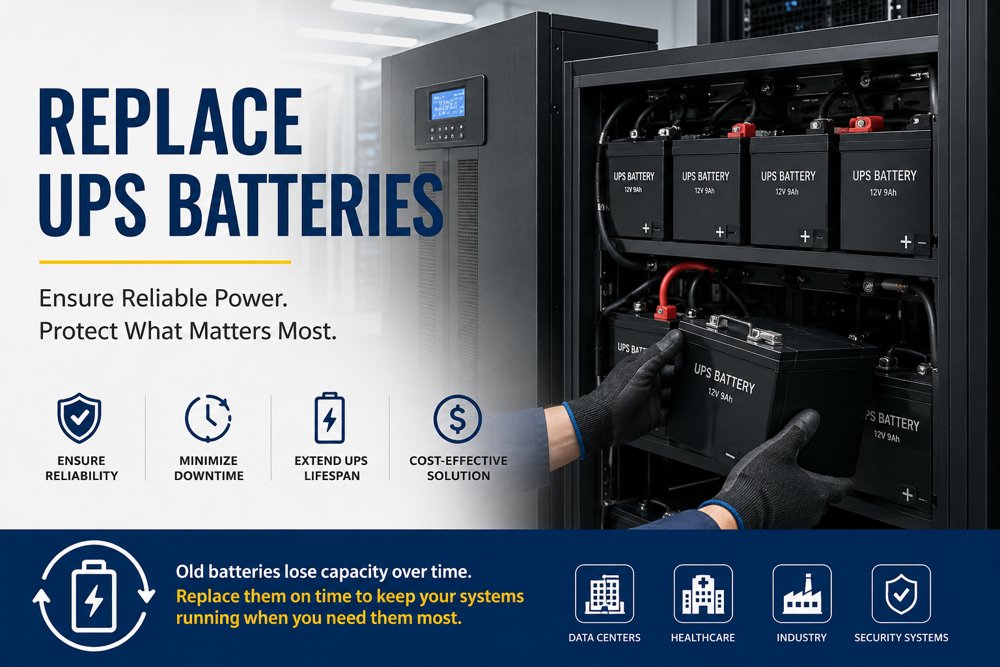
Uninterruptible Power Supplies (UPS) and Float Service
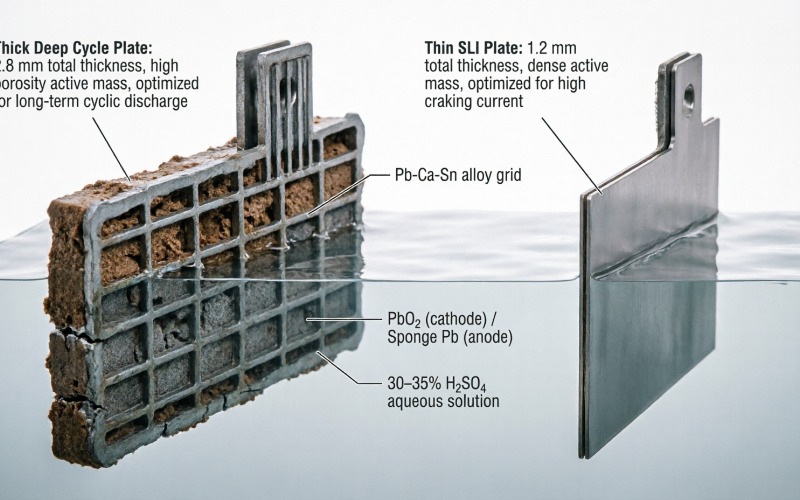
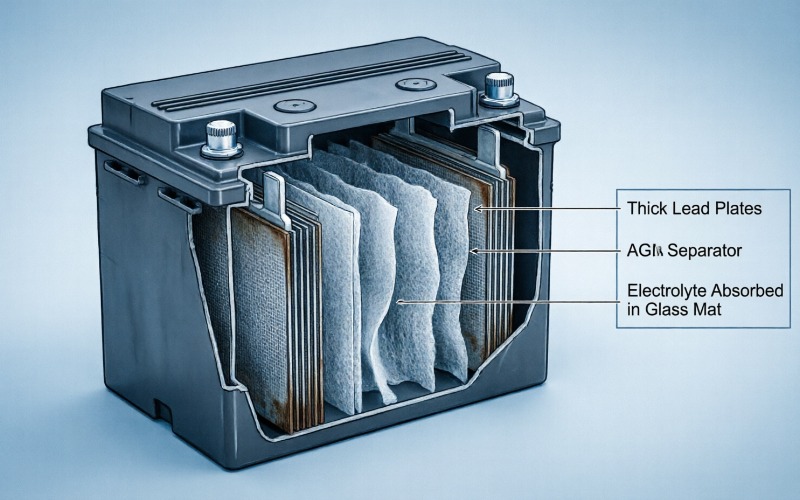
In standby applications like enterprise UPS systems, the battery sits dormant on a continuous float charge. It only discharges during unpredictable power grid anomalies. Here, positive grid corrosion and internal electrolyte dry-out are the primary failure modes, not active material shedding. Premium tier JYC Battery models purposefully utilize thicker, heavier plate designs to structurally combat this slow corrosion process over many years.
Motive Power and Off-Grid Solar Storage
Conversely, cyclic applications demand harsh daily charging and discharging. Off-grid solar energy storage relies heavily on extreme cycle durability. If a system integrator incorrectly specifies standard standby batteries for a demanding cyclic solar project, the ROI will plummet rapidly. Genuine deep cycle VRLA batteries feature higher density active pastes and reinforced separators to survive constant internal expansion and contraction without structural failure.
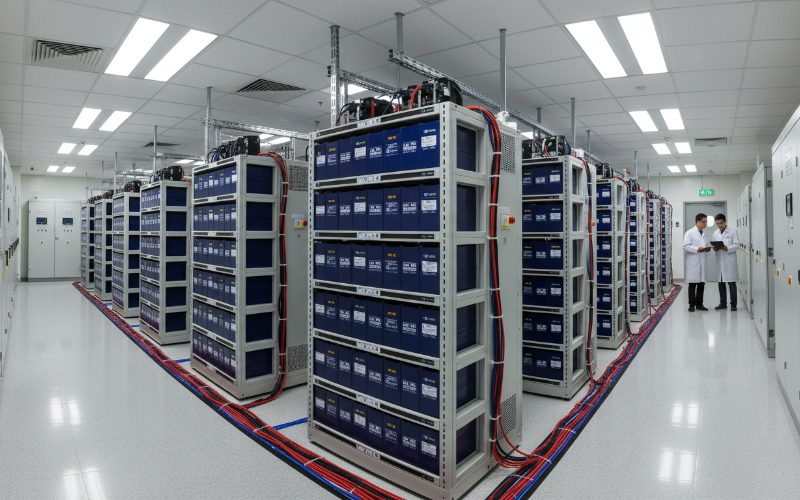
Field Experience: Managing VRLA Banks in Telecom Data Centers
During a major telecom infrastructure upgrade in Southeast Asia, our lead engineering team evaluated a massive, failing VRLA battery bank. The facility client demanded to know: why did these heavy-duty batteries fail in barely two years? Upon meticulous inspection, we discovered the float voltage was set 0.4V too high per individual block by the previous contractor. This seemingly minor continuous overcharge triggered aggressive premature positive grid corrosion and subsequent thermal runaway.
By completely recalibrating the charge controllers and deploying specialized batteries featuring advanced grid alloy technology, we stabilized the telecom site. We successfully implemented strict temperature-compensated charging protocols, ensuring the new million-dollar installation achieved its intended 10-year design life. This vivid scenario underscores a universal B2B truth: premium hardware is ultimately only as reliable as the final system configuration.
Advanced Grid Alloy Technology and Internal Resistance
Modern lead-acid manufacturing has evolved significantly over the past decade. Standard lead-calcium alloys offer excellent water retention, making them ideal for sealed maintenance-free operation. However, scientifically adding traces of tin or silver into the grid alloy matrix significantly enhances mechanical creep resistance and drastically improves cycle longevity.
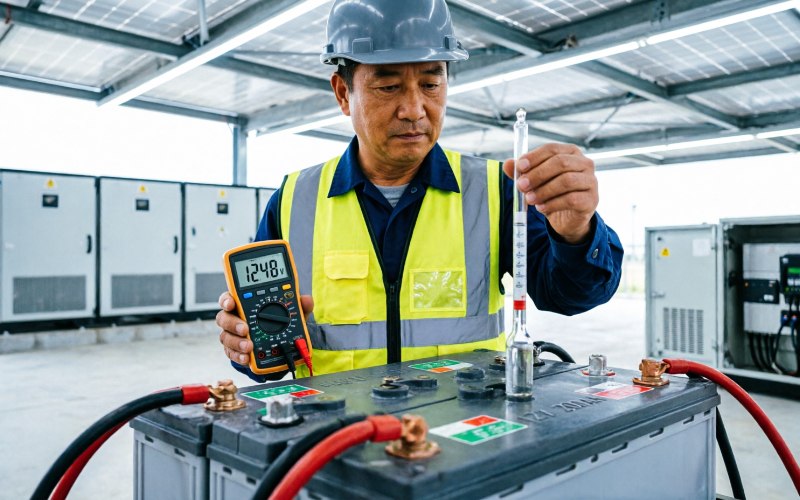
System integrators evaluating how long does an SLA battery last must rigorously review internal resistance (IR) documentation over time. A rising IR reading clearly indicates creeping sulfation or physical grid deterioration. Monitoring IR enables smart predictive maintenance protocols before a catastrophic power failure occurs during an outage. For standardized B2B testing methodologies, always refer to the authoritative IEEE testing guidelines for stationary batteries.
Comparative Analysis: VRLA Lead-Acid vs. Advanced Lithium-ion (LiFePO4)
As an industry expert in both VRLA Lead-Acid batteries and advanced Lithium-ion (LiFePO4) energy storage batteries, I frequently help enterprise clients navigate complex technology transitions. While SLA batteries consistently boast an exceptional initial capital expenditure advantage, the long-term ROI shifts dramatically when examining high-cycle, daily-use applications.
Lithium Iron Phosphate (LiFePO4) technology effectively eliminates the chemical sulfation risks inherent in lead-acid chemistry. A high-quality LiFePO4 battery can effortlessly sustain a Cycle Life @ 80% DOD of well over 5000 cycles, maintaining a perfectly flat voltage curve throughout the discharge event. However, despite this cycle superiority, SLA batteries remain functionally superior in specific low-temperature environments and critical zero-maintenance standby scenarios where the massive capital expenditure of Lithium simply cannot be financially justified.
System integrators must strategically weigh the initial hardware cost against the expected replacement cycle frequency. If an off-grid solar installation requires heavy daily cycling, LiFePO4 absolutely yields a lower Levelized Cost of Storage (LCOS). Conversely, for a standby telecom cell tower site cycling only twice a year, premium VRLA technology utilizing robust grid alloy technology offers the most sensible and risk-averse financial return.
How to Maximize SLA Battery Life Expectancy and Optimize ROI
Achieving the maximum optimal ROI requires proactive, scheduled maintenance and incredibly precise charging parameters. Integrators should strictly follow these proven engineering best practices to exponentially extend energy storage lifespan.
Temperature Compensation: Implement smart algorithmic chargers that automatically adjust float voltage based on continuous ambient temperature sensors.
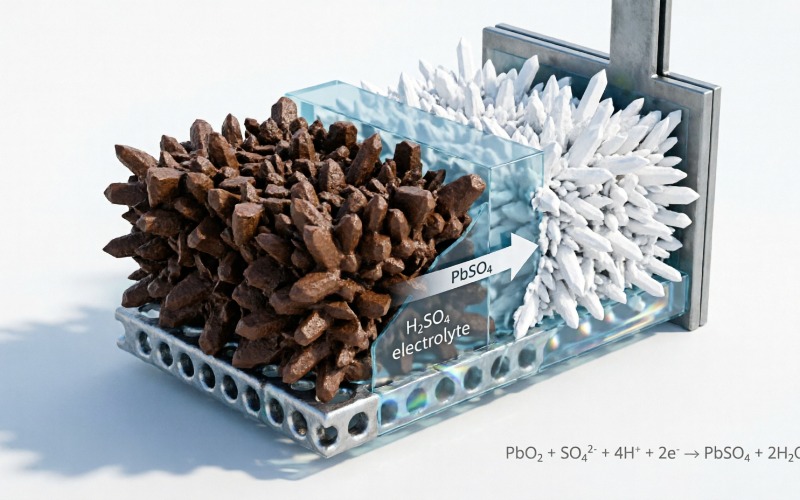
Prevent Fatal Sulfation: Never deliberately leave an SLA battery in a discharged state. Recharge immediately to prevent lead sulfate crystallization.
Voltage Balancing: In high-voltage serial strings (e.g., 480V enterprise UPS), use active battery balancers to prevent individual block overcharging.
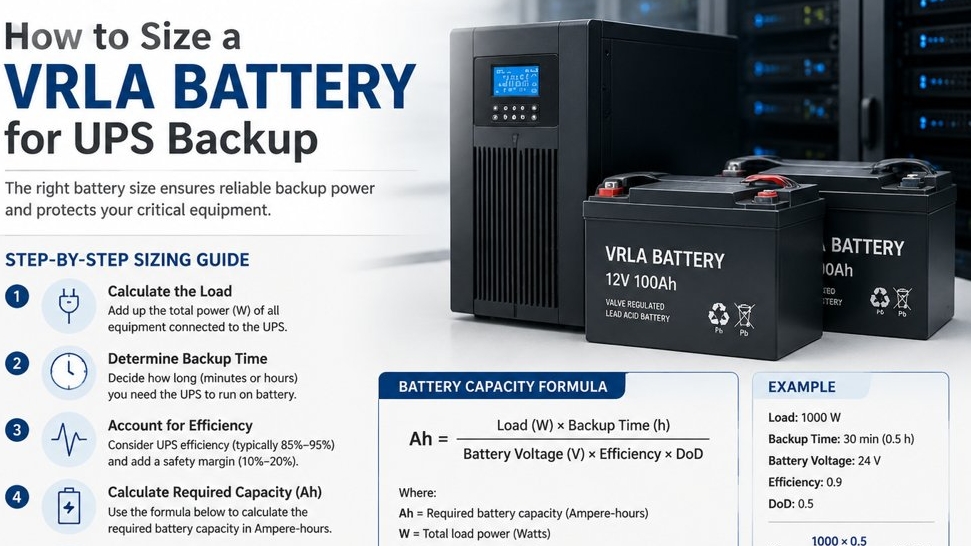
Appropriate Bank Sizing: Deliberately oversize the battery bank to ensure the average outage discharge strictly remains above 50% DOD.
Implement Equalization Protocols: If permitted by the manufacturer, utilize controlled equalization charges to balance cell voltages and stir stagnant electrolyte.
For massive commercial projects requiring extreme reliability and guaranteed longevity, system integrators should rigorously explore high-end VRLA Lead-Acid batteries or upgrade entirely to advanced Lithium-ion (LiFePO4) energy storage solutions.
Q: How long does an SLA battery last if never used?
A: An unused SLA battery typically lasts 6 to 12 months in storage at a controlled 25°C. Without periodic top-charge maintenance, natural chemical self-discharge leads to irreversible internal sulfation, permanently destroying its capacity and rendering it useless.
Q: Does overcharging impact Cycle Life @ 80% DOD?
A: Yes, continuous overcharging causes severe internal electrolyte boiling, water loss, and rapid positive plate corrosion. This dramatically reduces Cycle Life @ 80% DOD, often causing the sealed battery chassis to physically swell or vent explosive hydrogen gas.
Q: Can advanced grid alloy technology reverse battery aging?
A: Advanced grid alloy technology heavily prevents premature aging by successfully resisting internal corrosion, but it cannot miraculously reverse existing chemical degradation once the active material has physically shed from the lead plates.
Q: How long does an SLA battery last compared to LiFePO4?
A: A standard cyclic SLA battery typically lasts 300-500 cycles at a demanding 50% DOD, whereas an advanced Lithium-ion (LiFePO4) energy storage battery can easily exceed 4000-6000 cycles at an extreme 80% DOD, offering vastly superior long-term ROI for daily cycling.
Ultimately, knowing exactly how long does an SLA battery last helps intelligent system integrators optimize capital expenditure and eliminate catastrophic downtime. For expert technical guidance on correctly sizing your next uninterruptible power supply or enterprise telecom backup system, consult the professional engineering team at JYC Battery.



 en
en  fra
fra  spa
spa  de
de  vie
vie  ru
ru  ara
ara  kor
kor