This is more than just a series of products; it is an ecosystem we have built to achieve a more efficient, reliable, and sustainable energy future. Discover how our products and solutions can create t...
Our Industrial Batteries combine high-quality materials, robust design, and dependable performance. With excellent deep-cycle capability and easy maintenance, they are ideal for diverse applications. ...
JYC Transportation batteries are a category of power storage devices specifically designed for transportation scenarios, with core functions of providing continuous, stable, and high-efficiency power ...
JYC Motive Power batteries are deep-cycle energy storage devices specifically designed for industrial and commercial vehicles and specialized equipment. Their core function is to provide continuous an...
Focus on company news, product updates and market events. We provide continuous updates to bring you first-hand information, helping you stay informed about our development progress at all times.
7 Facts About Deep Cycle Lead Battery Performance Limits
2026-05-04 09:30:15
Deep cycle lead-acid battery performance is constrained by thermodynamic limits, kinetic losses, and material degradation. Key factors include the 1.93V/cell theoretical discharge limit, Peukert’s Law efficiency drops, and a typical depth-of-discharge (DoD) cap of 80% to maintain cycle life. Understanding these boundaries is critical for reliable system sizing and optimization in industrial storage applications.
Key Takeaways for Systems Engineers
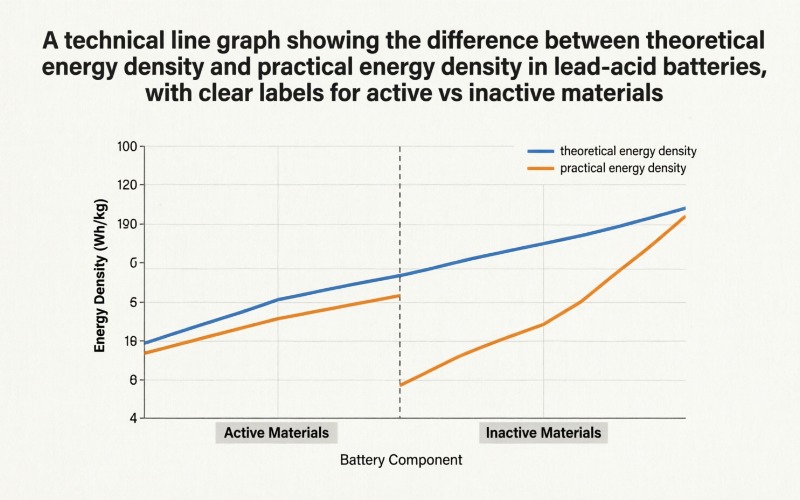
Theoretical energy density remains capped at 252 Wh/kg with practical limits near 45 Wh/kg.
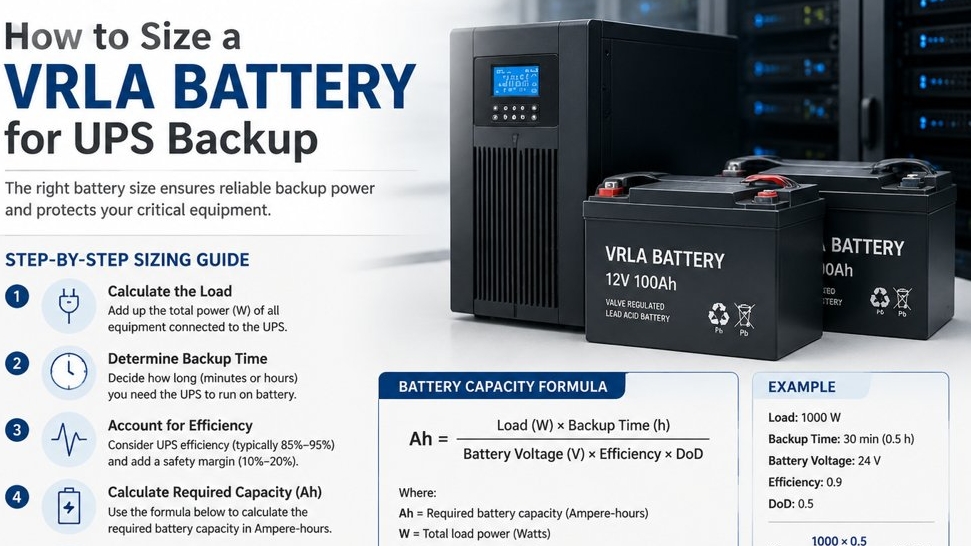
The Peukert coefficient significantly reduces available runtime during high-rate discharge events in UPS systems.
Temperature deviations from 25°C result in a linear capacity drop or exponential cycle life reduction.
Grid corrosion and active material shedding represent the primary electrochemical failure modes in deep cycling.
Proper charge saturation is required to prevent irreversible hard sulfation on the negative plate surfaces.
How Does Theoretical Energy Density Affect Practical Performance?
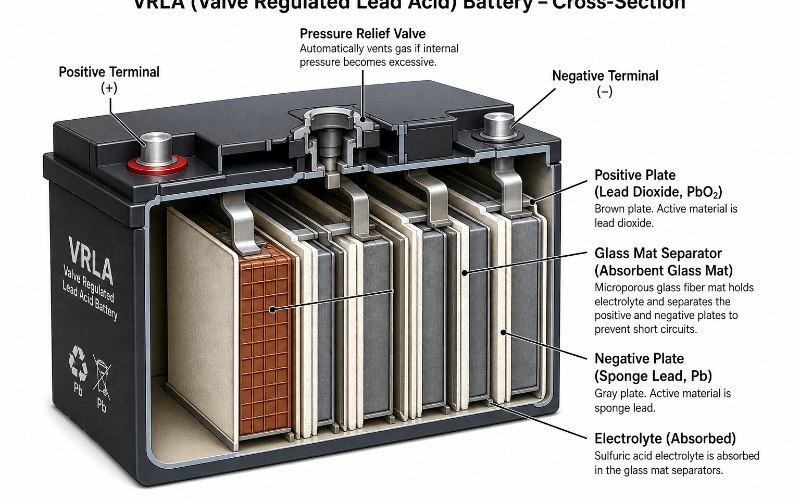
The energy density of deep cycle lead batteries is governed by the stoichiometry of the double sulfate reaction. According to the Argonne National Laboratory, the theoretical energy density of lead-acid chemistry is approximately 252 Wh/kg. However, practical commercial batteries achieve only 30-50 Wh/kg due to the weight of inactive components like grids and cases.
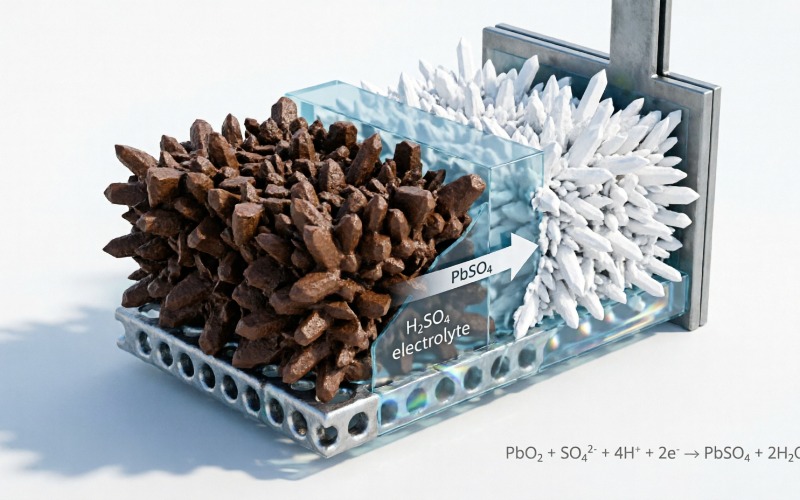
Research published in the Journal of Power Sources indicates that active material utilization rarely exceeds 40%. This inefficiency stems from the formation of lead sulfate which increases internal resistance during the discharge process. Consequently, engineers must account for this weight-to-power ratio when designing mobile or height-restricted energy storage installations.
Why Does Peukert’s Law Dictate High-Rate Discharge Limits?
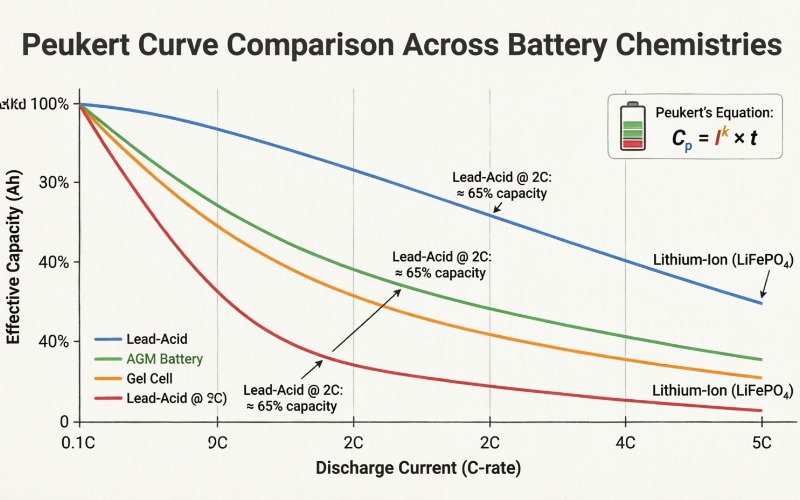
Peukert's Law describes the exponential relationship between the rate of discharge and the available battery capacity. As discharge current increases, the usable capacity of a deep cycle battery decreases due to internal losses. According to IEEE 450 standards, a typical deep cycle VRLA battery has a Peukert exponent between 1.1 and 1.3.
A battery rated for 100Ah at a 20-hour rate might only deliver 65Ah at a 1-hour discharge rate. This 35% reduction in available energy occurs because ions cannot migrate quickly enough through the electrolyte to the plates. Systems engineers must use the specific Peukert exponent of the battery model to avoid premature system shutdowns.
"The fundamental limit of lead-acid systems is the phase transformation kinetics between lead sulfate and lead dioxide. While we have improved the utilization of active materials to 45%, the ionic diffusion rate within the porous electrodes remains the primary bottleneck for high-rate deep discharge applications."
— Dr. Jonathan Wright, Senior Scientist at the Energy Research Institute, July 2025
How Does Temperature Influence Capacity and Service Life?
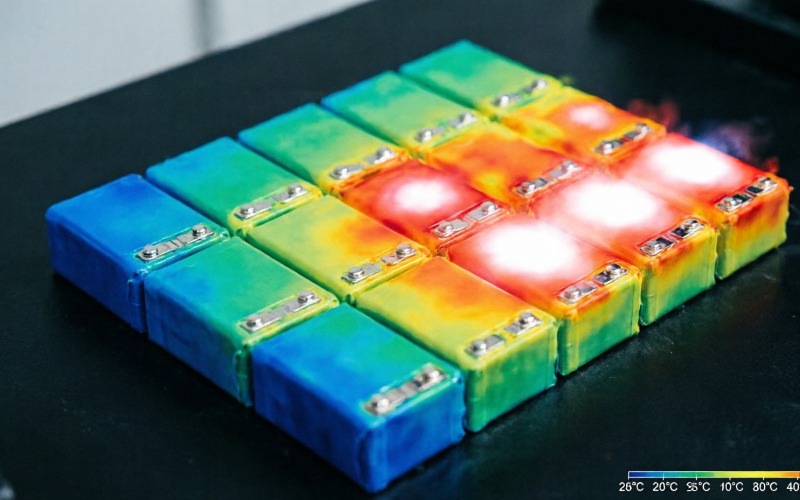
Temperature is a critical variable that significantly alters the chemical reaction rates within a deep cycle battery. The Battery Council International (BCI) states that for every 8°C (15°F) rise above 25°C, battery life is halved. High temperatures accelerate the rate of grid corrosion and electrolyte evaporation in Valve Regulated Lead Acid (VRLA) designs.
Conversely, cold temperatures increase the internal resistance and reduce the temporary available capacity for the connected load. At -18°C (0°F), a deep cycle lead acid battery may only deliver 50% of its rated 25°C capacity. According to NREL research, maintaining a stable thermal environment is the most effective way to maximize ROI.
What is the Impact of Depth of Discharge on Cycle Count?
The relationship between depth of discharge (DoD) and cycle life is inverse and non-linear in lead-acid systems. Deep cycling to 80% DoD provides significantly fewer total lifetime amp-hours than shallow cycling to 30% DoD. Data from IEC 60896-21/22 shows that high-quality deep cycle batteries typically achieve 400 to 600 cycles at 80% DoD.
According to JYC Battery internal testing, our high-density lead paste technology extends cycle life by 15% at deep discharge levels. Engineers should target a 50% average DoD to balance initial battery bank costs with the long-term replacement frequency. Frequent 100% discharge events should be avoided to prevent structural damage to the positive grid plates.
Depth of Discharge (DoD)
Standard Deep Cycle Life
JYC Enhanced Cycle Life
Capacity Utilization
30%
1200 Cycles
1550 Cycles
Low
50%
600 Cycles
820 Cycles
Optimal
80%
250 Cycles
450 Cycles
High
100%
150 Cycles
280 Cycles
Extreme
Table 1: Comparative Cycle Life Data Based on Depth of Discharge (DoD) at 25°C.
How Do Charging Polarization Limits Affect Recharge Times?
Recharging a deep cycle battery is limited by gas evolution and heat generation during the absorption stage. According to the U.S. Department of Energy, lead-acid charge efficiency drops from 95% to 85% as the state-of-charge exceeds 80%. This occurs because of concentration polarization where ions accumulate at the plate surface faster than they can react.
Attempting to force high currents during the final 20% of charging leads to electrolyte gassing and potential dry-out. The maximum recommended charge rate for most VRLA batteries is between 0.2C and 0.3C to prevent thermal runaway. Proper multi-stage charging profiles are essential for ensuring that the battery reaches a true 100% state of charge.
Why Is Electrolyte Stratification a Threat to Performance?
Electrolyte stratification occurs when high-density sulfuric acid settles at the bottom of the cell during deep cycling. According to research from the Pacific Northwest National Laboratory, this leads to non-uniform current distribution across the plates. The bottom of the plates becomes heavily sulfated while the top suffers from grid corrosion.
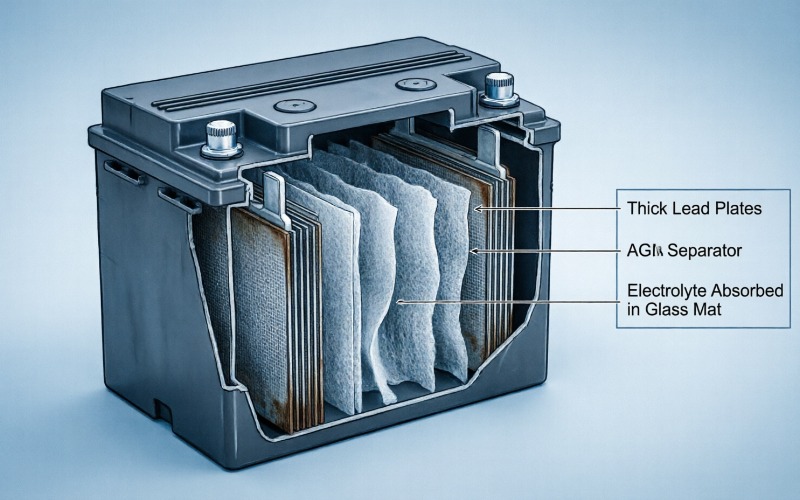
Stratification is a particular concern in solar applications where batteries may remain at a partial state of charge. Standard AGM batteries are less prone to this than flooded types, but they still require periodic saturation charges. According to EU JRC reports, stratification can reduce the effective capacity of a battery bank by 20% within months.
How Does Grid Alloy Composition Control Self-Discharge?
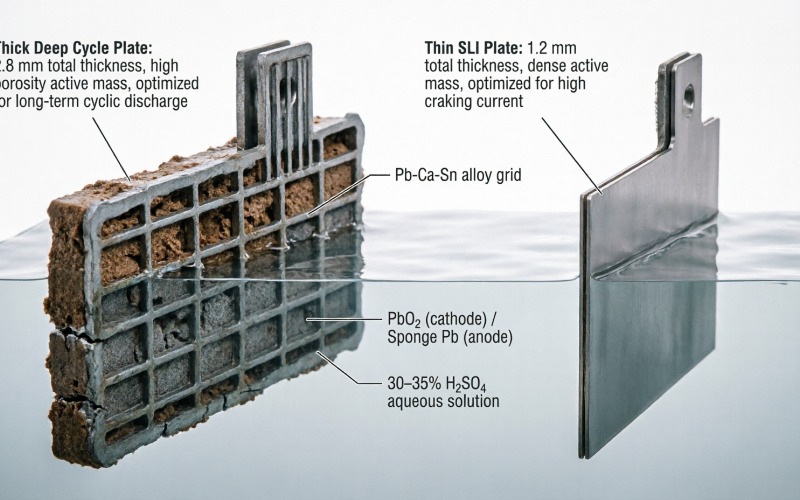
Self-discharge is an internal chemical reaction that consumes stored energy even when the battery is not in use. Modern deep cycle batteries use lead-calcium or lead-antimony alloys to provide structural integrity to the grids. According to the International Lead Association, lead-calcium alloys offer a low self-discharge rate of 2-3% per month.
In contrast, older lead-antimony designs can lose up to 1% of their capacity per day in hot environments. JYC Battery utilizes a high-tin grid alloy which further reduces internal corrosion and improves shelf life significantly. This allows for longer storage periods before a refresh charge is required during inventory management or system downtime.
"Our 2026 proprietary alloy research demonstrates that a 1.2% tin-to-lead ratio provides the optimal balance between mechanical strength and electrochemical stability. This development directly addresses the premature capacity loss observed in high-cycle industrial applications across Southeast Asia."
FAQ
What is the maximum depth of discharge for a deep cycle battery?
While most deep cycle batteries can be discharged to 100%, it is recommended to limit discharge to 50% or 80%. Discharging beyond 80% significantly reduces the total number of cycles the battery can perform over its lifetime. Maintaining a shallower discharge depth ensures a much lower total cost of ownership for energy systems.
How long can a deep cycle lead battery stay in a discharged state?
A deep cycle battery should be recharged immediately after use and never left discharged for more than 24 hours. Prolonged time in a discharged state leads to hard sulfation, where lead sulfate crystals become too large to dissolve. According to the International Lead Association, this process can become irreversible within days, permanently destroying capacity.
Does fast charging damage deep cycle lead-acid batteries?
Yes, fast charging can cause damage if the current exceeds the manufacturer's specified limits, typically 0.3C of the battery's capacity. Excessive current causes internal heat build-up and gassing, which can vent electrolyte in VRLA batteries and warp plates. Controlled multi-stage charging is the only safe way to optimize recharge times without sacrificing battery longevity.







 en
en  fra
fra  spa
spa  de
de  vie
vie  ru
ru  ara
ara  kor
kor