This is more than just a series of products; it is an ecosystem we have built to achieve a more efficient, reliable, and sustainable energy future. Discover how our products and solutions can create t...
Our Industrial Batteries combine high-quality materials, robust design, and dependable performance. With excellent deep-cycle capability and easy maintenance, they are ideal for diverse applications. ...
JYC Transportation batteries are a category of power storage devices specifically designed for transportation scenarios, with core functions of providing continuous, stable, and high-efficiency power ...
JYC Motive Power batteries are deep-cycle energy storage devices specifically designed for industrial and commercial vehicles and specialized equipment. Their core function is to provide continuous an...
Focus on company news, product updates and market events. We provide continuous updates to bring you first-hand information, helping you stay informed about our development progress at all times.
Deep Cycle Lead Battery vs Lithium Battery: Technical ESS Comparison
2026-05-27 10:30:46
Choosing between deep cycle lead batteries and lithium-ion requires evaluating cycle life, efficiency, and levelized cost of energy (LCOE). While lead-acid batteries offer lower initial costs, lithium-ion provides 95% efficiency and 5,000 cycles at 80% discharge. This guide analyzes these electrochemical systems to assist engineers in selecting the optimal technology for energy storage.
Key Takeaways for ESS Decision Makers
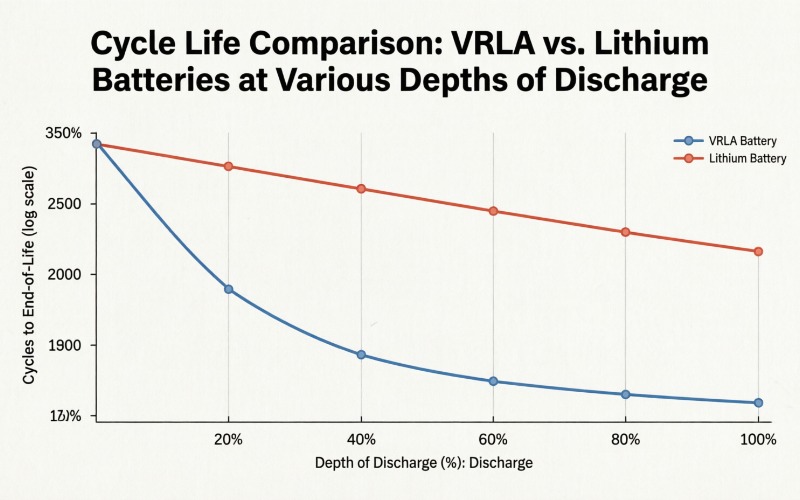
Cycle Performance: LiFePO4 batteries offer 10x the cycle life of traditional VRLA units when operated at 80% depth of discharge.
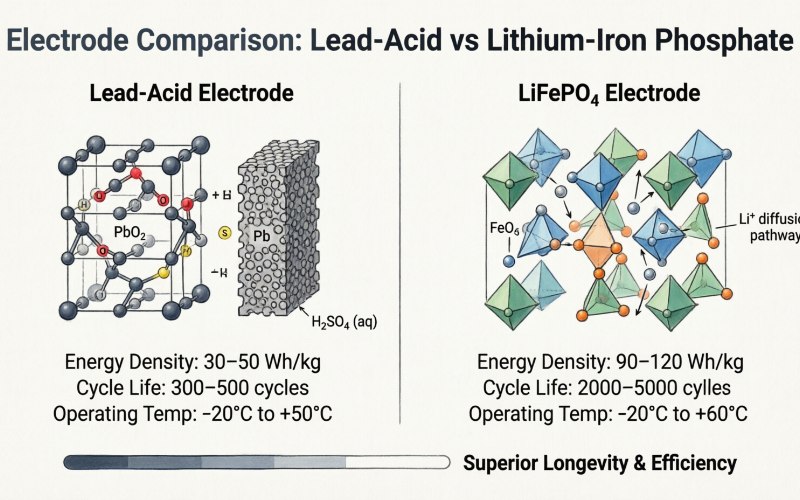
Energy Density: Lithium-ion systems provide 125-150 Wh/kg, significantly reducing the physical footprint compared to lead-acid's 30-50 Wh/kg density.
Efficiency: Lithium-ion round-trip efficiency typically exceeds 95%, while lead-acid efficiency ranges between 75% and 85% due to internal resistance.
Economic Impact: Although lithium-ion has a higher capital expenditure, its lower LCOE makes it more cost-effective for daily cycling.
What are the fundamental electrochemical differences between lead-acid and lithium batteries?
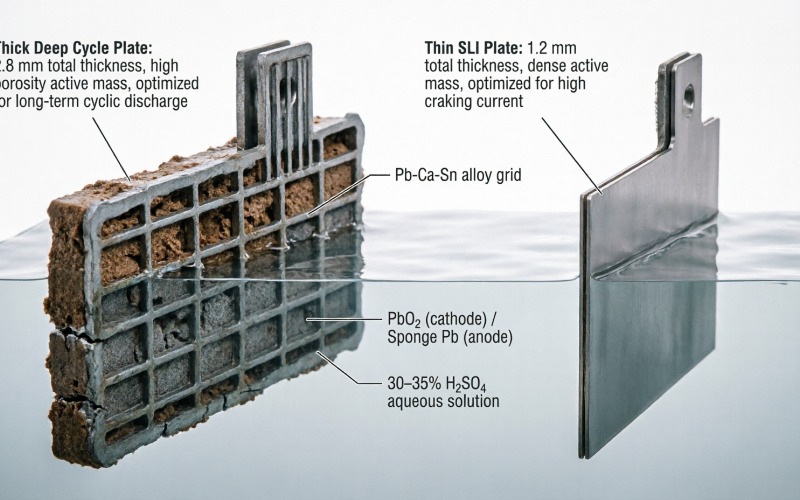
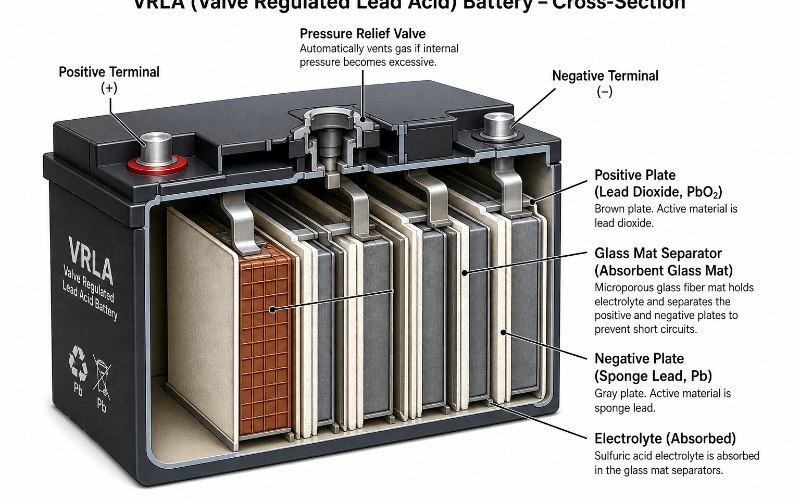
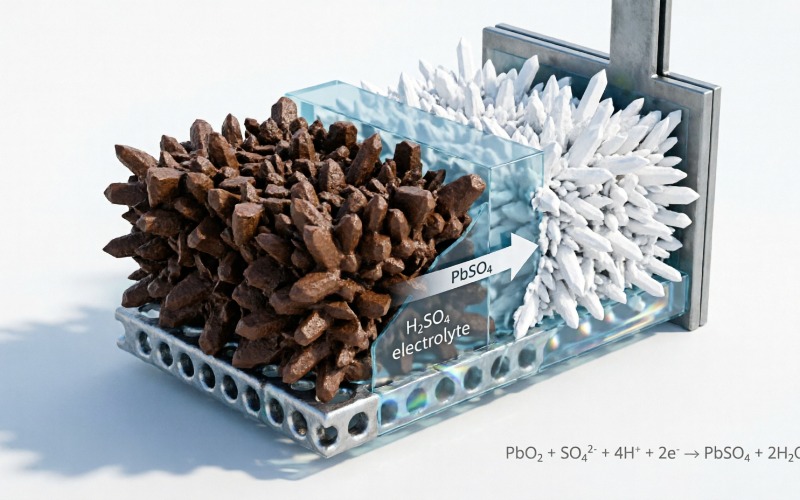
Lead-acid batteries utilize a lead-dioxide cathode and a sponge-lead anode immersed in an aqueous sulfuric acid electrolyte solution. During discharge, both electrodes transform into lead sulfate, which creates a chemical reaction that releases electrons for external work. According to the International Energy Agency (IEA) in 2024, lead-acid technology remains the most recycled battery chemistry globally. However, the formation of large lead sulfate crystals can permanently reduce capacity if the battery remains discharged for long.
Lithium-iron phosphate (LiFePO4) chemistry employs a carbon anode and a lithium-iron phosphate cathode to move ions via an intercalation process. This movement does not involve a primary chemical change in the electrode structure, which allows for significantly higher cycle stability. Research from the Department of Energy (DOE) in 2025 indicates that LiFePO4 prevents the thermal runaway risks found in cobalt-based lithium. JYC Battery has optimized this chemistry to ensure maximum safety for high-density commercial energy storage installations.
How does round-trip efficiency impact the long-term levelized cost of energy?
Round-trip efficiency (RTE) measures the percentage of energy retrieved from a battery relative to the energy used during charging. Lithium-ion batteries consistently achieve an RTE of 95% to 98%, which minimizes energy waste during daily charging cycles. According to the National Renewable Energy Laboratory (NREL), a 10% increase in RTE can reduce total system costs by 15%. This efficiency is critical for solar integrators who must maximize the utilization of every kilowatt-hour generated.
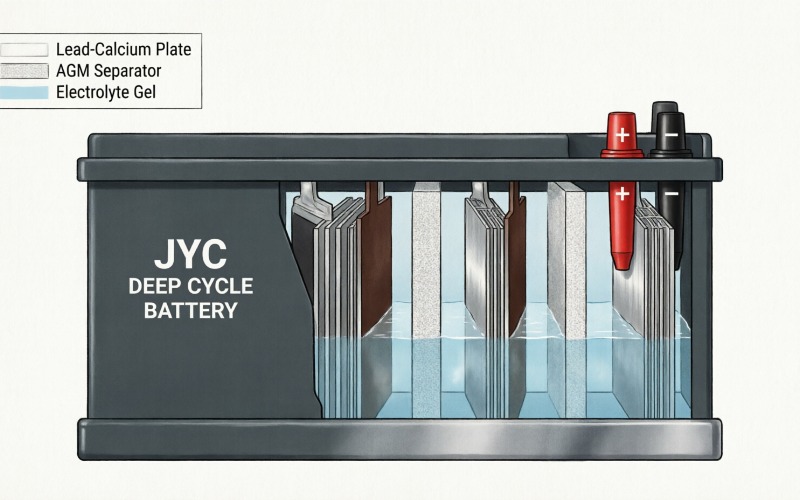
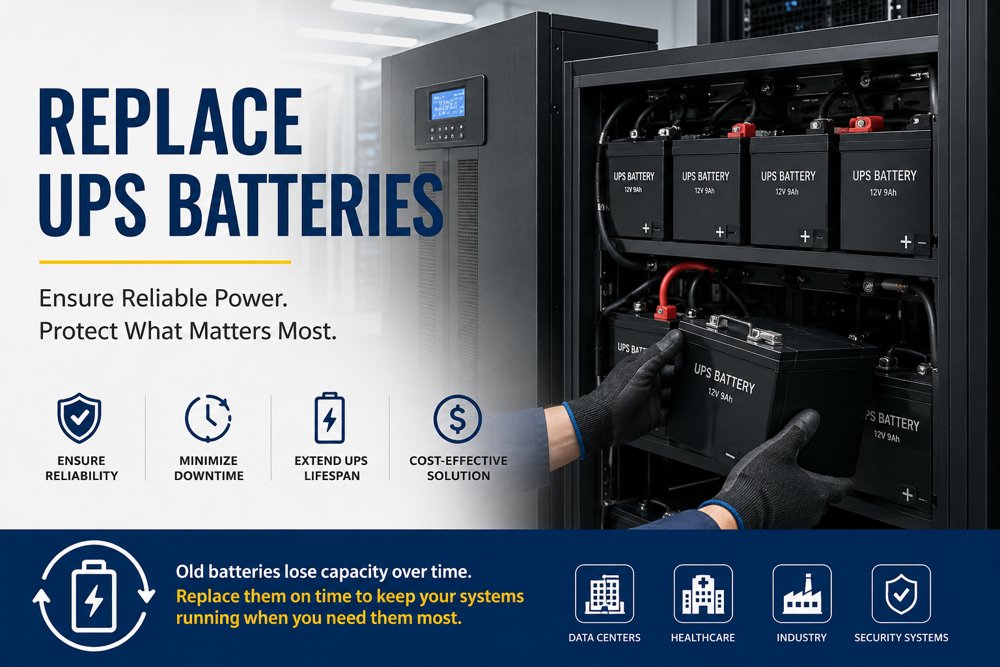
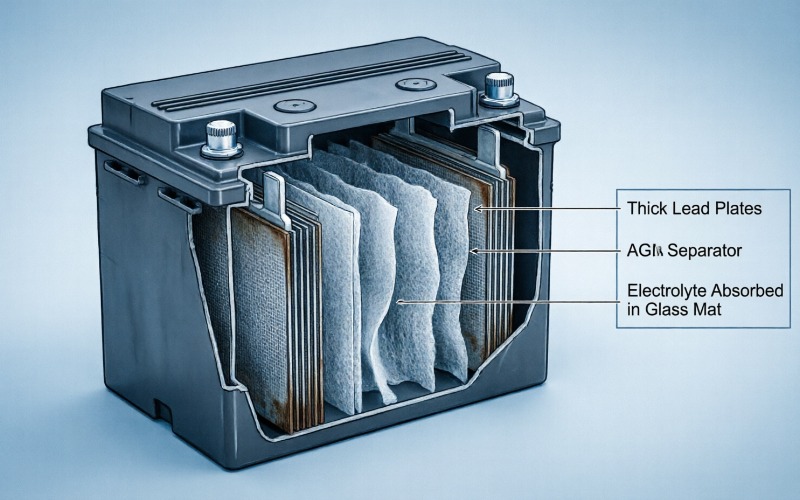
In contrast, lead-acid batteries typically operate with a round-trip efficiency ranging from 75% to 85% under standard industrial conditions. Higher internal resistance leads to heat generation during the final 20% of the charging stage, which reduces overall efficiency. For applications like uninterruptible power supplies (UPS), this energy loss results in higher operational cooling requirements for the facility. JYC Battery's advanced AGM separators reduce this internal resistance to improve performance over traditional flooded lead-acid designs.
What is the cycle life comparison at 80% depth of discharge?
Cycle life is the most significant differentiator for engineers designing systems that require daily energy cycling for peak shaving. A standard deep cycle lead battery provides approximately 500 to 1,000 cycles when discharged to 50% of its capacity. According to IEEE Standards Association, deep discharge beyond 50% significantly accelerates the degradation of lead plates through sulfation and active material shedding. This limitation often forces engineers to oversize lead-acid banks to ensure longevity in the field.
Lithium-ion batteries, specifically LiFePO4, are designed to handle deep discharges of 80% to 100% without experiencing rapid degradation. Modern lithium cells provide between 3,000 and 6,000 cycles while maintaining 80% of their original nameplate capacity during use. According to recent industry reports, the cycle life of lithium-ion is now 5 to 10 times higher than lead-acid technology. This longevity reduces the frequency of battery replacements, which significantly lowers the total cost of ownership over time.
"The transition from lead-acid to lithium-ion in stationary storage is driven by the superior cycle durability and thermal stability of LiFePO4."
How do physical dimensions and energy density compare between technologies?
Energy density determines the physical space required for a battery bank, which is a critical factor for urban ESS installations. Lithium-ion batteries possess a gravimetric energy density of 120-160 Wh/kg, allowing for compact designs in space-constrained environments. A 2024 study by BloombergNEF found that lithium systems save approximately 60% of floor space compared to equivalent lead-acid systems. This reduction in volume also simplifies logistics and lowers the shipping costs for large-scale international energy projects.
Lead-acid batteries have a lower energy density, typically ranging from 30 to 50 Wh/kg, due to the weight of lead. This heavy weight necessitates robust structural support and reinforced flooring in battery rooms to handle the static load requirements. For mobile applications or rooftop solar installations, the weight of lead-acid can be a prohibitive factor for structural engineering teams. JYC Battery provides high-density VRLA options that optimize plate geometry to offer the best possible weight-to-power ratio.
Technical Parameter
Deep Cycle VRLA (Lead-Acid)
LiFePO4 (Lithium-ion)
Cycle Life (80% DoD)
400 - 800 Cycles
3,500 - 6,000 Cycles
Round-Trip Efficiency
75% - 85%
95% - 98%
Energy Density (Wh/kg)
30 - 50 Wh/kg
120 - 160 Wh/kg
Charge Time (0-100%)
8 - 12 Hours
1 - 3 Hours
Depth of Discharge (DoD)
50% Recommended
80% - 100% Recommended
Operating Temperature
-20°C to +50°C
-10°C to +60°C
Table 1: Technical comparison of VRLA and LiFePO4 battery performance characteristics.
What are the safety standards for industrial energy storage systems?
Safety is the primary concern for engineers when selecting battery chemistries for indoor or critical infrastructure energy storage applications. Lead-acid batteries are intrinsically safe because they use a non-flammable aqueous electrolyte that does not support thermal runaway reactions. They must comply with IEC 60896 standards for stationary lead-acid batteries to ensure mechanical and electrical reliability during operation. However, lead-acid systems require adequate ventilation to manage the potential hydrogen gas emission during high-voltage equalization charging stages.
Lithium-ion systems must adhere to more stringent safety certifications like UL 1973 and UL 9540A to mitigate thermal runaway risks. These standards involve rigorous testing of the Battery Management System (BMS) and the cell's ability to contain internal fires. According to the National Fire Protection Association (NFPA), 15% of battery fire incidents are caused by BMS failures or external heating. JYC Battery integrates advanced multi-layer protection in its lithium modules to monitor voltage, current, and temperature at the cell level.
For system planning, see our energy storage solutions to align the battery choice with site requirements.
How does temperature sensitivity affect performance in extreme environments?
Operating temperature has a profound impact on the service life and performance of both lead-acid and lithium battery technologies. Lead-acid batteries are sensitive to heat; for every 8°C increase above 25°C, the service life is reduced by 50%. According to data from the Scientific Equipment and Furniture Association (SEFA), managing ambient temperature is vital for maintaining industrial battery health. AGM batteries are better suited for colder climates as they are less likely to freeze than flooded lead-acid cells.
Lithium-ion batteries maintain high performance at elevated temperatures but face challenges during charging in sub-zero conditions without integrated heaters. Charging a lithium battery below 0°C can cause lithium plating on the anode, which permanently damages the cell structure. Recent innovations in BMS technology have introduced self-heating functions that allow lithium batteries to operate in environments down to -30°C. JYC Battery utilizes high-grade thermal interface materials to ensure even heat distribution across the entire battery module during discharge.
Who should choose lead-acid over lithium for their energy storage project?
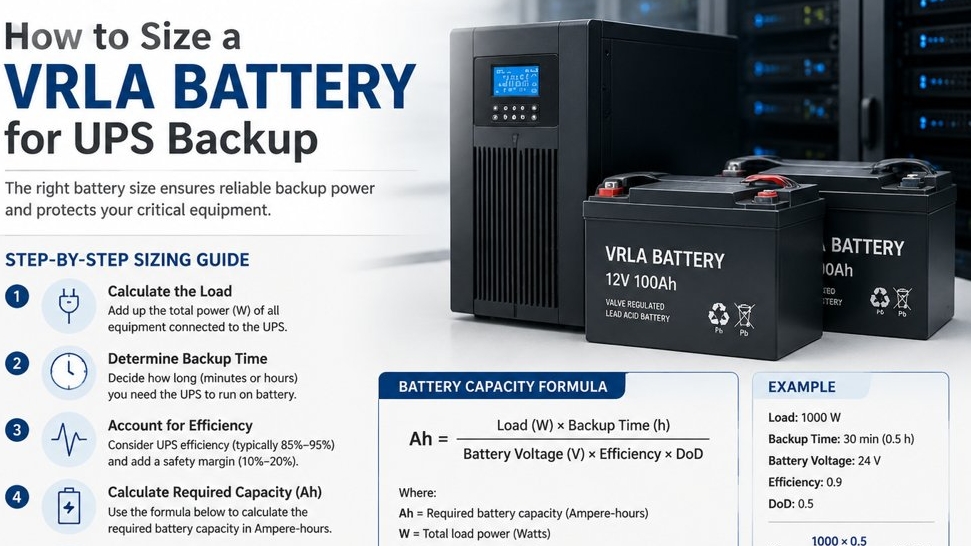
Despite the rise of lithium-ion, lead-acid batteries remain the preferred choice for specific applications where initial capital expenditure is restricted. For standby applications like emergency lighting or basic UPS systems, the low cycle count makes the high cost of lithium unnecessary. According to industry surveys, 45% of data centers still rely on VRLA batteries for short-duration backup power requirements. Lead-acid is also easier to transport and does not require complex electronic management for simple series-parallel configurations.
Lithium-ion is the superior choice for active energy storage projects involving solar integration, microgrids, or high-frequency power cycling. The ability to charge rapidly and discharge deeply allows for more flexible grid services and better renewable energy utilization. While the upfront cost is higher, the total cost per cycle is significantly lower for lithium over its lifetime. JYC Battery helps engineers conduct a full LCOE analysis to determine which technology provides the best return on investment.
For a suitable configuration, review our lithium battery solutions for specifications and deployment options.
Frequently Asked Questions
Can I replace my lead-acid battery bank directly with lithium batteries?
Yes, many lithium batteries are designed as "drop-in replacements" with internal BMS units that mimic the charging profile of lead-acid. However, you must verify that your existing charger or solar inverter supports the specific voltage setpoints required for lithium. According to 2025 engineering standards, using a dedicated lithium charger improves the overall lifespan of the battery bank.
Why is lithium-ion more expensive than deep cycle lead-acid batteries?
The higher cost of lithium-ion is due to the expensive raw materials, complex manufacturing processes, and the necessary electronic management systems. Lithium cells require precise monitoring of every cell to ensure safety and longevity, which adds to the hardware cost. Despite this, the cost per kilowatt-hour of lithium has dropped by 80% over the last decade according to IRENA.
Which battery technology is more environmentally friendly for long-term use?
Lead-acid batteries are currently more sustainable because they have a 99% recycling rate in the United States and Europe. Lead can be recovered and reused indefinitely in new batteries, making it a perfect example of a circular economy. Lithium-ion recycling is improving rapidly, with 2025 projections suggesting a 70% recovery rate for critical minerals like lithium and copper.
Does a lithium battery require more maintenance than a VRLA battery?
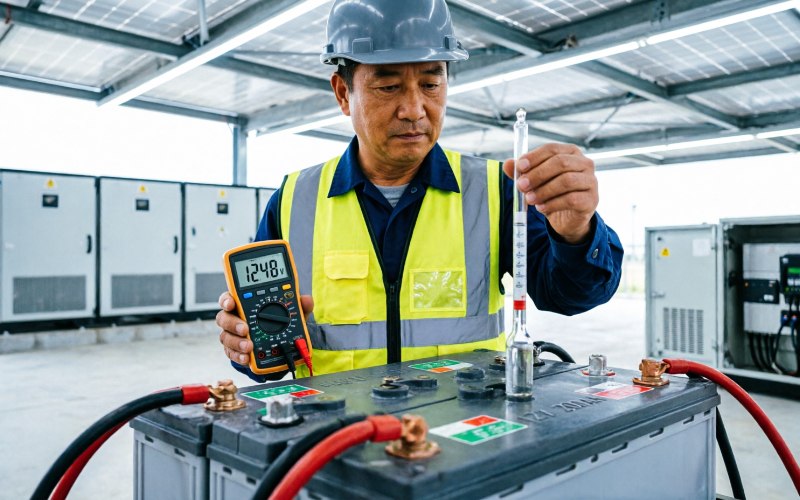
No, lithium batteries are virtually maintenance-free because they do not require water topping or periodic equalization charges. The integrated BMS automatically balances the cells and protects the battery from overcharge or deep discharge damage. VRLA batteries are also maintenance-free in terms of watering but require regular terminal inspections and voltage checks to ensure health.





 en
en  fra
fra  spa
spa  de
de  vie
vie  ru
ru  ara
ara  kor
kor