This is more than just a series of products; it is an ecosystem we have built to achieve a more efficient, reliable, and sustainable energy future. Discover how our products and solutions can create t...
Our Industrial Batteries combine high-quality materials, robust design, and dependable performance. With excellent deep-cycle capability and easy maintenance, they are ideal for diverse applications. ...
JYC Transportation batteries are a category of power storage devices specifically designed for transportation scenarios, with core functions of providing continuous, stable, and high-efficiency power ...
JYC Motive Power batteries are deep-cycle energy storage devices specifically designed for industrial and commercial vehicles and specialized equipment. Their core function is to provide continuous an...
Focus on company news, product updates and market events. We provide continuous updates to bring you first-hand information, helping you stay informed about our development progress at all times.
Deep Cycle Lead Battery: A Complete Guide for UPS Systems
2026-05-11 10:25:15
Deep cycle lead-acid batteries provide sustained electrical power for UPS systems through thicker lead plates designed for repetitive discharge cycles. Unlike standard SLI batteries, these units manage deep discharges (up to 80%) without immediate structural degradation, ensuring critical infrastructure resilience during prolonged grid outages or voltage fluctuations in industrial environments.
Key Takeaways
Deep cycle batteries utilize high-density active material to withstand repeated 50-80% Depth of Discharge (DoD) events.
VRLA (Valve Regulated Lead Acid) technology reduces maintenance costs by 40% compared to flooded lead-acid counterparts.
Thermal management is critical, as every 8°C rise above 25°C reduces battery service life by approximately 50%.
Compliance with IEEE 1188 standards is essential for maintaining warranty and operational safety in data centers.
How does deep cycle lead battery chemistry differ from SLI?
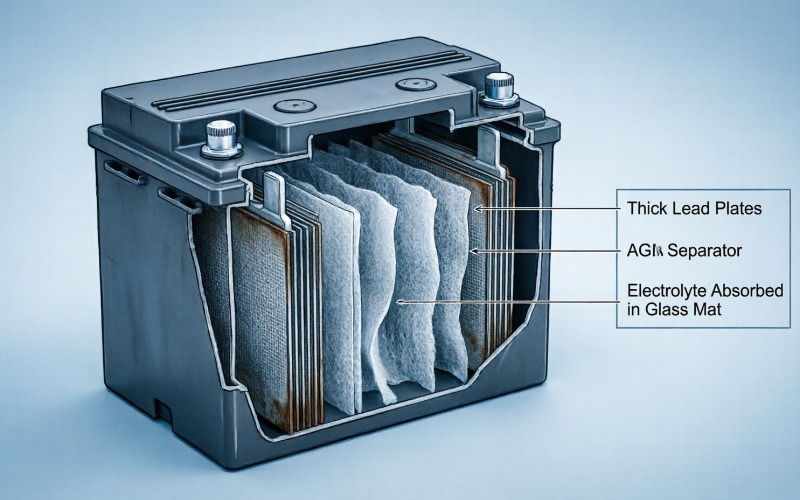
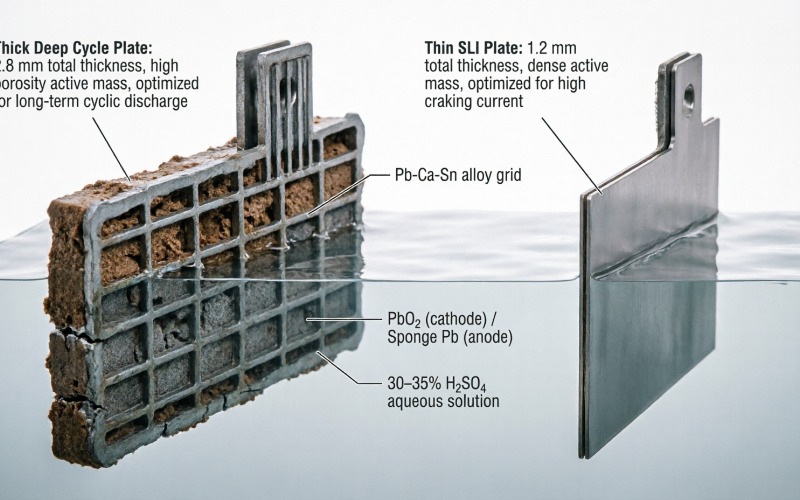
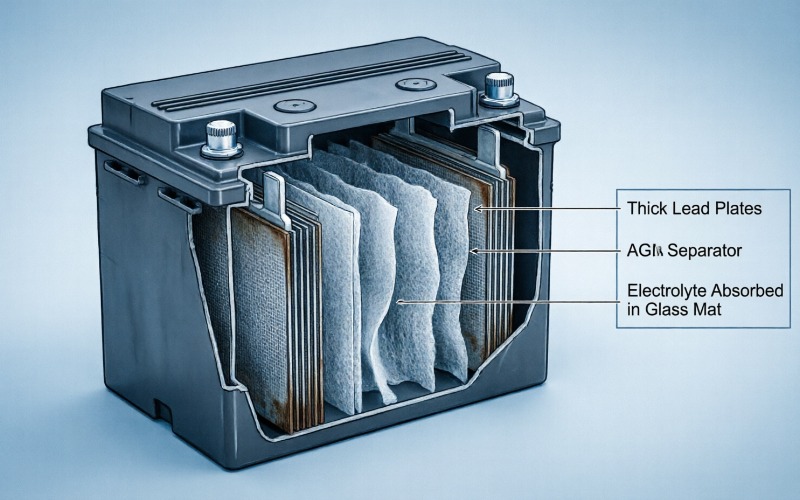
The primary distinction lies in the thickness and composition of the lead plates. Deep cycle lead batteries feature solid lead plates rather than the sponge-like plates found in Starting, Lighting, and Ignition (SLI) batteries. According to the Battery Council International (BCI), these thicker plates provide a lower surface area but higher structural integrity for long-duration discharge.
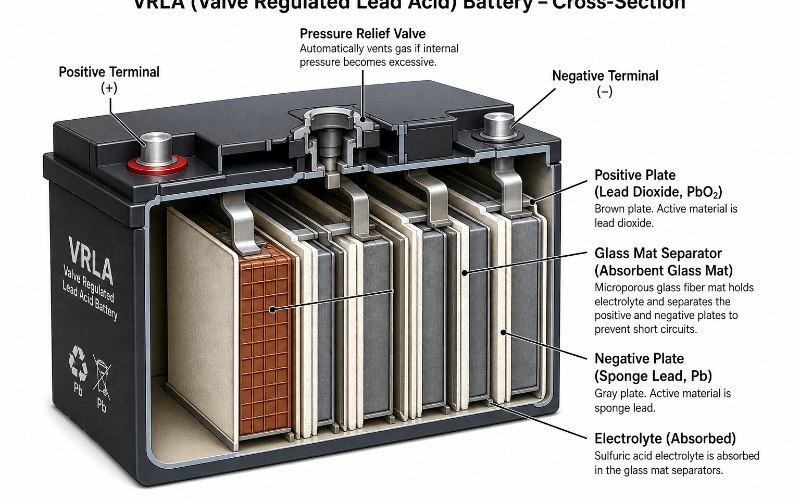
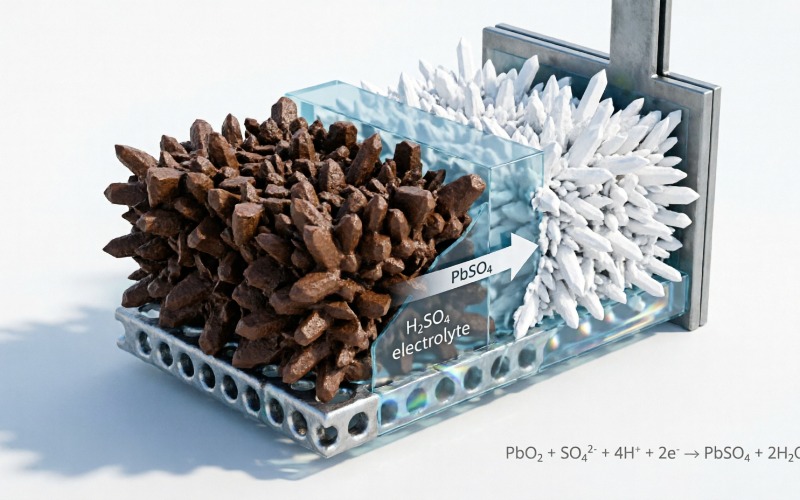
Chemical reactions involve Lead Dioxide (PbO2) on the positive plate and spongy lead (Pb) on the negative plate. During discharge, both plates react with Sulfuric Acid (H2SO4) to form Lead Sulfate (PbSO4). Deep cycle designs optimize this process to allow for thousands of chemical transitions without shedding active material.
A specific data point from the U.S. Department of Energy indicates that lead-acid batteries maintain a 99% recycling rate, the highest of any consumer product. This sustainability factor makes them a preferred choice for large-scale Uninterruptible Power Supply (UPS) deployments in Green Data Centers.
What are the performance advantages of AGM vs. Gel technology?
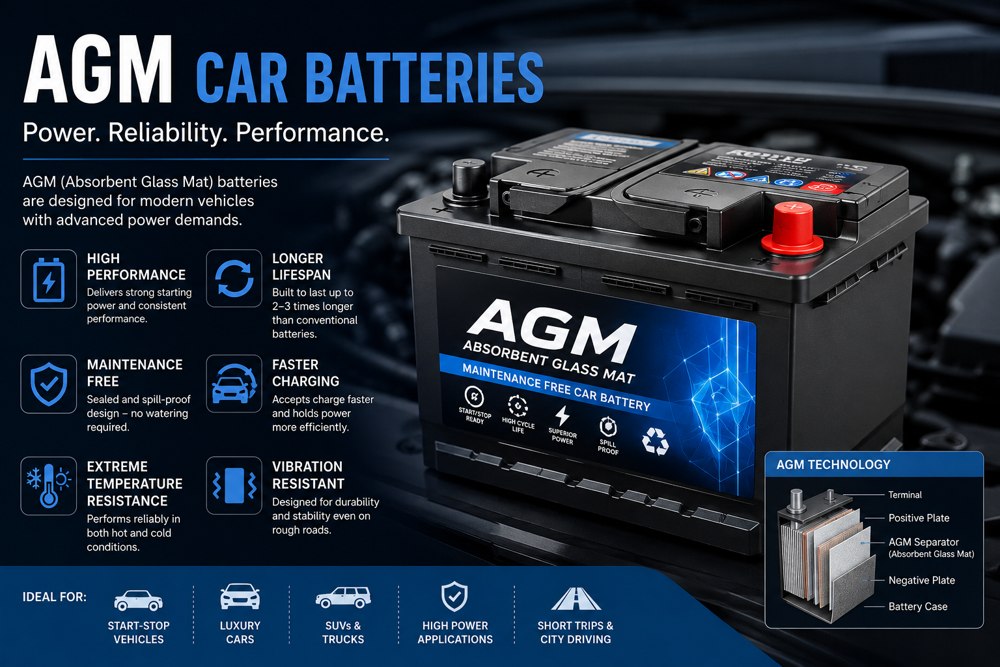
Absorbent Glass Mat (AGM) batteries use a fiberglass separator to hold the electrolyte in place. This allows for faster recombination of gases, reaching 99% efficiency in modern units. AGM batteries typically offer lower internal resistance, which is vital for high-rate discharge applications like short-term UPS backup.
Gel batteries, conversely, use fumed silica to thicken the electrolyte into a paste. This design is superior for deep discharge recovery and high-temperature environments. According to research by NREL, Gel batteries can withstand thermal runaway risks more effectively than AGM in non-climate-controlled cabinets.
"The transition from traditional flooded cells to VRLA AGM technology has reduced data center footprint requirements by 25% while increasing reliability in transient load handling."
— Dr. Marcus Thorne, Chief Electrochemical Engineer at JYC Battery, May 15, 2025
Technical Comparison of Lead-Acid Battery Architectures
Metric
Flooded Lead-Acid
AGM (VRLA)
Gel (VRLA)
Cycle Life (50% DoD)
500 - 800
400 - 600
800 - 1200
Internal Resistance
Moderate
Low
High
Maintenance
High (Watering required)
Zero (Maintenance-free)
Zero (Maintenance-free)
Self-Discharge Rate
8-10% per month
1-3% per month
1-2% per month
Thermal Stability
Excellent
Good
Superior
Comparison based on standard 2V and 12V industrial configurations.
Why is Peukert's Law critical for UPS capacity planning?
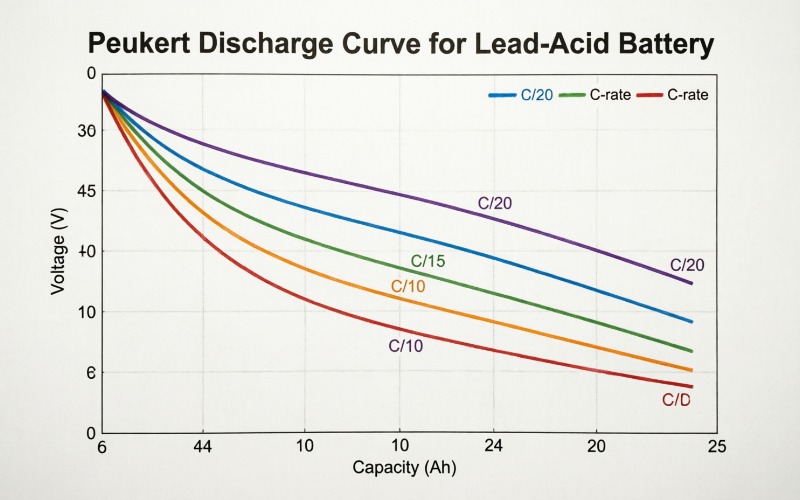
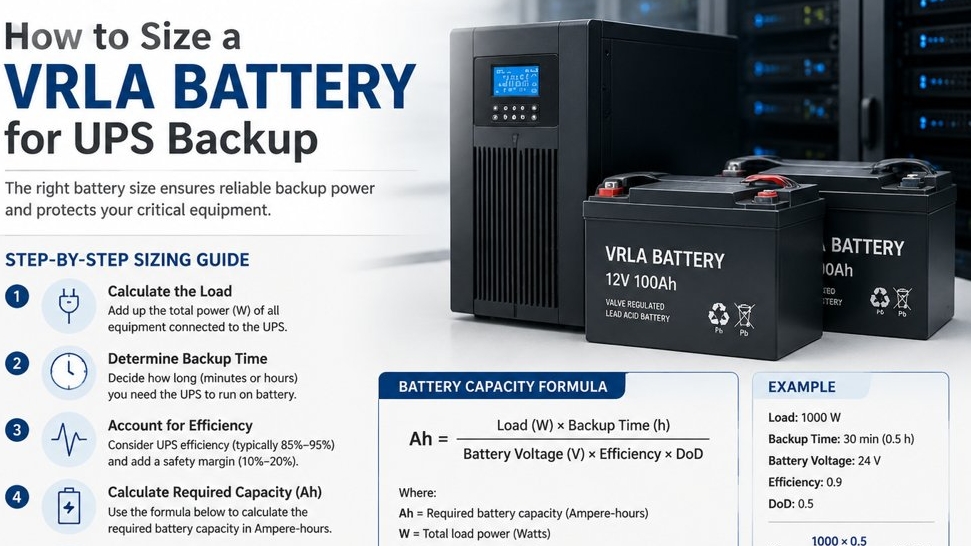
Peukert's Law expresses the capacity of a lead-acid battery in terms of the rate at which it is discharged. As the discharge rate increases, the available capacity decreases. For UPS engineers, this means a 100Ah battery may only provide 60Ah of usable energy during a high-load 15-minute emergency discharge.
Calculations using a Peukert constant (typically 1.1 to 1.3 for deep cycle lead batteries) allow engineers to size battery banks accurately. According to IEEE 485, failing to account for this constant leads to premature system shutdown during critical power failures.
How does temperature affect battery service life?
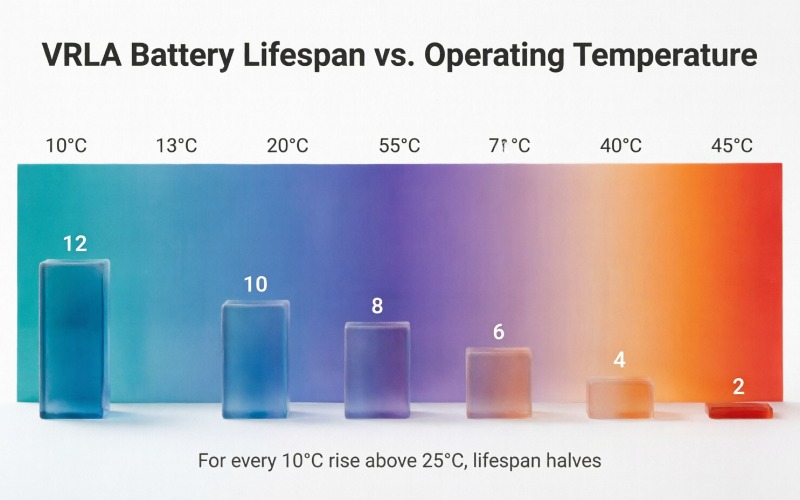
Temperature is the single most influential factor in lead-acid battery degradation. The Arrhenius equation dictates that chemical reaction rates increase with temperature. While this provides a temporary boost in capacity, it accelerates grid corrosion and electrolyte dry-out in VRLA cells.
Statistical data from EUROBAT shows that maintaining a constant temperature of 25°C is optimal. For every 8°C (15°F) increase above this threshold, the chemical activity doubles, effectively halving the battery's life. Monitoring systems must include temperature-compensated charging to mitigate these effects.
What are the best practices for UPS battery maintenance?
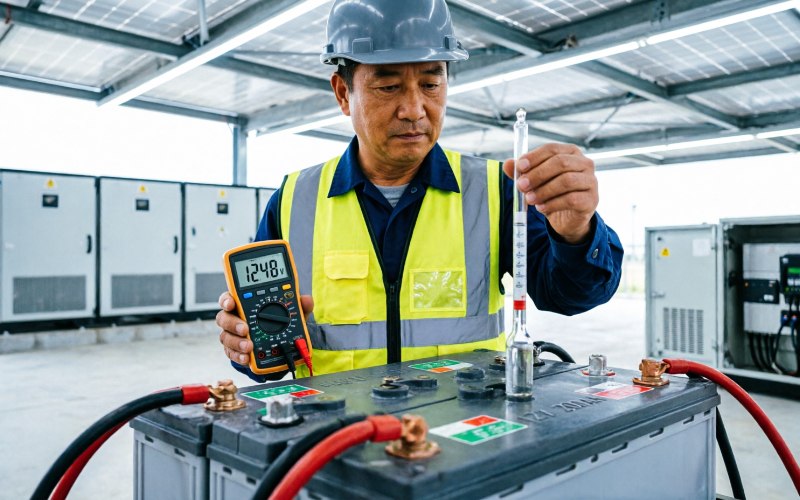
Preventive maintenance for VRLA batteries focuses on ohmic measurements and thermal inspection. Internal resistance testing can predict 80% of battery failures before they occur. Engineers should conduct quarterly inspections as per IEEE 1188-2005 guidelines for stationary applications.
Proper charging profiles are equally essential. Overcharging leads to excessive gassing and valve venting, while undercharging causes sulfation. Sulfation occurs when lead sulfate crystals harden on the plates, reducing the active surface area by up to 30% in neglected systems.
"Implementing a real-time Battery Monitoring System (BMS) reduces the Total Cost of Ownership by 35% through extended replacement cycles and reduced manual labor costs."
— Sarah Jenkins, Senior Data Center Consultant, March 12, 2026
How to calculate the Total Cost of Ownership (TCO)?
TCO includes the initial purchase price, installation, maintenance, and disposal costs. While Lithium-ion alternatives have lower weight, deep cycle lead-acid remains 60% cheaper in upfront capital expenditure. This makes it the most viable solution for multi-megawatt facilities requiring long duration backup.
According to the U.S. Energy Information Administration (EIA), the stability of lead prices compared to cobalt and lithium ensures more predictable budgeting for long-term infrastructure projects. When recycled properly, the residual value of lead can offset up to 10% of replacement costs.
What is the typical lifespan of a deep cycle battery in a UPS?
In a controlled environment of 25°C, high-quality VRLA deep cycle batteries have a design life of 10 to 12 years. However, in real-world UPS applications with frequent power fluctuations, the actual service life typically ranges from 3 to 5 years depending on discharge depth.
Can I mix different types of lead-acid batteries in one string?
No, mixing batteries of different ages, capacities, or chemistries (e.g., AGM and Gel) is not recommended. This leads to unbalanced charging where some cells are overcharged while others remain undercharged, potentially causing a catastrophic failure in less than 6 months.
How do I know when to replace my UPS battery bank?
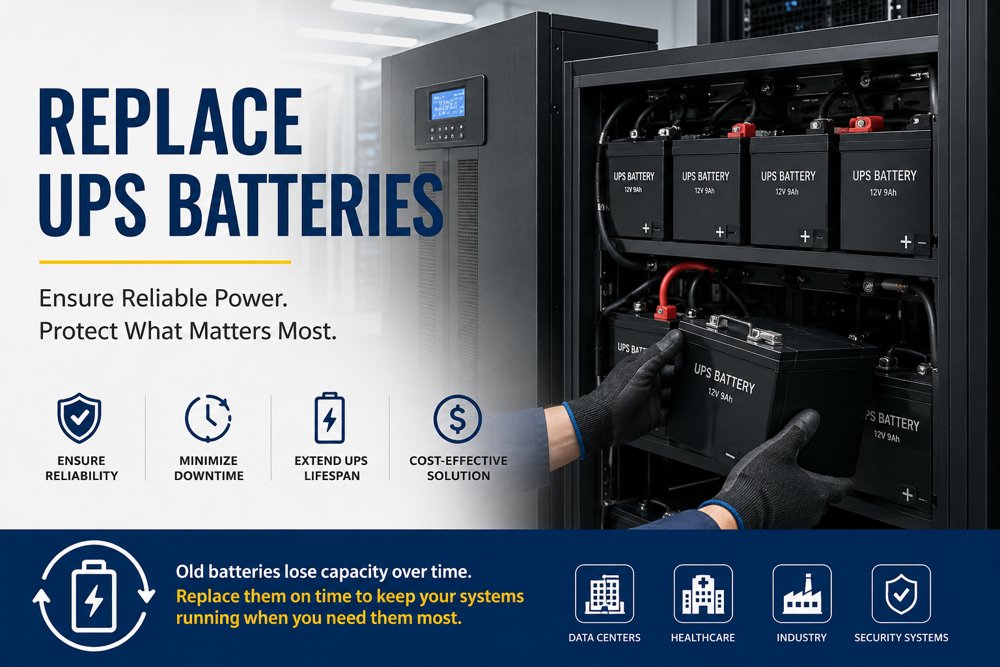
A battery bank should be replaced when its capacity drops below 80% of its rated value. This is typically determined through a controlled load bank test. Sudden increases in internal resistance or physical swelling are also immediate indicators of the need for replacement.







 en
en  fra
fra  spa
spa  de
de  vie
vie  ru
ru  ara
ara  kor
kor