This is more than just a series of products; it is an ecosystem we have built to achieve a more efficient, reliable, and sustainable energy future. Discover how our products and solutions can create t...
Our Industrial Batteries combine high-quality materials, robust design, and dependable performance. With excellent deep-cycle capability and easy maintenance, they are ideal for diverse applications. ...
JYC Transportation batteries are a category of power storage devices specifically designed for transportation scenarios, with core functions of providing continuous, stable, and high-efficiency power ...
JYC Motive Power batteries are deep-cycle energy storage devices specifically designed for industrial and commercial vehicles and specialized equipment. Their core function is to provide continuous an...
Based on the low-carbon concept, and thanks to the competitiveness of energy storage technology, lithium applications in various systems will be gradually realized globally. JYC Lithium Battery Soluti...
Focus on company news, product updates and market events. We provide continuous updates to bring you first-hand information, helping you stay informed about our development progress at all times.
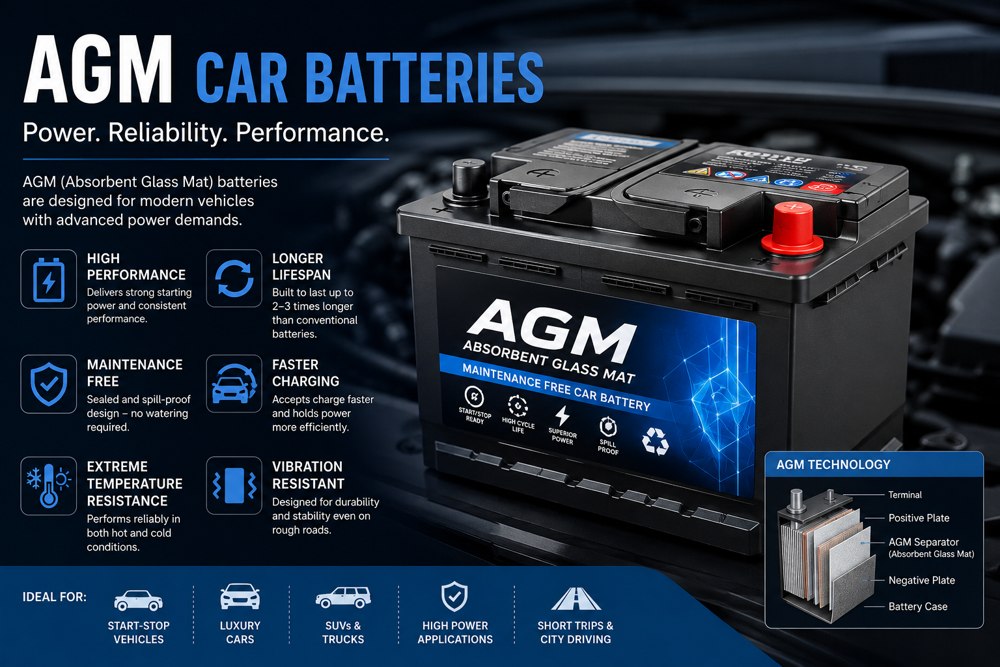
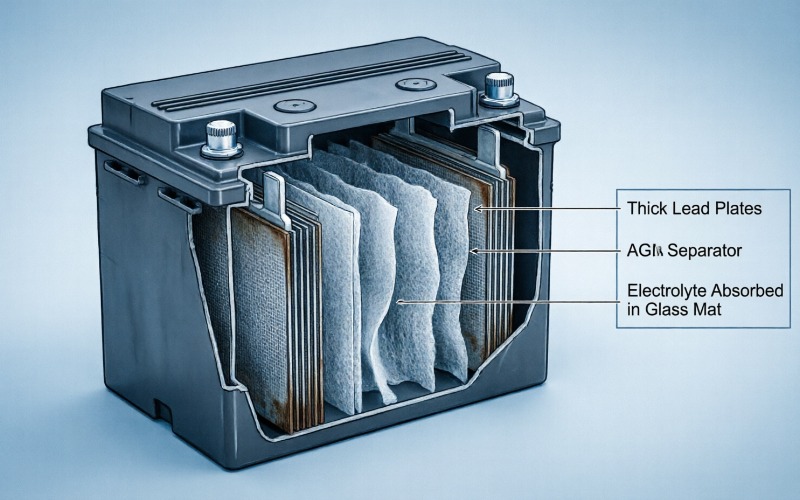
Absorbent Glass Mat (AGM) batteries typically last between 3 and 7 years under normal use. Their cycle life ranges from 200 to over 1000 cycles depending on depth of discharge (DoD). Proper charging and temperature control can significantly extend this lifespan.
Key Tkeaways
AGM batteries last 3–7 years in most applications, with cycle life of 200–1000 cycles.
Temerature, depth of discharge, and charging quality are the top three factors affecting lifespan.
Proper maintenance can extend battery life by up to 50% compared to neglect.
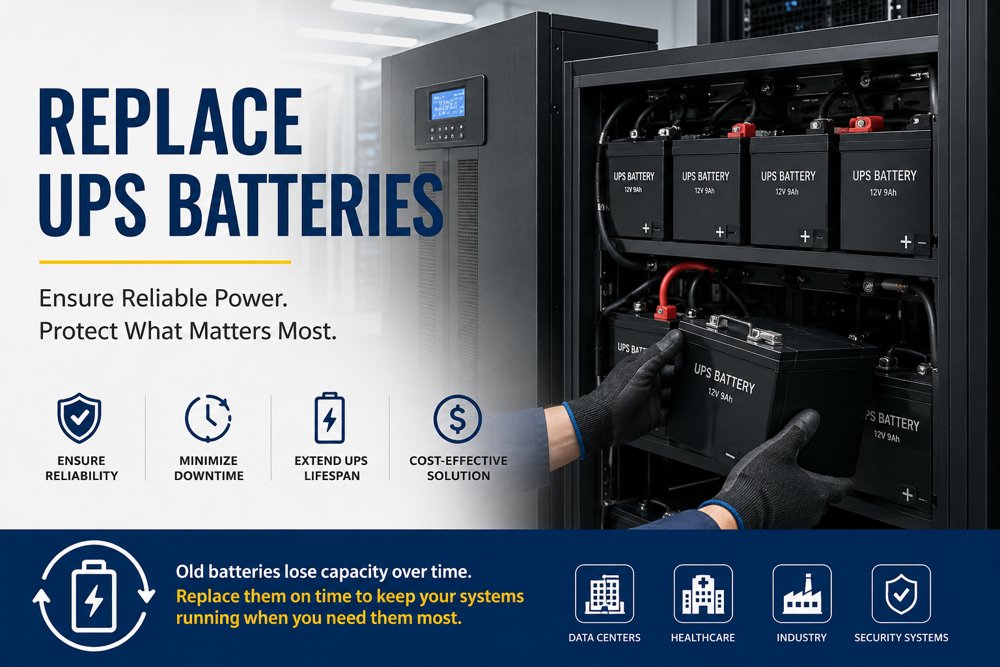
For system planning, see our UPS battery solutions to align the battery choice with site requirements.
How Long Do AGM Batteries Typically Last?
According to Battery University (2023), AGM batteries deliver 300–500 cycles at 80% DoD and up to 1000 cycles at 30% DoD. In float service (e.g., UPS backup), they often last 5–7 years. In cyclic applications like solar storage, lifespan drops to 3–5 years depending on usage patterns. A 2022 study in the Journal of Power Sources found that AGM batteries retained 80% capacity after 600 cycles at 50% DoD.
What Factors Shorten AGM Battery Life?
Three primary factors degrade AGM batteries: temperature, depth of discharge, and charging practices. The US Department of Energy reports that battery life halves for every 15°F above 77°F. DoD affects cycle count: cycling to 80% DoD yields 300 cycles, while 30% DoD yields over 1000 cycles. Overcharging causes grid corrosion, while undercharging leads to sulfation. A 2021 IEEE study showed that proper charging can extend life by 30%.
Factor
Impact on Lifespan
Mitigation
High Temperature
Life halves every 15°F above 77°F
Keep batteries in climate-controlled area
Deep Discharge
More cycles at shallow DoD
Limit DoD to 50% or less
Improper Charging
Overcharge: corrosion; Undercharge: sulfation
Use temperature-compensated chargers
For a suitable configuration, review our high-rate batteries for specifications and deployment options.
How Does Temperature Affect AGM Battery Life?
AGM batteries are sensitive to heat. At 77°F (25°C), a battery may last 7 years. At 95°F (35°C), life drops to 3.5 years. Cold reduces capacity but does not shorten life as much; however, charging below freezing can damage the battery. Battery University recommends maintaining a temperature between 60°F and 80°F for optimal life.
How Does Depth of Discharge Impact Cycle Life?
Depth of discharge is the percentage of capacity removed during a cycle. Shallower discharges allow more total cycles. East Penn Manufacturing data shows the following relationship:
Depth of Discharge (%)
Typical Cycle Life
100%
200–300
50%
600–900
30%
1000–1200
10%
3000+
For maximum lifespan, keep DoD below 50% in cyclic applications. In standby use, batteries are rarely discharged deeply, allowing longer calendar life.
How to Extend AGM Battery Life?
Optimal Charging
Use a smart charger with temperature compensation. Avoid overcharging above 14.7V for 12V systems. Undercharging leads to sulfation. The IEEE 1188 standard recommends equalizing charges occasionally if the battery is deeply discharged.
Regular Maintenance
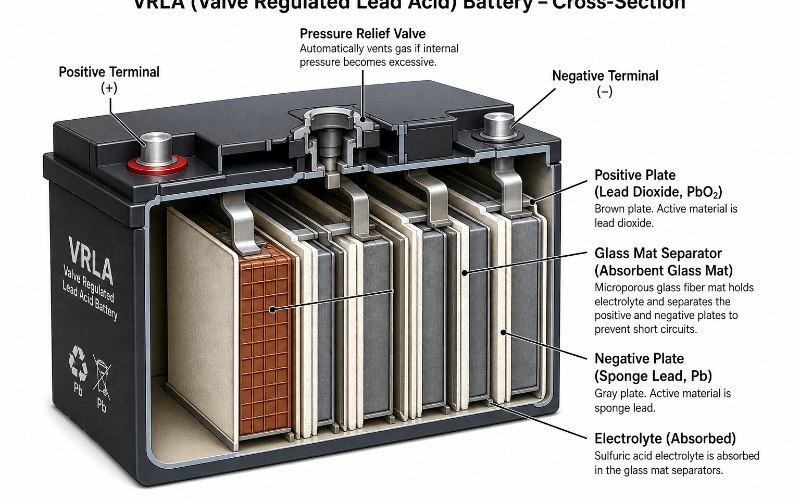
Keep terminals clean, check voltage monthly, and ensure proper ventilation. AGM batteries are valve-regulated but still gas slightly during overcharge. Cleaning prevents parasitic drain.
AGM batteries offer moderate lifespan and maintenance. Flooded lead-acid last 3–5 years, gel batteries 4–6 years, and lithium-ion (LiFePO4) 8–12 years. However, AGM is often preferred for its balanced cost and performance.
AGM batteries offer reliable power storage with a typical lifespan of 3–7 years. By controlling temperature, limiting DoD, and using proper charging, users can maximize return on investment. While newer lithium technologies last longer, AGM remains a cost-effective choice for many applications.
Frequently Asked Questions
What is the average lifespan of an AGM battery?
Most AGM batteries last 3–7 years in real-world use. In standby applications like UPS, they can last 5–7 years. In deep-cycle solar use, 3–5 years is typical if cycled daily.
Can an AGM battery last 10 years?
It's rare but possible under ideal conditions: constant 77°F temperature, very shallow discharges (<20% DoD), and perfect charging. Most users should expect 5–7 years maximum.
How do I know when my AGM battery is failing?
Signs include reduced runtime, bulging case, low voltage (below 12.4V resting), and inability to hold charge upon load test. A 2023 study in Enel X found that capacity below 80% is considered end of life.







 en
en  fra
fra  spa
spa  de
de  vie
vie  ru
ru  ara
ara  kor
kor