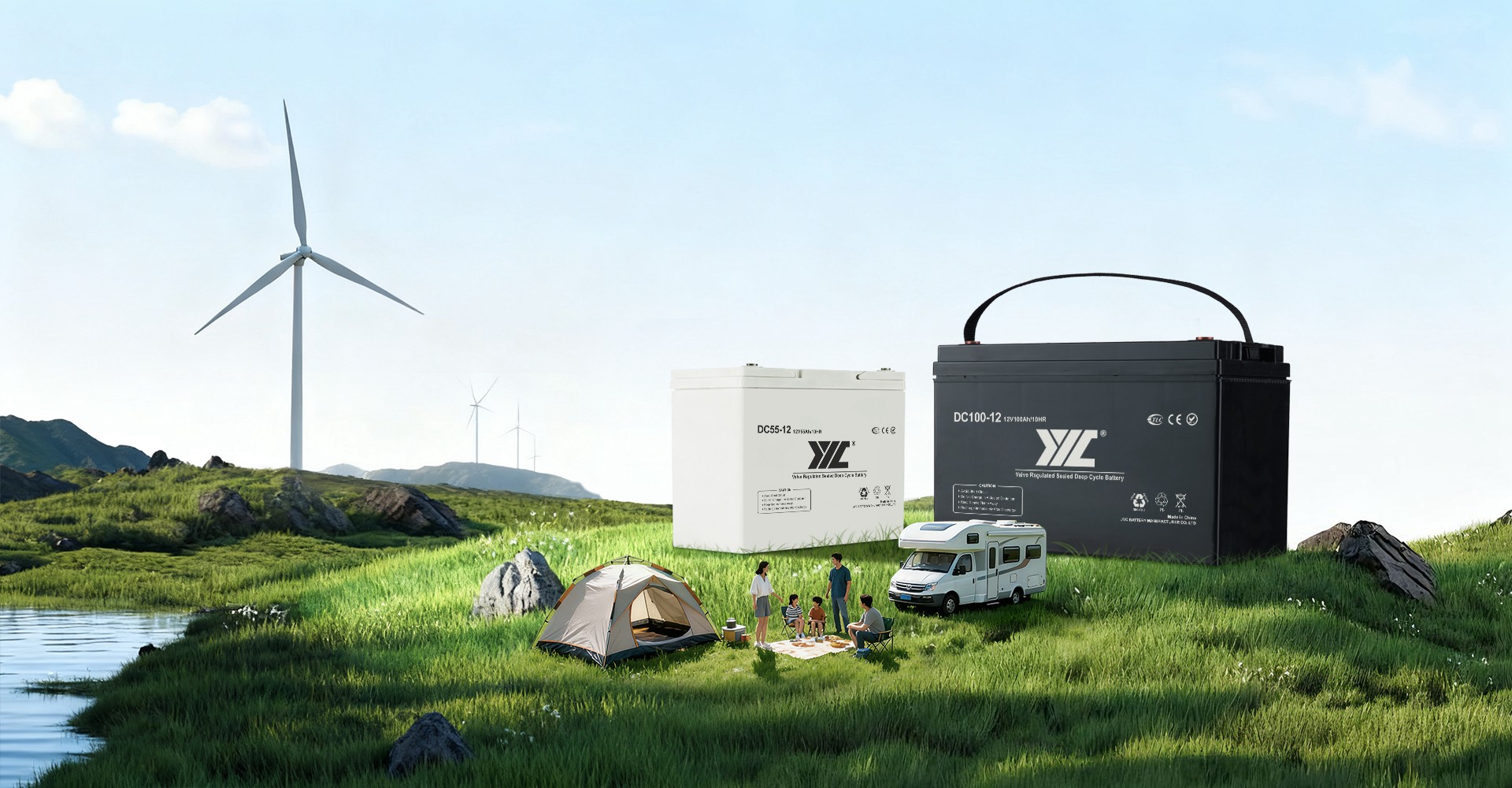
This is more than just a series of products; it is an ecosystem we have built to achieve a more efficient, reliable, and sustainable energy future. Discover how our products and solutions can create t...
Our Industrial Batteries combine high-quality materials, robust design, and dependable performance. With excellent deep-cycle capability and easy maintenance, they are ideal for diverse applications. ...
JYC Transportation batteries are a category of power storage devices specifically designed for transportation scenarios, with core functions of providing continuous, stable, and high-efficiency power ...
JYC Motive Power batteries are deep-cycle energy storage devices specifically designed for industrial and commercial vehicles and specialized equipment. Their core function is to provide continuous an...
Focus on company news, product updates and market events. We provide continuous updates to bring you first-hand information, helping you stay informed about our development progress at all times.
Tubular Plate vs Flat Plate Lead Acid Batteries for Heavy Duty Applications
2026-11-26 10:30:57
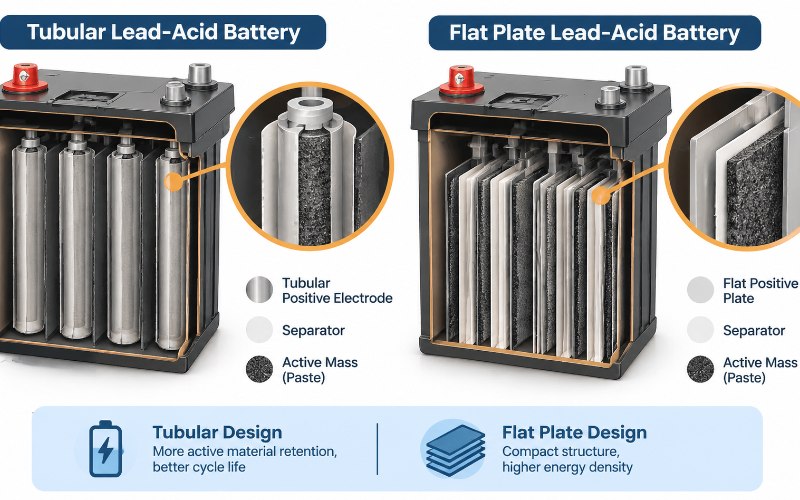
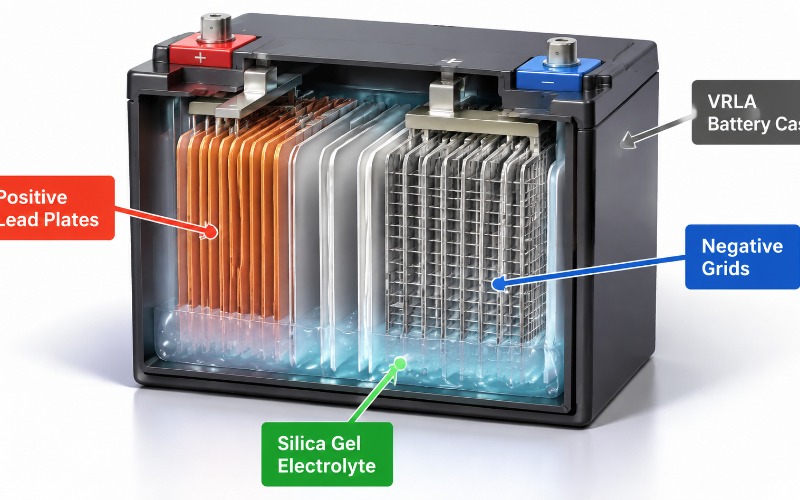
When designing robust power storage solutions, evaluating the structural mechanics of a tubular battery vs flat plate battery is critical for engineers. A tubular plate lead acid battery utilizes a specialized multi-spine positive grid encased in a porous gauntlet, whereas flat plate variants rely on pasted grids. According to industry standards from the International Electrotechnical Commission, these distinct geometries dictate active material retention, deep cycling capacity, and total operational lifespan in heavy-duty environments.
What is the fundamental difference between tubular positive plates and pasted flat plates?
The core distinction between these two technologies lies in how lead dioxide, the positive active material, is mechanically supported. Pasted flat plates rely on a planar grid structure where the active paste is applied directly to the surface of a cast lead alloy grid. This design provides high initial surface area and excellent high-rate discharge performance for short-duration loads. However, continuous expansion and contraction during charge-discharge cycles subject the flat paste to mechanical stress.
In contrast, an opzv tubular plate distributes active material inside a series of vertical lead spines surrounded by individual porous tubes. This geometric configuration confines the active mass securely against the conductive spine, preventing structural disintegration. According to research published by the IEEE, this multi-spine design reduces shedding by up to 40% compared to standard pasted alternatives under identical thermal and electrical stress parameters.
\
How the woven polyester gauntlet structure prevents positive active material shedding
The longevity of a heavy duty deep cycle battery largely depends on its ability to retain active mass during deep discharges. The gauntlet plate design utilizes high-density woven polyester or multi-layered synthetic tubes slipped over the lead-antimony or lead-calcium spines. These microscopic pores allow electrolyte penetration while physically locking the active material particles in place.
During cycling, active material naturally tends to soften and shed to the bottom of the battery jar as sediment. The gauntlet structure neutralizes this failure mode by maintaining constant mechanical pressure on the positive active mass. Consequently, internal resistance remains stable over thousands of cycles, preserving overall energy efficiency and preventing premature short circuits caused by sediment bridging.
Why OPzV and OPzS tubular batteries achieve fifteen to twenty year design lifespans
Industrial installations requiring exceptional reliability turn to stationary flooded OPzS and gel-regulated OPzV variants. These systems achieve operational lifespans reaching twenty years due to low corrosion rates in their heavy-gauge positive spines. Furthermore, the thick-section casting of the spines reduces grid growth, a primary degradation mechanism in standard lead-acid architectures.
According to long-term operational data from utility-scale energy storage deployments, tubular lead acid tubular battery units maintain over 80% of their initial nominal capacity after 1,500 to 2,000 deep discharge cycles at a frequentemente 80% Depth of Discharge (DoD). This performance tier significantly outperforms standard flat plate designs, which typically degrade much faster under similar cyclical demands.
Total cost of ownership comparison across heavy continuous cyclic applications
Evaluating capital expenditure versus operational expenditure reveals distinct economic profiles for each battery technology. While flat plate batteries present a lower initial purchase price, their shorter service life requires frequent replacements in demanding environments. Over a twenty-year horizon, recurring replacement labor, system downtime, and recycling fees often drive cumulative expenses much higher.
Performance Metric
Tubular Plate Battery (OPzS/OPzV)
Standard Flat Plate Battery
Design Life (Float)
15 to 20 Years
5 to 10 Years
Cycle Life at 80% DoD
1,500 to 2,000 Cycles
500 to 700 Cycles
Active Material Retention
High (Gauntlet Secured)
Moderate (Pasted Grid)
Initial Capital Cost
Higher
Lower
Total Lifecycle Cost
Optimized for Long-Term
Higher Due to Replacements
Which specific industrial installations require tubular plates rather than standard flat plates
Selecting the correct plate geometry depends entirely on the operational duty cycle and environmental profile of the installation site. Telecommunications infrastructure planners favor tubular batteries for remote cellular base stations where grid instability demands robust deep-cycling resilience. Similarly, microgrid designers utilize these systems to manage intermittent renewable energy storage profiles safely.
Utility engineers also specify tubular configurations for sub-station switchgear control and emergency backup systems where failure is not an option. Conversely, standard flat plate batteries remain well-suited for light-duty standby applications, such as small UPS systems, where high-rate short-duration discharge matters more than deep cyclic endurance.
For more detailed technical specifications on advanced energy storage solutions, explore our range of industrial VRLA battery products designed for demanding global infrastructure requirements.






 en
 fra
 spa
 de
 vie
 ru
 ara
 kor