This is more than just a series of products; it is an ecosystem we have built to achieve a more efficient, reliable, and sustainable energy future. Discover how our products and solutions can create t...
Our Industrial Batteries combine high-quality materials, robust design, and dependable performance. With excellent deep-cycle capability and easy maintenance, they are ideal for diverse applications. ...
JYC Transportation batteries are a category of power storage devices specifically designed for transportation scenarios, with core functions of providing continuous, stable, and high-efficiency power ...
JYC Motive Power batteries are deep-cycle energy storage devices specifically designed for industrial and commercial vehicles and specialized equipment. Their core function is to provide continuous an...
Focus on company news, product updates and market events. We provide continuous updates to bring you first-hand information, helping you stay informed about our development progress at all times.
Understanding Lead Acid Battery Internal Resistance and What Influences Impedance
2026-11-10 13:45:43
Lead acid battery internal resistance represents the opposition to current flow within an electrochemical cell, directly dictating voltage drop and thermal output during discharge. According to standards by the International Electrotechnical Commission (IEC), understanding these milliohm metrics is essential for maintaining reliable backup power systems in critical data centers and electrical substations.
What is lead acid battery internal resistance and how does it affect available power output?
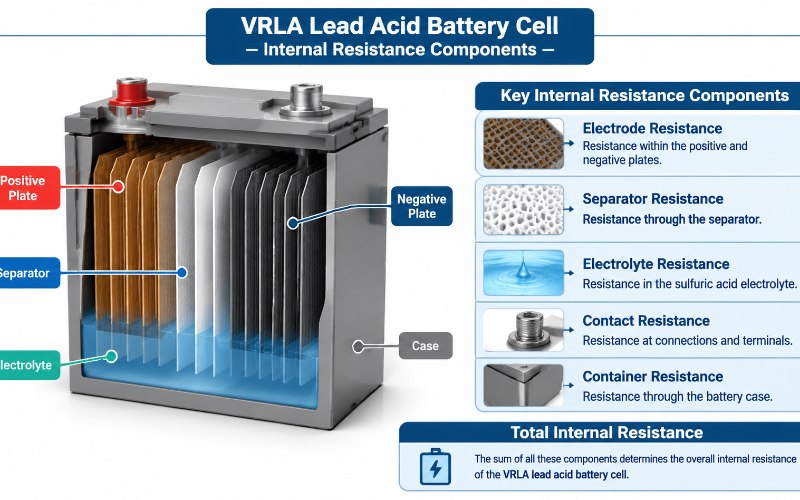
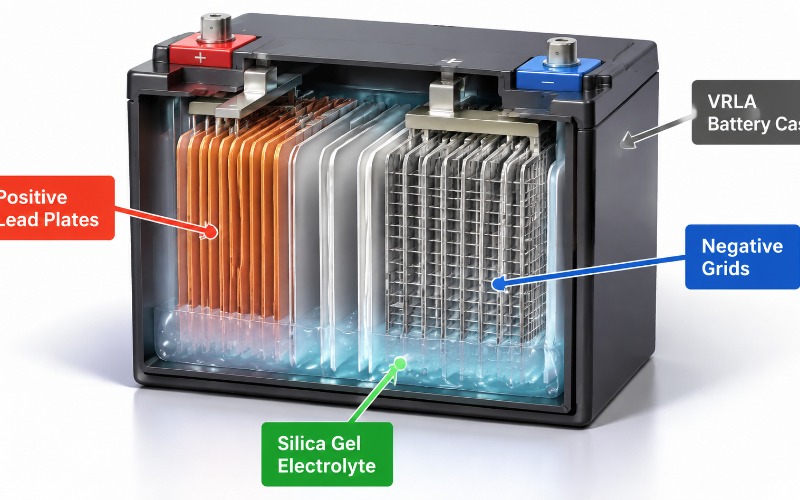
Internal resistance in a VRLA battery consists of both electronic resistance from the grid structure, terminals, and strap connections, as well as ionic resistance through the sulfuric acid electrolyte and separator matrix. When a high current load is applied, Ohm's law dictates that an elevated internal resistance causes a severe terminal voltage sag, diminishing the actual power delivered to critical loads.
According to IEEE operational guidelines published by the Institute of Electrical and Electronics Engineers, initial resistance values are typically measured in the sub-milliohm range for healthy cells. As this resistance creeps upward due to aging, the internal power losses transform electrical energy directly into waste heat rather than useful work.
Primary chemical factors that drive internal resistance higher during deep discharge
During deep discharge cycles, lead dioxide on the positive plate and spongy lead on the negative plate convert into lead sulfate. This chemical transformation significantly reduces electrolyte conductivity because sulfuric acid is consumed in the reaction, lowering the specific gravity of the liquid solution.
Furthermore, prolonged discharge or incomplete recharging causes hard sulfation, where large lead sulfate crystals permanently block the porous active material of the plates. According to electrochemical research, this structural blockage restricts ion diffusion, driving internal resistance exponentially higher and permanently reducing the capacity of the energy storage unit.
Why internal resistance serves as an indispensable indicator of battery state of health
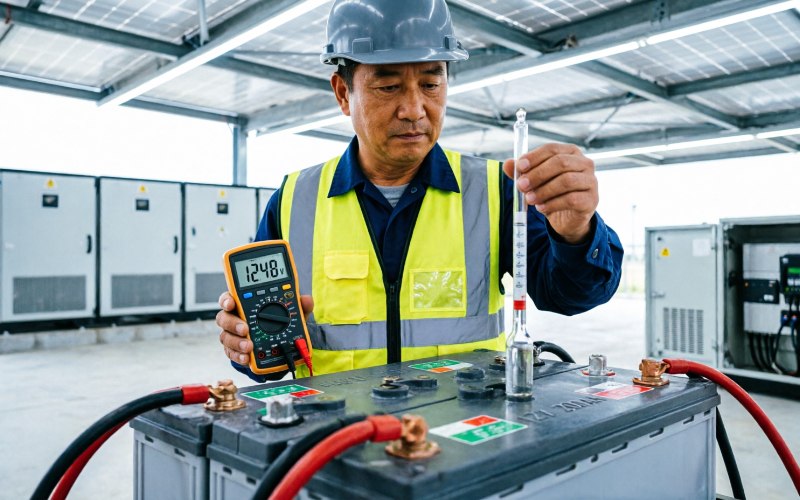
Tracking internal resistance trends provides technicians with a non-intrusive method to perform a comprehensive battery state of health check without taking the string offline. When internal resistance deviates by more than 30% to 50% from baseline installation benchmarks, it strongly indicates internal degradation mechanisms such as grid corrosion, plate sulfation, or dry-out in valve-regulated designs.
Maintenance engineers rely on regular impedance tracking to schedule proactive replacements before catastrophic failures occur during emergency utility outages. Establishing a localized baseline during commissioning ensures that localized anomalies are detected early in the operational lifecycle of the power plant.
Measuring milliohm impedance using AC conductance methods versus high current DC load testing
Accurate diagnostic testing requires understanding the distinct advantages and limitations of AC conductance versus traditional DC load testing methodologies. AC conductance injects a low-frequency signal to measure how easily current flows through the electrochemical structure, offering a quick and safe assessment without discharging the cell.
Conversely, high-current DC load testing applies a heavy discharge burden to measure real-time voltage response under authentic operational stress. While DC loading validates actual runtime capacity, AC testing provides rapid screening capabilities across large installations containing hundreds of individual blocks.
Testing Method
Primary Measurement
Operational Safety
Equipment Complexity
AC Conductance
Mhos / Milliohms (Impedance)
High (Non-discharge)
Portable handheld meter
DC Load Testing
Voltage under heavy discharge
Moderate (Requires load bank)
Heavy-duty resistive load cart
Can excessive internal resistance cause thermal damage during heavy current draw?
Excessive internal resistance generates severe localized heat when high current passes through degraded internal connections or sulfated plates. According to thermodynamic principles, power loss equals the square of the current multiplied by the internal resistance ($P = I^2R$), meaning even a small increase in milliohms results in exponential heat generation under heavy loads.
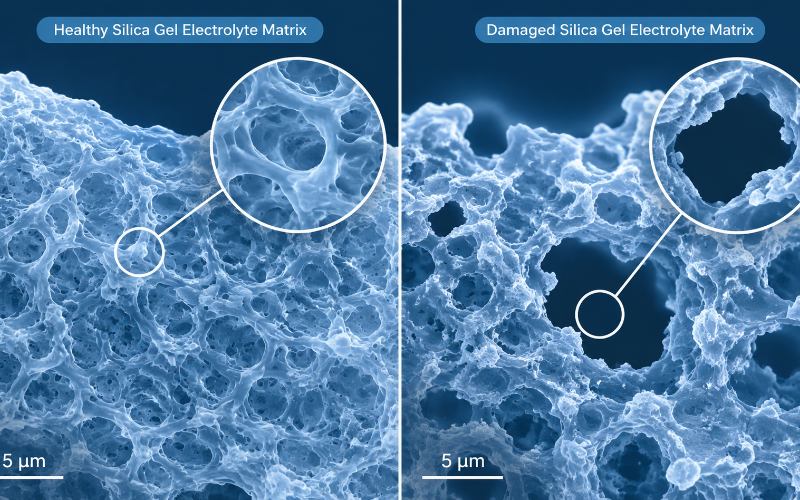
This localized thermal accumulation accelerates electrolyte dry-out in VRLA cells, creating a dangerous positive feedback loop known as thermal runaway. Monitoring resistance trends remains the most effective preventive measure against catastrophic battery fires and unexpected system downtime in mission-critical facilities.








 en
 fra
 spa
 de
 vie
 ru
 ara
 kor