This is more than just a series of products; it is an ecosystem we have built to achieve a more efficient, reliable, and sustainable energy future. Discover how our products and solutions can create t...
Our Industrial Batteries combine high-quality materials, robust design, and dependable performance. With excellent deep-cycle capability and easy maintenance, they are ideal for diverse applications. ...
JYC Transportation batteries are a category of power storage devices specifically designed for transportation scenarios, with core functions of providing continuous, stable, and high-efficiency power ...
JYC Motive Power batteries are deep-cycle energy storage devices specifically designed for industrial and commercial vehicles and specialized equipment. Their core function is to provide continuous an...
Focus on company news, product updates and market events. We provide continuous updates to bring you first-hand information, helping you stay informed about our development progress at all times.
How Temperature Affects Lead Acid Battery Performance and Chemical Reaction Rates
2026-11-06 09:28:45
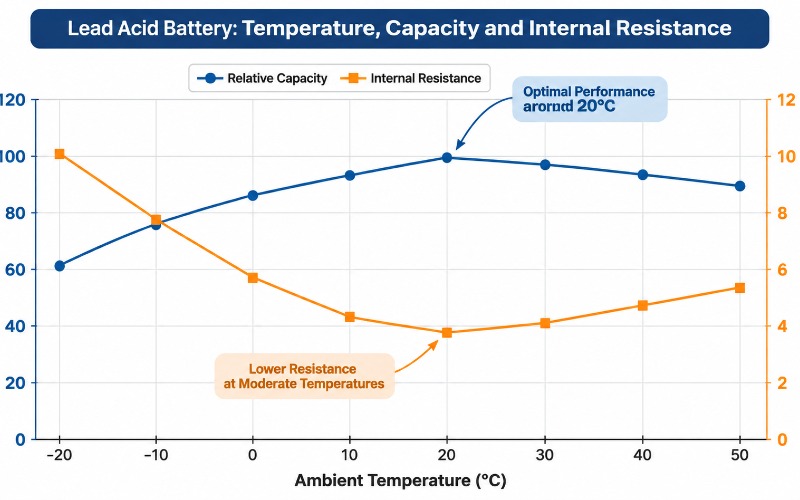
The lead acid battery temperature effect dictates that electrochemical reaction rates accelerate in heat and decelerate in cold conditions. According to the International Electrotechnical Commission (IEC), standard valve-regulated lead-acid (VRLA) operating ranges center around 25°C, where thermal deviations directly impact capacity, internal resistance, and overall service life. Outdoor equipment engineers and solar engineering, procurement, and construction (EPC) contractors must understand these thermodynamic principles to design reliable energy storage systems.
Why does ambient temperature exert such a strong influence on lead acid electrochemistry?
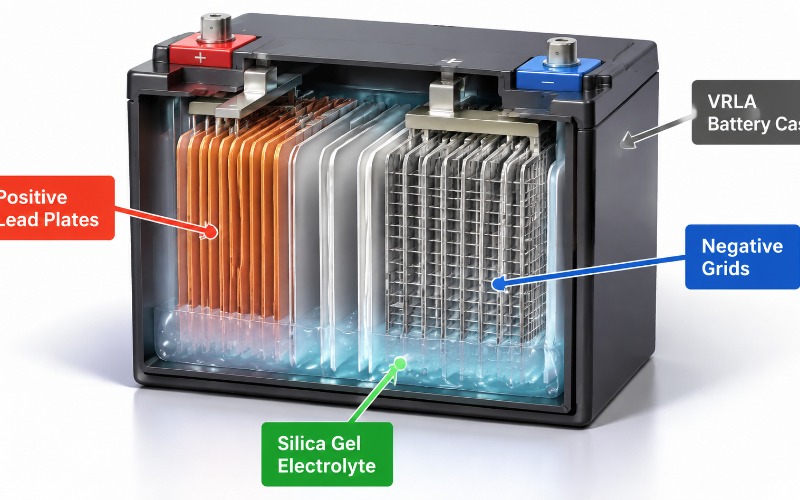
Electrochemical storage relies on active material interactions between lead dioxide plates, spongy lead, and sulfuric acid electrolyte. When ambient temperatures rise, ion mobility increases significantly within the liquid or immobilized electrolyte matrix. This increased ionic velocity reduces internal resistance and momentarily boosts available discharge capacity. However, this thermodynamic agitation also accelerates parasitic chemical reactions within the cell.
According to research published by the Institute of Electrical and Electronics Engineers (IEEE), every 1°C rise above the optimal baseline increases local self-discharge rates by approximately 5% to 10%. Telecommunication facility planners frequently observe this phenomenon in poorly climate-controlled outdoor cabinets during peak summer months. Elevated internal temperatures drive accelerated grid corrosion and premature active material softening, permanently reducing the energy throughput of the VRLA battery.
Conversely, sub-optimal cold environments suppress kinetic energy at the plate-electrolyte interface. The viscosity of the sulfuric acid electrolyte increases sharply as thermal energy leaves the system. This higher viscosity severely impedes ion diffusion rates through the microporous separators. Consequently, voltage sag occurs under load because the chemical conversion rate cannot keep pace with electrical demand.
How does the Arrhenius rule cut operating service life in half for every ten-degree increase?
The Arrhenius rate law provides a mathematical foundation for predicting chemical reaction velocity changes relative to thermal fluctuations. In lead-acid battery engineering, this thermodynamic principle dictates that the rate of chemical degradation doubles for every 10°C increase above the standard design temperature of 25°C. A battery rated for a ten-year design life at 25°C will often fail within five years if continuously operated at an ambient temperature of 35°C.
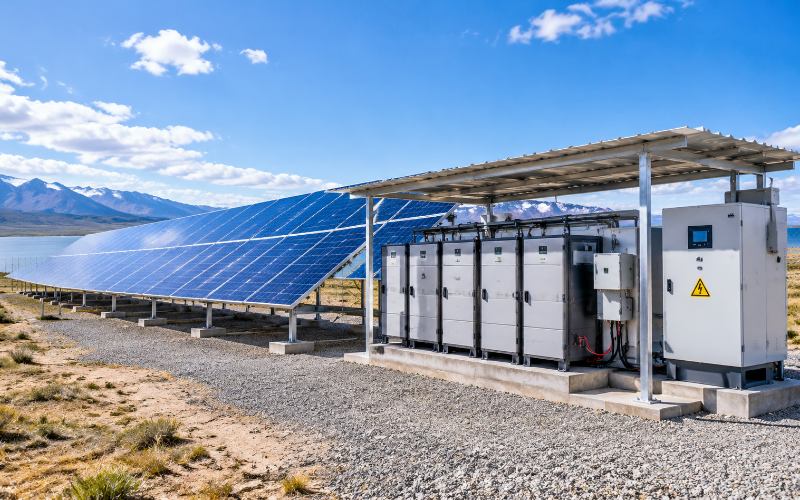
Thermal degradation manifests primarily as rapid grid corrosion, positive plate sulfation anomalies, and electrolyte dry-out. According to industrial reliability data compiled by stationary power standard organizations, continuous operation at 45°C cuts expected service life by up to 75%. Solar EPC contractors configuring remote off-grid sites must account for solar gain inside unshaded enclosures. Direct solar radiation can easily push internal cabinet temperatures 20°C above ambient readings.
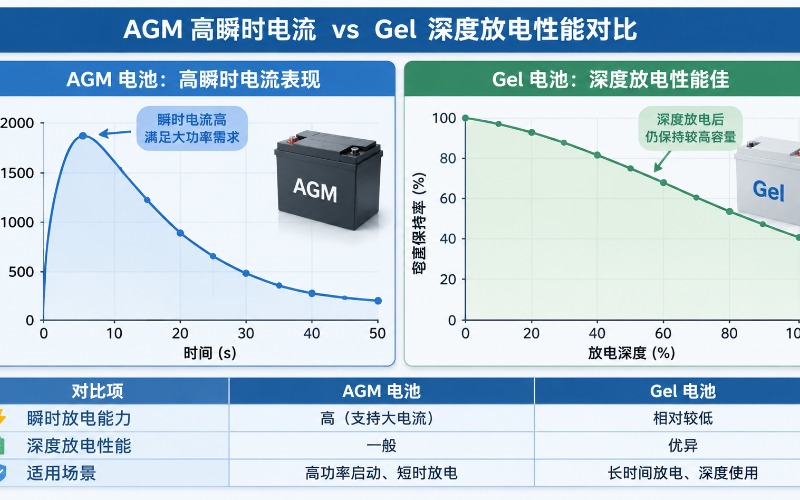
Mitigating this rapid degradation requires strict adherence to temperature-compensated charging algorithms. Smart chargers reduce float voltage as ambient temperatures rise to prevent excessive gassing and thermal runaway. Without thermal compensation, high temperatures cause overcharging, which rapidly depletes water content in flooded designs and accelerates dry-out in absorptive glass mat (AGM) systems.
What happens to cold cranking amps and usable capacity below freezing temperatures?
Sub-zero operating environments present severe operational challenges for outdoor equipment engineers relying on dependable starting and reserve power. At -18°C (0°F), a typical lead-acid battery loses approximately 30% to 50% of its nominal Amp-hour (Ah) capacity compared to baseline performance at 25°C. This capacity loss occurs because lower thermal energy levels stall the chemical conversion of lead sulfate back into active lead and sulfuric acid.
Battery cold cranking amps (CCA), which measure a battery's ability to deliver high current loads in cold weather, drop drastically as internal resistance spikes. According to automotive and industrial testing benchmarks, internal resistance can double when temperatures drop from room temperature to -20°C. This spike in resistance causes severe voltage drop under heavy high-rate discharge conditions, challenging starter motors and sensitive telecommunication radio equipment.
To evaluate performance across typical operating envelopes, engineers rely on standardized operational temperature ranges. The table below outlines how capacity and resistance shift across thermal thresholds.
Ambient Temperature
Relative Capacity (%)
Internal Resistance Multiplier
Primary Degradation Risk
40°C (104°F)
105% (Temporary boost)
0.8x
Thermal runaway & grid corrosion
25°C (77°F)
100% (Baseline)
1.0x
Normal calendar aging
0°C (32°F)
85%
1.5x
Reduced power delivery
-20°C (-4°F)
50%
2.5x
Severe voltage sag & low CCA
What are the critical ventilation and thermal management considerations for indoor battery enclosures?
Indoor and sheltered battery enclosures require careful engineering to manage both heat accumulation and gas evolution risks. During charging cycles, VRLA and flooded lead-acid batteries generate hydrogen and oxygen gases through the electrolysis of water. According to international safety standards, ventilation systems must maintain hydrogen gas concentrations well below the lower explosive limit of 4% by volume to prevent catastrophic failure.
Natural convection ventilation is frequently sufficient for small-scale installations, provided that inlet and outlet vent sizing adheres to strict area calculations. However, large telecommunication facility planners must install forced-air ventilation or active HVAC systems in rooms housing high-capacity industrial battery banks. These active climate control systems ensure that ambient temperatures remain within the ideal 20°C to 25°C window, directly neutralizing the Arrhenius aging acceleration factors.
Thermal management design must also prevent localized hot spots within multi-tier battery racks. Airflow stagnation between tightly packed units creates temperature differentials exceeding 5°C across the string. These thermal gradients cause uneven internal resistance, leading to unbalanced charging currents and premature failure of individual cells within the bank.
Can a fully charged lead acid or gel battery freeze during severe winter weather?
A common inquiry among field engineers is whether a gel battery or standard VRLA unit can freeze during severe winter weather conditions. The freezing point of a lead-acid battery electrolyte depends directly on its specific gravity and state of charge (SoC). Sulfuric acid acts as a powerful antifreeze agent when properly mixed into the water solution within the active cell matrix.
A fully charged lead-acid battery with a specific gravity of 1.265 to 1.280 features an electrolyte freezing point of approximately -68°C (-90°F). Under these ideal energy storage conditions, the risk of internal freezing is extremely low even in arctic field deployments. However, the freezing threshold changes dramatically as the battery discharges and acid converts back into lead sulfate, leaving mostly water in the electrolyte solution.
When a lead-acid or gel battery drops to a 40% state of charge, the specific gravity falls to roughly 1.150, raising the freezing point to approximately -15°C (5°F). A completely discharged battery with a specific gravity near 1.000 will freeze at just 0°C (32°F). When the electrolyte freezes, the expanding ice crystals fracture the positive and negative active plates, buckling internal grids and destroying the separator materials permanently.





 en
 fra
 spa
 de
 vie
 ru
 ara
 kor