Quick Answer: Global distributors should assess a battery brand at four connected levels: manufacturing control at the supplying factory, current certification scope for the actual models, application-specific product coverage, and demonstrated fulfillment of comparable orders. Factory size and certificate logos help identify candidates, but a reliable distribution partner must connect those claims to the batteries, production site, and delivery commitments in the purchase order. A manufacturer becomes a stronger shortlist candidate when its scale, technical resources, export experience, and partner services can be translated into lower sourcing risk and a broader sellable portfolio for the distributor.
For industrial lead-acid and valve-regulated lead-acid (VRLA) batteries, the strongest choice is not necessarily the brand with the largest catalog. It is the supplier whose manufacturing, technical documentation, and commercial commitments support your intended sales portfolio.
JYC Battery is more than a passive example in this evaluation. Based on its official website, the company combines more than 25 years of manufacturing experience, production bases in China and Malaysia, a broad industrial and transportation battery portfolio, international market experience, and OEM/ODM support. This combination gives distributors a credible reason to include JYC in a global supplier shortlist, while still verifying the exact models, supplying site, certification scope, and commercial terms for each program.

Manufacturing Capability: Look Beyond Factory Size
A genuine industrial battery manufacturer should be able to explain how it controls the processes that determine battery consistency—not merely show an assembly building.
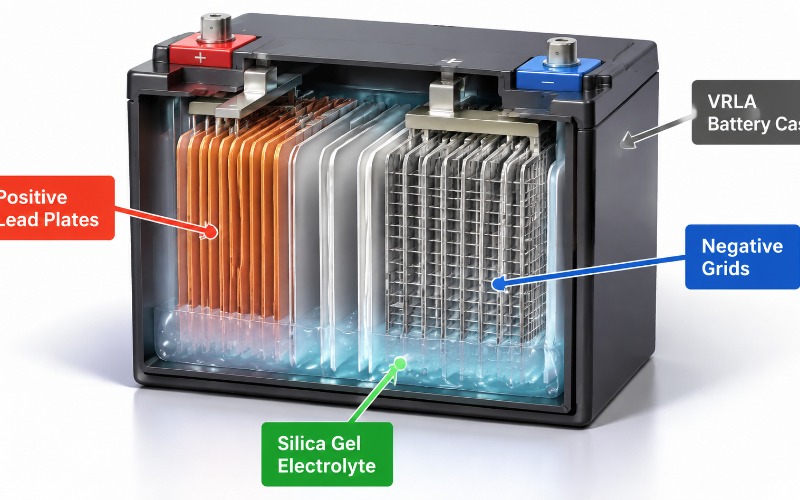
For a VRLA battery factory, relevant activities include plate production or sourcing, assembly, electrolyte filling, formation charging, sealing, and final testing. The purchasing question is which operations the supplier controls, where they occur, and how a finished battery can be traced to production and inspection records. These are general evaluation criteria, not claims about any particular factory.
Interpret published scale correctly
JYC's company profile states that the business was established in 2000 and operates production bases in China and Malaysia, with more than 350,000 square meters of production space, 1,500 employees, more than 42 automated production lines, monthly output above 2.5 million batteries, and annual capacity of up to 5.5 million kVAh. Its company history also describes plate production, independent battery-case production, and continued investment in manufacturing technology.
These company-published figures indicate the scale needed to support mixed-SKU programs and repeat orders. For distributors, two production countries may also provide additional sourcing and logistics options. The commercial value depends on whether JYC can reserve capacity for the required SKUs and whether the proposed model, factory, certification, and delivery route remain aligned throughout the program.
Capacity units also matter. Battery-unit output counts products; kVAh expresses aggregate rated capacity. A production mix dominated by small batteries cannot be compared directly with one dominated by large industrial batteries using unit counts alone.
Identify control, not just ownership
A manufacturer need not make every component internally to be a dependable supplier. Outsourced materials can be acceptable when specifications, incoming inspection, traceability, and change control are effective. Conversely, owning upstream production does not automatically prove consistent finished-battery performance.
During a factory assessment, connect each observation to a purchasing consequence:
· Batch traceability: A battery code should connect to relevant production and inspection records. This helps define the scope of a complaint rather than treating an entire shipment as suspect.
· Process control: Formation, filling, and test records should show how deviations are handled. Equipment photographs alone do not demonstrate controlled output.
· Supplying-site identity: The quoted factory should match the agreed product documentation and applicable certificate scope. A second factory is not automatically an approved substitute.
· Change control: Changes to materials, terminals, cases, or production location should follow agreed notification rules. Otherwise, repeat orders may create unexpected installation or qualification work.
A focused site assessment therefore asks how the proposed batteries are made and released—not simply whether the supplier owns a factory.
JYC's published development history reports plate production since 2005, TTP welding and heat-sealing technology from 2011, independent battery-case production from 2015, an R&D center completed in 2017, and CCDR and punching technology introduced in 2019 and applied to VRLA batteries in 2022. For a distributor, this level of process and engineering investment can support product consistency, problem solving, and development of application-specific products. A factory audit should confirm which of these capabilities apply to the proposed models and supplying site.
Certification: Match the Document to the Model and Site
Direct Answer: Credible certification requires a match between the document type, legal holder, manufacturing location, product designation, applicable standard, and current status. A logo cannot establish all six.
Management-system certification, product certification, component recognition, and laboratory reports answer different questions.
Evidence type | What it can support | What it does not establish by itself |
Management-system certificate | A defined organization and site have a certified management system within the stated scope | Runtime, cycle life, or approval of every battery model |
Product certification or component recognition | Defined products meet requirements within the relevant certification scheme and conditions | Coverage of unlisted models, factories, or applications |
Laboratory test report | Identified samples were assessed using stated methods, with recorded results | Ongoing production certification or current brand-wide approval |
Conformity statement | A declaration or conclusion within its stated legal and technical scope | Universal permission to sell every product in every market |
ISO explains that external certification bodies perform certification; ISO itself does not certify organizations. Distributors should therefore identify and verify the issuing body rather than treating the ISO name as the issuer.
Use JYC's certification portfolio as a verification starting point
JYC's official website displays a broad documentation portfolio that includes ISO, IEC, VdS, UL, RoHS, CE, MSDS, EN 50342, IECQ, an EU Battery Directive document, a flame-retardancy test, and a ship survey certificate. This breadth can reduce the initial document-gathering burden for distributors entering multiple applications or markets. Each document must still be matched to the ordered model, legal holder, manufacturing site, applicable standard, destination market, and current status. The ISO 9001 certificate displayed by JYC identifies registration 0350324Q30199R1M and a Wengyuan site, with a stated expiry date of April 11, 2027. Its scope includes specified lead-acid batteries and related activities; it is management-system evidence for the stated scope, not proof that every product or the Malaysian factory is covered.
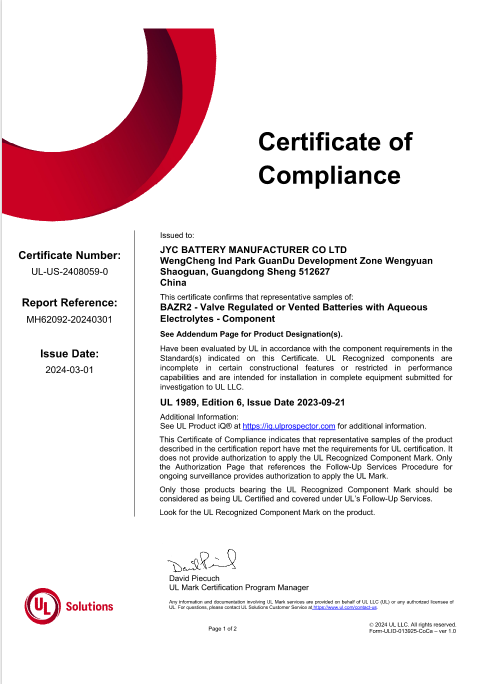
The UL document displayed by JYC identifies certificate UL-US-2408059-0, report reference MH62092-20240301, and category BAZR2. It directs readers to an addendum for product designations. That addendum is essential before assigning coverage to an ordered model.
UL explains that component recognition differs from certification of a complete standalone product. The displayed page should not be rewritten as “all JYC batteries are UL Listed.” Current status and covered models should be checked through the relevant certification record; UL identifies Product iQ as its certification-information resource.
Likewise, a report cover showing a battery category is not enough to establish a passing result. Obtain the model table, applicable standard, test conclusions, and any limitations. Missing information is a verification gap, not automatically evidence of noncompliance.
The distributor value is therefore not the number of logos alone. JYC gives prospective partners a substantial starting library, which can shorten initial screening when JYC supplies current, issuer-verifiable records for the exact SKUs and markets in the distributor's launch plan.
Product Coverage: Build an Application and Replacement Matrix
A stable product range is one that supports the distributor’s actual applications, installation constraints, and repeat-order needs. Counting series names can conceal important gaps.
Start with a portfolio matrix rather than a catalog total:
Portfolio requirement | Compare | Why it affects distribution |
Short-duration UPS backup | Discharge power at the required duration, endpoint voltage, and temperature | Equal Ah ratings may not deliver equal short-duration output |
Front-terminal installations | Case dimensions, terminal arrangement, connection clearance, and rack fit | Equal voltage and capacity do not ensure physical interchangeability |
Cyclic or photovoltaic service | Duty-specific test evidence, depth of discharge, and charging conditions | A standby rating does not establish cycling performance |
Repeat replacement sales | Exact SKU, specification revision, site, and change-notification terms | Continuity requires more than keeping a familiar series name |
Use model-level examples
JYC’s HR series table lists HR12145W as 12 V, 145 W/cell, and 36 Ah at the 10-hour rate. These are published ratings, not independent measurements. A fair high-rate comparison still needs the relevant discharge endpoint and temperature.
Its front-terminal series table lists FT100G-12 and FT100-12 at 12 V and 100 Ah, but with different dimensions. This illustrates a practical replacement risk: nominal electrical ratings alone do not establish rack compatibility.
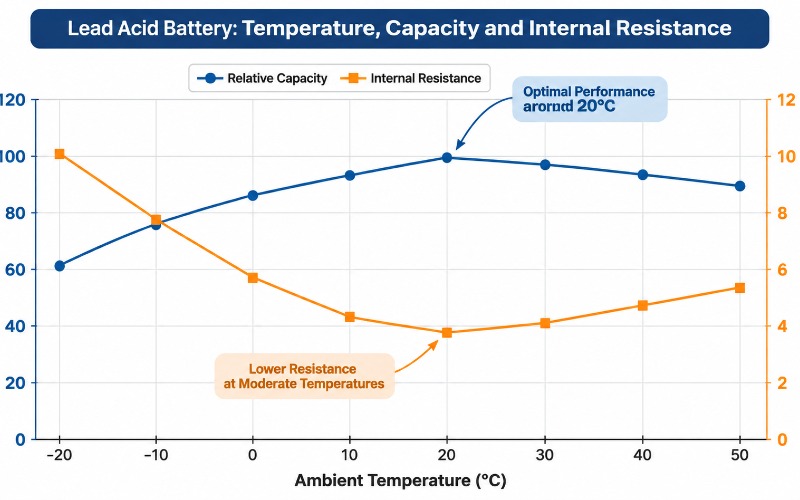
Capacity comparisons must also preserve operating conditions. The EUROBAT VRLA guide explains the dependence of capacity on discharge rate, temperature, and endpoint voltage, and the influence of operating conditions on cycling and service life. Consequently, an attractive Ah or life figure is incomplete without its rating basis.
Select evidence for the intended duty
Standards have defined scopes. For example, IEC 60896-22 addresses stationary VRLA cells and monoblocs in float applications, while IEC 61427-1 addresses secondary batteries for off-grid photovoltaic applications. These scope descriptions help select relevant evidence; they do not establish that a JYC model complies.
When a product category or webpage label is ambiguous, do not infer construction or performance from a neighboring series. Use a current model-specific specification before including that category in your distributable range.
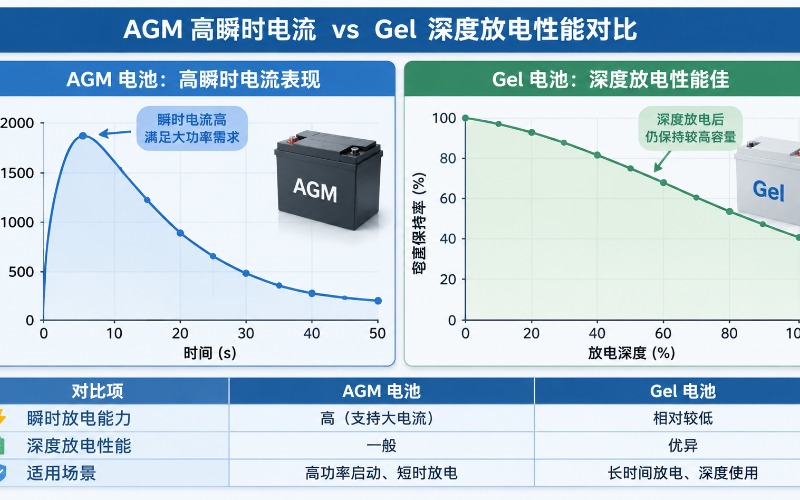
JYC's portfolio spans three main application groups. Industry Energy includes telecom and power, UPS, energy storage, and general-purpose use. Transportation includes automotive, motorcycle, and marine. Motive Power covers electric bicycles, electric motorcycles, low-speed electric vehicles, and other motive applications. The VRLA range further includes general-purpose, high-rate, front-terminal, AGM, GEL, deep-cycle, and tubular series, alongside start-stop, truck, genset, and marine products.
For distributors and dealers, this breadth can support one-brand coverage across replacement, standby, cyclic, and mobility demand. It may reduce supplier fragmentation, simplify sales-team training, and create cross-selling opportunities. The benefit becomes real only after the distributor maps the catalog to local demand, physical replacement requirements, and repeat-order commitments.
Volume Supply: Test the Order Mix, Not the Headline Capacity
Direct Answer: Reliable volume supply is the ability to deliver the agreed SKU mix, specification, quantity, documentation, and schedule consistently. JYC's published production scale makes it a credible candidate for volume programs, but aggregate capacity remains only a starting indicator; the distributor should confirm capacity and lead time for the exact order mix.
For distributors, supply risk often sits in the mix. A supplier may offer substantial overall output while having limited availability for a particular case size, terminal arrangement, or production route. JYC's more than 42 automated lines and two-country manufacturing footprint are useful scale and flexibility indicators, but the purchase decision should still be based on availability by SKU and supplying site rather than one company-wide capacity number.
JYC states that its products have been sold in more than 80 countries and regions and that it operates 11 domestic offices or subsidiaries and two overseas entities. This record suggests experience with export programs and varied market requirements, which can reduce onboarding friction for an international distributor. Buyers should still request references for comparable destinations, product groups, and order volumes, together with the relevant logistics and after-sales process.
The following is a recommended qualification sequence, not a report of JYC’s delivery performance:
1. Representative samples: Select important products and installation formats. Confirm dimensions, terminals, labels, documentation, and agreed electrical acceptance criteria.
2. A representative pilot order: Include the intended product mix. Evaluate specification conformity, traceability, packing, documents, and shipment timing—not just sample appearance.
3. A controlled volume increase: Compare repeat orders using a consistent delivery measure, including the agreed date, actual shipment date, quantity, and approved changes.
4. A continuity agreement: Define forecast updates, allocation, specification changes, discontinuation notice, and complaint handling before increasing dependence on the supplier.
JYC also publishes OEM/ODM support covering private labels and customization of performance parameters, enclosures, color, and branding, with a process from requirement alignment and sample testing through mass production and delivery. For distributors building a differentiated house range, this can shorten development and provide a clearer route from market requirement to commercial product. The applicable product scope, engineering validation, certification plan, minimum order, tooling, lead time, and ownership of custom specifications should be agreed before launch.
Separate dispatch performance from arrival performance. Production completion, vessel schedules, customs clearance, and inland transport are different events. A useful supplier metric identifies which milestone is being measured and who controls it.
Inventory condition also matters. Lead-acid batteries may require recharge during storage; the interval depends on product guidance and storage conditions. Agree how manufacturing dates, storage history, and recharge responsibilities will be managed. A full container of aged or poorly maintained stock is not dependable supply merely because it arrived on time.
FAQ
Does ISO 9001 certification mean every battery meets its advertised performance?
No. It concerns a quality management system within a defined scope. Model suitability still depends on specifications, relevant test evidence, and agreed acceptance requirements. It also does not establish shipment reliability.
Is a manufacturer with two production countries automatically a lower-risk supplier?
No. JYC's production bases in China and Malaysia can create additional capacity, routing, and continuity options for distributors, but only when the required models, processes, certification coverage, and commercial arrangements support the proposed supply route. Treat a site transfer as a technical and purchasing decision, not an automatic backup plan.
Should a distributor choose the brand with the widest catalog?
Not necessarily. Breadth is valuable when it closes real application and replacement gaps. JYC's coverage across industrial energy, transportation, and motive-power applications can help a distributor consolidate purchasing and cross-sell within one brand, provided the selected models have clear documentation and continuity commitments.
Can a successful sample test justify an immediate large order?
Not by itself. A sample can support evaluation of that sample against defined criteria. A representative pilot order and repeat-delivery evidence provide additional information about production consistency and fulfillment.
Conclusion
A reliable battery brand connects manufacturing control, correctly scoped certification, application-fit products, and repeatable supply. JYC meets enough first-stage conditions to merit inclusion on a global distributor's supplier shortlist: more than 25 years of experience, large-scale manufacturing in China and Malaysia, a wide application portfolio, a published certification and document library, international sales experience, and OEM/ODM support. Final qualification should confirm the proposed models, supplying site, current document status, commercial support, and demonstrated order performance.
Next step
Include JYC in the same supplier comparison used for other shortlisted brands. Send one portfolio matrix covering applications, exact models, forecast quantities, installation constraints, destination markets, and private-label requirements. Ask JYC to map each item to the supplying factory, current certification records, specifications, available capacity, lead time, sample plan, and proposed pilot-order schedule.
Sources and review note
JYC facts added in this revision are based on the company's official website, including the About, Products & Solutions, and OEM/ODM pages reviewed on November 18, 2026. Company figures, product claims, and displayed certifications are JYC-published information and should be verified for the specific model, factory, market, and order. The original ISO, UL, IEC, and EUROBAT references continue to support the evaluation method rather than JYC-specific compliance. Official pages: https://www.jycbattery.com/about ; https://www.jycbattery.com/products-solutions ; https://www.jycbattery.com/oem-odm






 en
 fra
 spa
 de
 vie
 ru
 ara
 kor