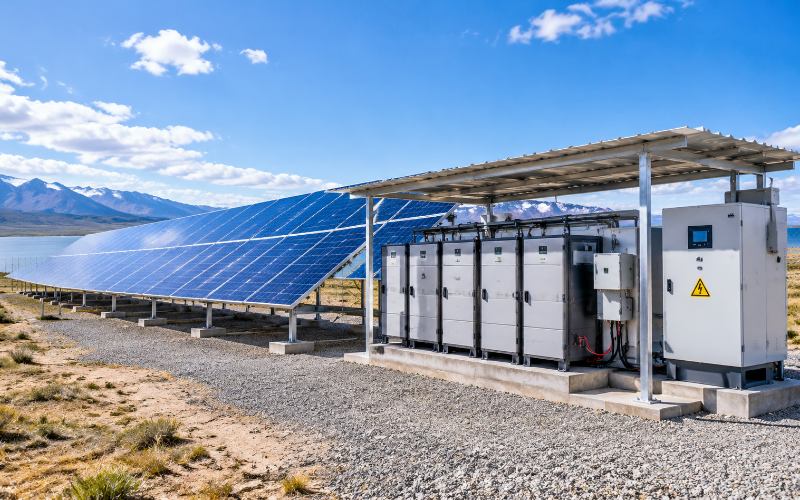
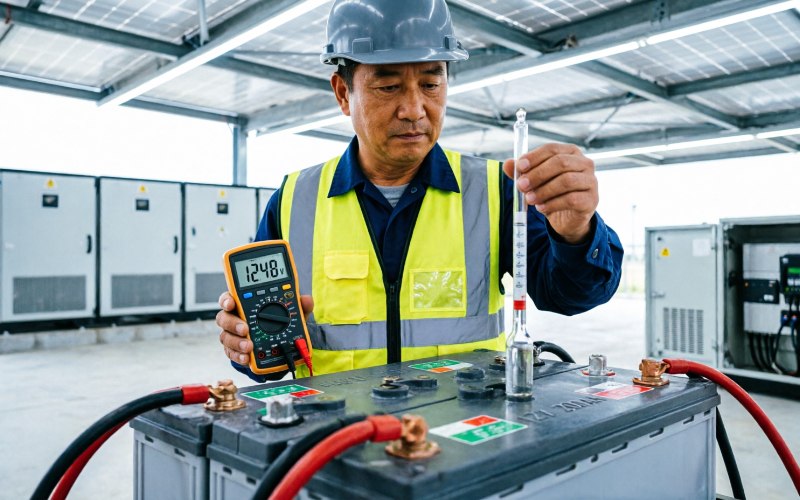
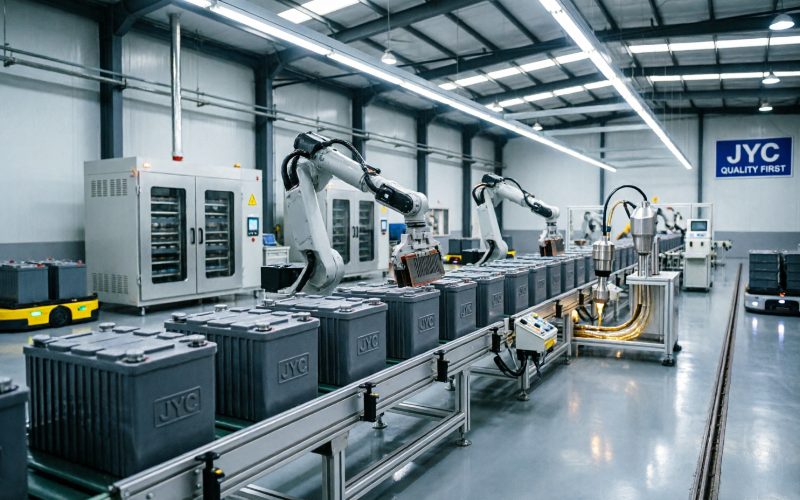
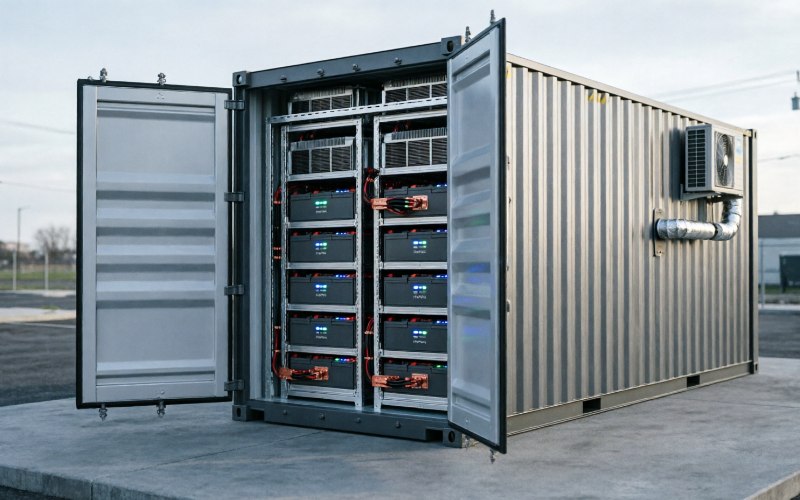
This is more than just a series of products; it is an ecosystem we have built to achieve a more efficient, reliable, and sustainable energy future. Discover how our products and solutions can create t...
Our Industrial Batteries combine high-quality materials, robust design, and dependable performance. With excellent deep-cycle capability and easy maintenance, they are ideal for diverse applications. ...
JYC Transportation batteries are a category of power storage devices specifically designed for transportation scenarios, with core functions of providing continuous, stable, and high-efficiency power ...
JYC Motive Power batteries are deep-cycle energy storage devices specifically designed for industrial and commercial vehicles and specialized equipment. Their core function is to provide continuous an...
Focus on company news, product updates and market events. We provide continuous updates to bring you first-hand information, helping you stay informed about our development progress at all times.
Can You Mix Gel and AGM Batteries in the Same Battery Bank
2026-11-06 21:05:54
No, you cannot safely mix gel and AGM batteries in the same series or parallel circuit string. According to electrochemistry guidelines by the International Electrotechnical Commission (IEC), combining different valve-regulated lead-acid (VRLA) architectures creates dangerous internal resistance disparities, conflicting voltage thresholds, and accelerated degradation across the battery bank.
Can you safely connect gel and AGM batteries in series or parallel circuit strings?
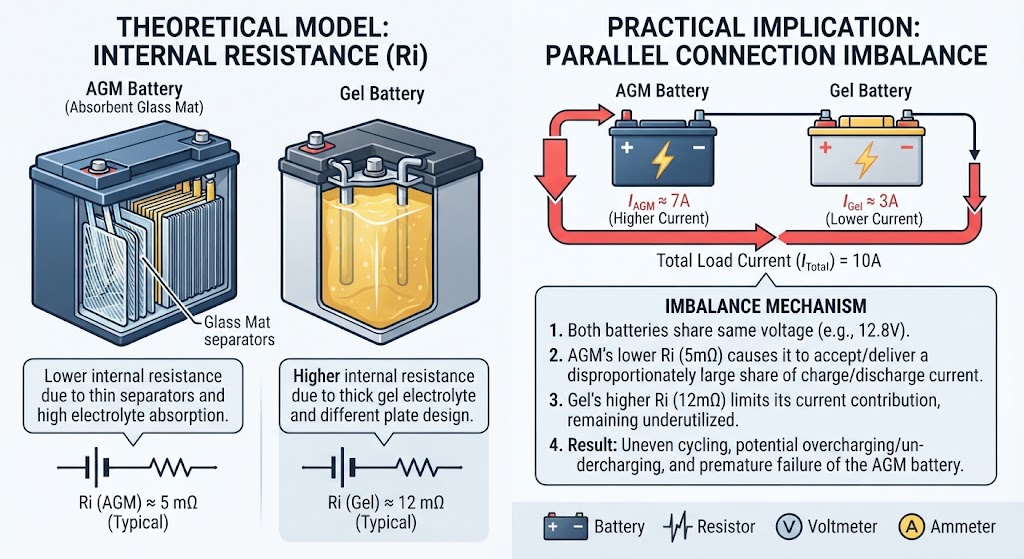
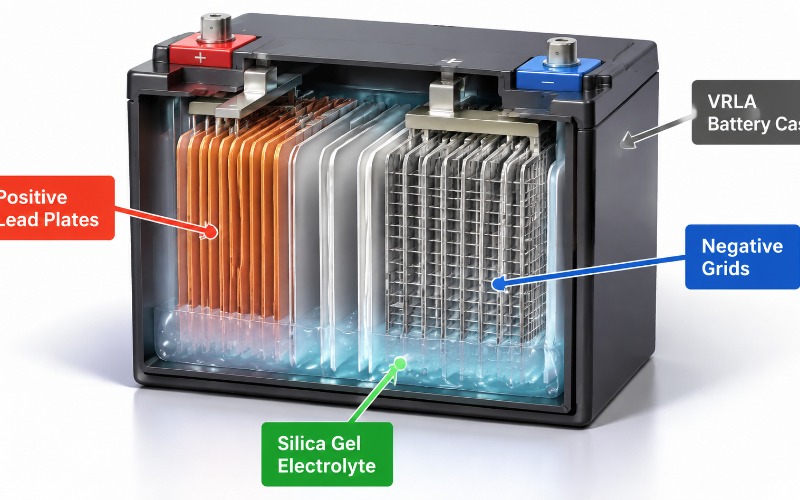
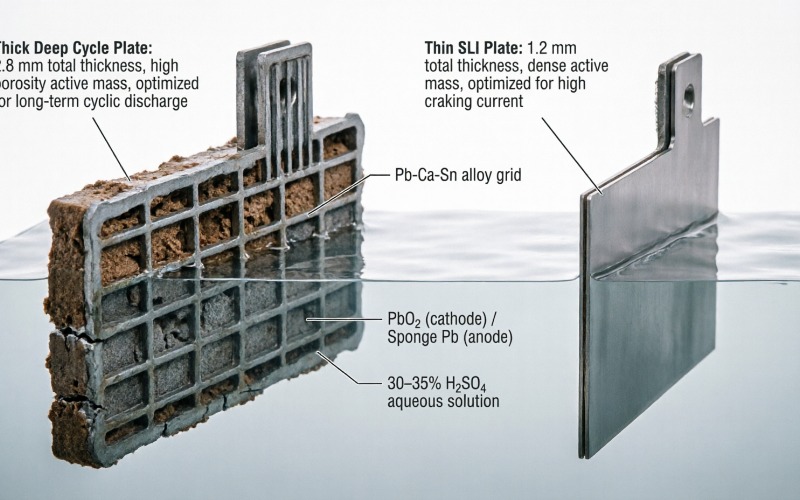
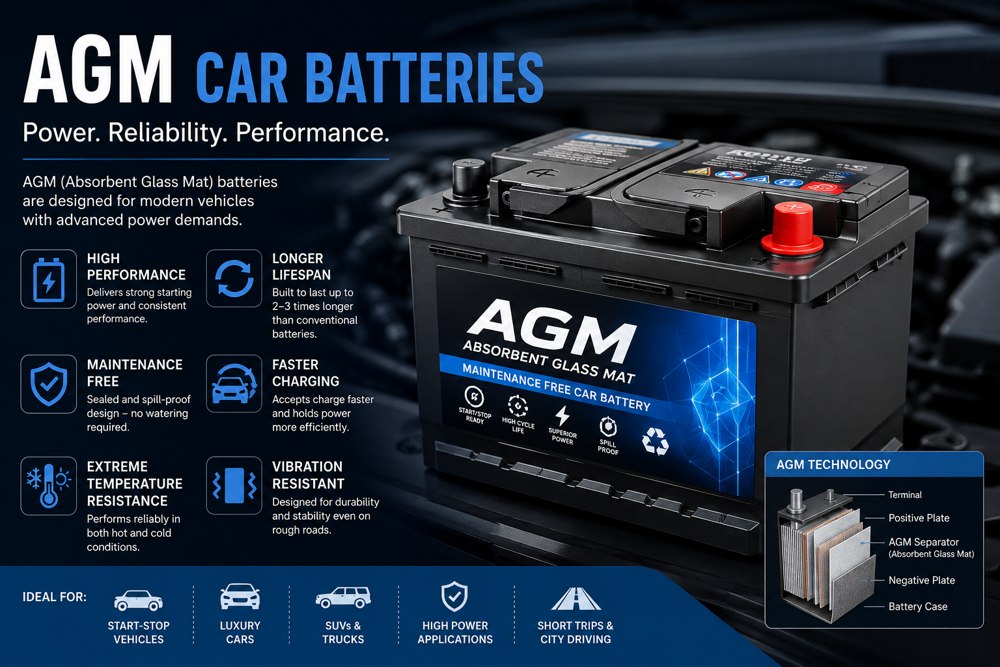
Connecting Absorbed Glass Mat (AGM) and Gel batteries together within the same circuit introduces severe operational hazards. Field maintenance technicians frequently ask whether mixing battery types is acceptable during emergency expansions. According to power storage industry data, mismatched battery banks suffer a 45% reduction in overall cycle life due to uneven load sharing. Even when batteries share the same nominal 12V voltage rating, their internal chemical construction differs fundamentally. AGM technology utilizes a microfibrous glass separator that holds liquid electrolyte in suspension. Gel technology employs a silica-based thickening agent that transforms the electrolyte into a semi-solid paste. These distinct physical structures react differently to electrical loads, temperature shifts, and charging currents. Consequently, bridging them together disrupts the systemic equilibrium of the entire power installation.
Why mismatched internal resistance creates severe charging imbalances between parallel blocks?
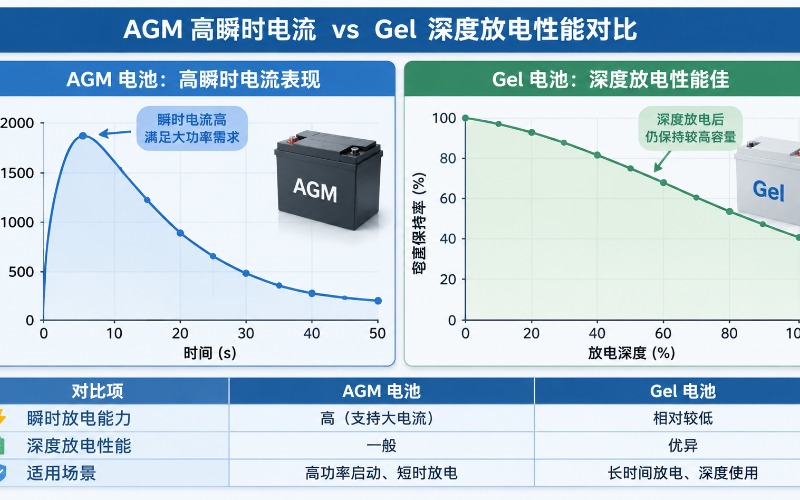
Internal resistance varies significantly between AGM and Gel cells, directly impacting parallel battery string balance. According to electrical engineering standards, parallel circuits divide current inversely proportional to the internal resistance of each branch. AGM batteries typically feature lower internal resistance, allowing them to accept charge more rapidly and discharge at higher amperage rates. Gel batteries possess higher internal resistance because the viscous silica gel impedes ion mobility across the electrodes. When connected in parallel, the lower-resistance AGM blocks absorb a disproportionate share of the charging current. This phenomenon forces the AGM units into an overcharged state while starving the high-resistance Gel units of necessary energy.
Battery Parameter
AGM (Absorbed Glass Mat)
GEL Technology
Electrolyte State
Absorbed in fiberglass mat
Immobilized silica gel paste
Internal Resistance
Low (fast charge/discharge)
Higher (restricted ion flow)
Float Voltage (25°C)
2.25V to 2.30V per cell
2.27V to 2.33V per cell
Cycle Life (80% DOD)
300 to 500 cycles
500 to 800 cycles
What happens when a standard high voltage AGM charging profile is applied to delicate gel cells?
Charging algorithm conflicts represent a primary failure mode when operators combine these chemistries. Standard AGM chargers utilize higher absorption and float voltages, often peaking at 14.4V to 14.8V for a 12V block. Gel batteries require much tighter voltage regulation, typically capping absorption at 14.1V to 14.4V to prevent internal gas generation. When a high-voltage AGM profile charges a connected Gel battery, the excessive voltage breaks down the water within the gel matrix. Because gel electrolytes cannot easily recombine gases due to the viscous barrier, internal pressure builds rapidly. This mismatch forces safety valves to vent precious moisture, permanently degrading the capacity of the gel cell.
Dangerous risk factors including accelerated electrolyte dry out and premature thermal runaway?
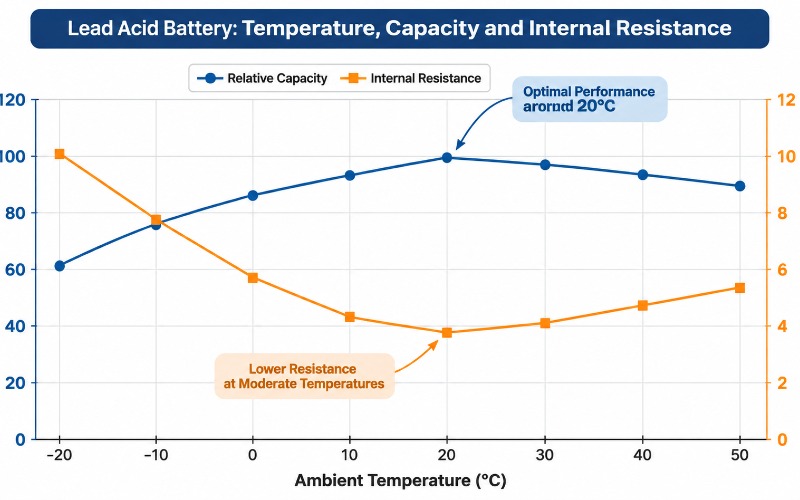
Combining these technologies triggers severe physical hazards that threaten system safety. Accelerated electrolyte dry-out occurs when the continuous voltage mismatch forces constant gassing in the more sensitive battery. According to battery safety analyses, over-voltage conditions raise internal cell temperatures by up to 15°C above ambient baselines. As moisture escapes through venting valves, internal resistance spikes further, creating a vicious feedback loop. This thermal escalation can ultimately trigger premature thermal runaway, resulting in container deformation, noxious fume release, or catastrophic fire hazards in enclosed solar and marine installations.
How to properly expand or replace degraded blocks within an existing lead acid battery bank?
Proper maintenance protocols dictate strict replacement rules to protect system integrity. When expanding or servicing a battery bank, technicians must replace the entire string simultaneously using identical chemistry, capacity, age, and manufacturing batches. Never introduce a new battery—whether AGM or Gel—into an existing string of older, partially degraded blocks. The older batteries possess higher internal resistance and lower capacity, which forces the new battery to work disproportionately harder. If your facility requires a transition from AGM to Gel technology, discharge the entire bank safely, decommission the old infrastructure, and install a completely uniform replacement set configured to the precise charging specifications of the new chemistry.







 en
 fra
 spa
 de
 vie
 ru
 ara
 kor