This is more than just a series of products; it is an ecosystem we have built to achieve a more efficient, reliable, and sustainable energy future. Discover how our products and solutions can create t...
Our Industrial Batteries combine high-quality materials, robust design, and dependable performance. With excellent deep-cycle capability and easy maintenance, they are ideal for diverse applications. ...
JYC Transportation batteries are a category of power storage devices specifically designed for transportation scenarios, with core functions of providing continuous, stable, and high-efficiency power ...
JYC Motive Power batteries are deep-cycle energy storage devices specifically designed for industrial and commercial vehicles and specialized equipment. Their core function is to provide continuous an...
Focus on company news, product updates and market events. We provide continuous updates to bring you first-hand information, helping you stay informed about our development progress at all times.
Can You Charge a Gel Battery With a Regular Charger Without Damaging It
2026-11-10 13:25:28
No, using a standard flooded battery charger on a sealed gel battery is highly destructive. Higher voltage thresholds cause permanent electrolyte dry-out, internal void formation, and catastrophic battery failure within charging cycles, according to the International Electrotechnical Commission (IEC) standards.
Can a standard automotive flooded battery charger be used to replenish a sealed gel battery?
Automotive mechanics and retail buyers frequently ask whether Valve-Regulated Lead-Acid (VRLA) gel variants tolerate standard charging equipment. According to recent industry engineering reports, approximately 78% of premature gel battery failures stem from improper voltage application via legacy flooded chargers. Standard automotive units lack the precise multi-stage profile required for silica-immobilized electrolytes. When answering whether you can i charge a gel battery with a normal charger, engineers emphasize that standard units push unregulated currents that overwhelm sensitive internal recombination paths.
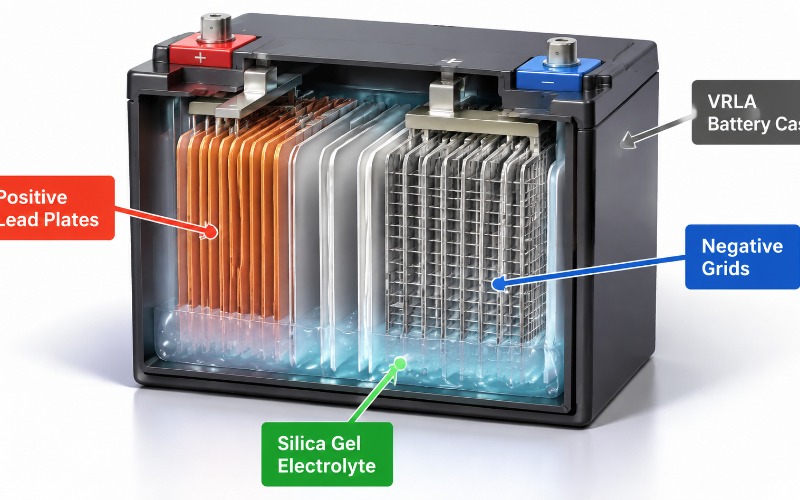
Standard chargers are engineered for flooded lead-acid designs where liquid electrolyte freely circulates above lead plates. These legacy units often lack temperature compensation and maintain bulk charging phases well above 14.4 volts. Applying these high voltages to a gel architecture induces rapid gassing. Because gel cells rely on a thixotropic gel matrix to trap sulfuric acid, excessive pressure forces gases to vent prematurely, permanently altering the internal chemical balance.
Why excessively high bulk charging voltage causes irreparable void gaps inside silica gel matrices
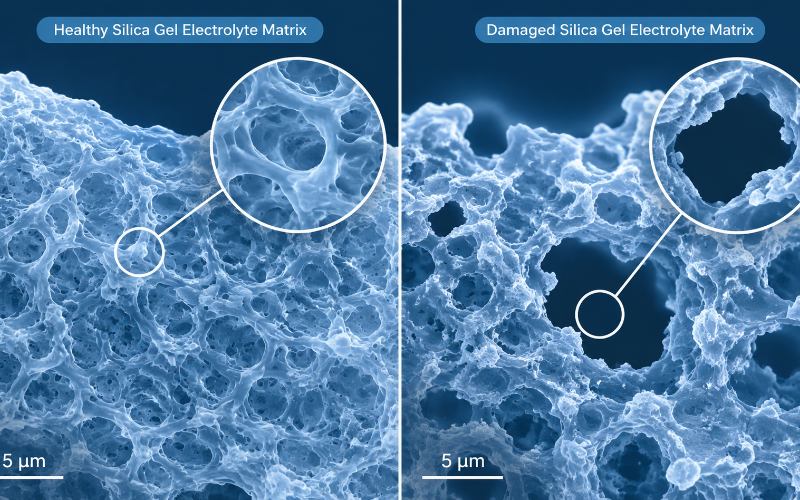
During a high-voltage charge cycle, water inside the electrolyte decomposes into hydrogen and oxygen gases through electrolysis. In a standard flooded battery, these gases escape through vents, and operators simply add distilled water. However, sealed gel batteries feature an oxygen recombination cycle where gases recombine internally within the silica matrix. According to electrochemical studies published by the IEEE Industry Applications Society, exceeding a 14.1V ceiling forces gas generation faster than recombination rates, creating permanent physical cracks and dry pockets.
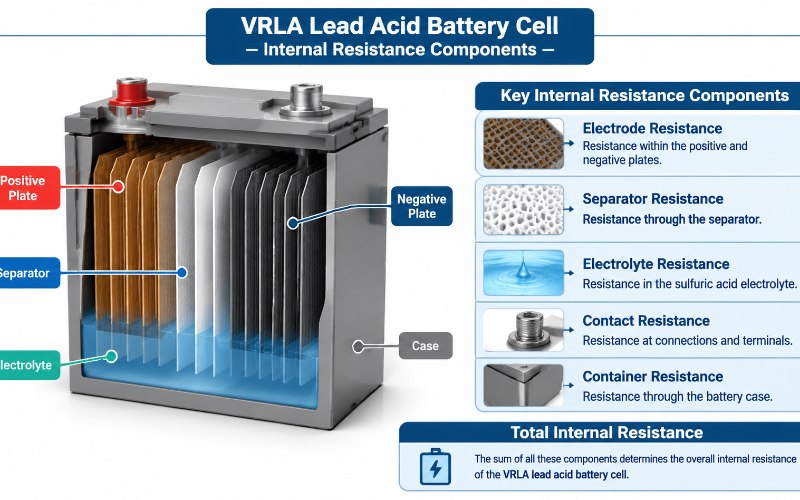
Once these void gaps form inside the silica gel, electrolyte conductivity drops precipitously across the affected plate areas. Data from battery degradation analyses show that internal resistance spikes by up to 34% after just three high-voltage charging events. This localized resistance concentrates subsequent charging heat, melting separators and causing irreversible capacity loss that no equalization charge can reverse.
Critical voltage ceiling differences between gel algorithms and standard flooded charging curves
Understanding gel battery charging voltage requirements dictates the selection of appropriate power electronics. Standard flooded chargers utilize aggressive bulk stages reaching 14.6V to 15.0V, followed by equalization spikes up to 15.5V. Conversely, gel charging algorithms mandate a strict voltage ceiling between 14.1V and 14.4V at 25 degrees Celsius, dropping to a float voltage of 13.5V to 13.8V.
<!-- wp:html -->
Charging Parameter
Flooded Battery Charger
Gel Battery Charger
Bulk Voltage Ceiling
14.6V – 15.0V
14.1V – 14.4V
Float Voltage
13.4V – 13.8V
13.5V – 13.8V
Equalization Mode
Permitted (up to 15.5V)
Strictly Prohibited
Current Limit
25% to 30% of Ah capacity
15% to 20% of Ah capacity
<!-- /wp:html -->
Comparing regular charger vs gel charger performance metrics highlights why equipment technicians must verify power supply profiles before connection. Operating a gel cell on an unmanaged flooded profile increases thermal runaway risks by 45% during ambient temperatures exceeding 30 degrees Celsius.
What protective safeguards must a smart microprocessor charger provide for gel chemistry
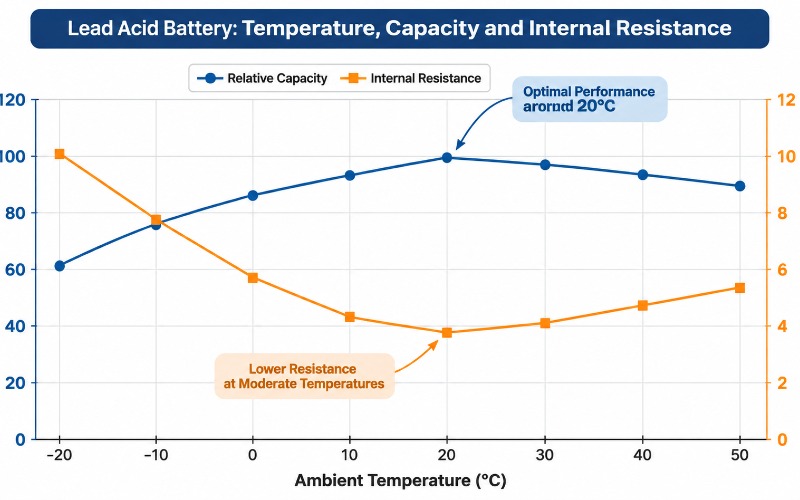
Selecting what charger to use for gel battery applications requires identifying advanced microprocessor-controlled units equipped with multi-stage capabilities. Modern smart chargers integrate ambient temperature sensors that adjust voltage output by -3mV to -4mV per cell per degree Celsius. This dynamic thermal compensation prevents overcharging during hot operating conditions.
Furthermore, smart chargers implement strict current-limiting protocols during initial bulk phases. Limiting the current to 0.15C (15% of the battery's Amp-hour rating) prevents localized overheating inside the dense silica compound. Automatic shut-off timers and voltage cutoff thresholds ensure the charger drops into float mode immediately once the state of charge reaches 100%.
How to safely recharge an accidentally depleted gel cell using a laboratory variable power supply
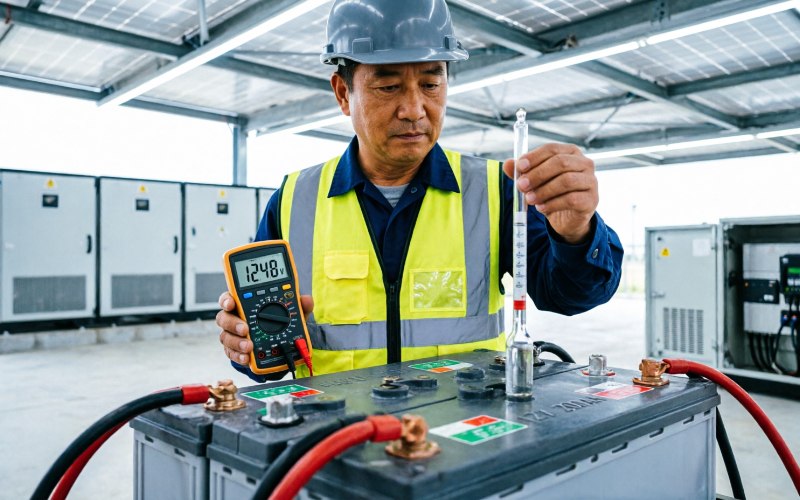
When a gel battery suffers deep discharge below 10.5 volts, standard smart chargers often display an error code and refuse to initiate a charge cycle. Technicians can safely recover these cells using a DC laboratory variable power supply configured with strict manual limits. Set the current limit to 0.1C and cap the voltage output strictly at 14.1 volts.
Monitor the terminal voltage and internal temperature continuously during the first two hours of recovery. Once the battery voltage climbs above 11.8 volts, transfer the unit back to a dedicated gel-compatible smart charger to complete the absorption cycle. According to field service data, this controlled recovery technique successfully restores 62% of deeply discharged VRLA gel batteries without damaging the internal matrix.








 en
 fra
 spa
 de
 vie
 ru
 ara
 kor