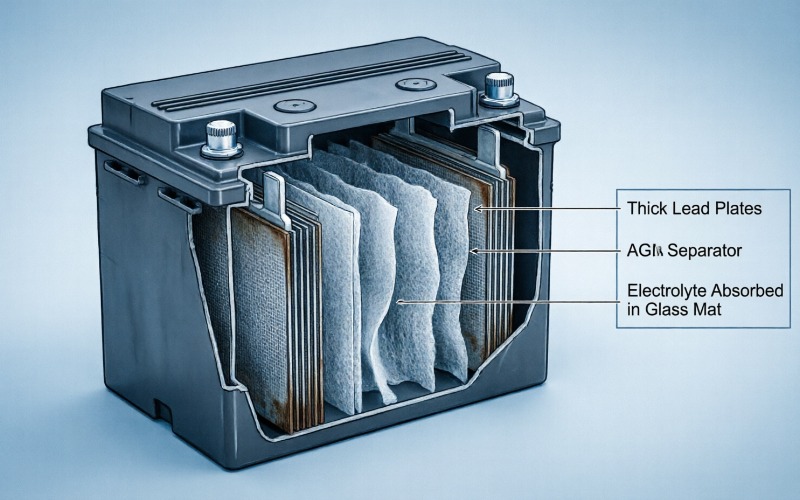
UPS batteries should be replaced when verified condition data shows that the battery string can no longer deliver the runtime required by the protected load, when a safety-related defect is found, or when the trend of battery health creates an unacceptable risk for the site. A calendar date alone is not enough. Battery life is influenced by temperature, charging conditions, discharge history, maintenance quality, system design, and the battery model.
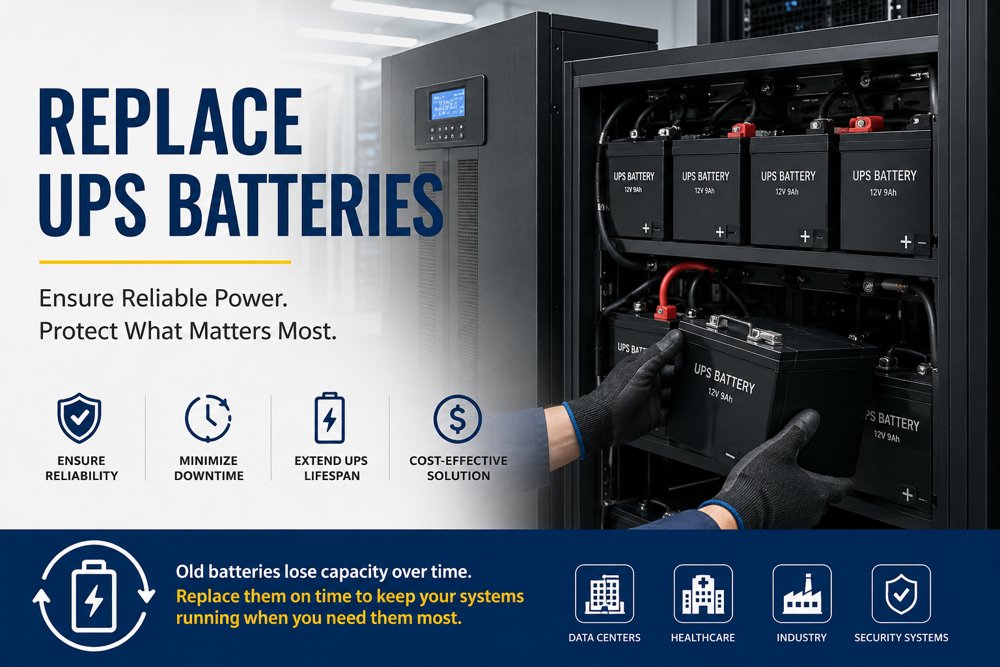
For a critical UPS installation, the practical question is not simply, "How old are the batteries?" It is, "Can this battery bank still support the required load for the required time under the conditions in this site?" A documented answer to that question helps facilities teams plan replacement before an avoidable outage, rather than responding after a failed runtime event.
If you are assessing an existing UPS bank, start with the JYC UPS battery. It explains the role of high-rate VRLA batteries in UPS backup systems and links to suitable product families.
Use Four Types of Evidence Before Making a Replacement Decision
The most reliable replacement decisions use more than one signal. Review the following evidence together:
| Evidence | What to review | What it may mean |
|---|
| Required runtime | The latest load and runtime requirement for the protected equipment | The installed bank may no longer have enough usable capacity, even if individual batteries appear normal at rest. |
|---|
| Condition testing | Capacity test results, conductance or impedance trend, block voltage, connection condition, and temperature | A declining trend or a weak block may justify replacement planning or targeted investigation. |
|---|
| Site history | Installation date, previous outages, maintenance records, charger alarms, and replacement history | Repeated alarms, poor maintenance history, or a string approaching its planned service period can increase operational risk. |
|---|
| Physical inspection | Swelling, leakage, abnormal heat, damaged terminals, corrosion, loose connections, or cabinet damage | These conditions require prompt assessment by qualified personnel and may require isolation or replacement. |
|---|
Use the acceptance criteria defined by your UPS manufacturer, battery manufacturer, site policy, and applicable safety procedures. Do not treat one open-circuit voltage reading as a complete health assessment. A battery can show a normal resting voltage but still have reduced capacity under load.
For a related technical reference, read our deep cycle batteries for UPS systems before finalizing the design.
Warning Signs That a UPS Battery Bank Needs Review
The following signs do not all lead to the same action, but they should trigger a structured review:
A controlled runtime test no longer meets the site's backup-time requirement.
Monitoring data shows a sustained change in block voltage, impedance, conductance, temperature, or charger current.
A UPS reports a battery alarm, failed self-test, repeated low-battery event, or unexplained transfer issue.
One or more batteries show swelling, leakage, cracked cases, terminal damage, overheating, or excessive corrosion.
New loads have been added to the UPS, but the battery bank has not been re-sized.
The battery room has experienced prolonged high temperature, poor ventilation, or charging problems.
The site has no recent test record, no clear installation date, or no documented runtime requirement.
For visible physical damage, follow the site's electrical safety procedure and involve trained personnel. Do not rely on a visual inspection alone to approve a battery string for continued service.
For a suitable configuration, review our HR Series high-rate batteries for specifications and deployment options.
Replace According to Runtime Risk, Not Only Age
Many organizations set a planned replacement window because it is easier to budget, procure, and schedule work before batteries become unreliable. That approach can be useful, but the schedule should be checked against real operating conditions. A well-managed bank in a controlled environment may perform differently from a similar bank exposed to high ambient temperature, repeated deep discharges, or unsuitable charging.
A practical replacement plan has three stages:
Confirm the duty requirement. Record the actual UPS load, target runtime, system DC voltage, battery layout, room temperature range, and any future load growth.
Assess the installed bank. Review inspection records and use appropriate electrical tests to identify capacity loss, imbalance, weak connections, or abnormal thermal behavior.
Plan replacement and commissioning. Select compatible batteries, confirm rack dimensions and terminals, verify charger settings, schedule a maintenance window, and document post-installation checks.
For an aged series string, mixing new batteries with substantially older batteries can create an imbalance because the units may have different capacity and charging behavior. The correct approach depends on the system and the inspection results, so confirm the plan with a qualified UPS or battery specialist.
Select the UPS Battery for the Actual Discharge Profile
UPS batteries are not selected by amp-hour rating alone. The expected discharge duration, load profile, room conditions, cabinet space, charger settings, and maintenance plan all matter.
For short-duration, high-current UPS duty, review the JYC HR Series. Its product table includes 15-minute power data, which is relevant when comparing high-rate performance for UPS applications. For general standby duty, the GP-Stationary Series may be appropriate when its specifications match the required discharge profile. For compact telecom racks and front-access maintenance, see the FT Series.
The product selection request should include:
UPS model and nominal DC system voltage
Current load and required backup time
Existing battery model and quantity
Available rack or cabinet dimensions
Terminal orientation and cable requirements
Ambient temperature range and ventilation conditions
Required standards, project country, and target delivery date
This information allows the supplier to check electrical and mechanical compatibility instead of recommending a battery based only on a similar-looking model.
Replacement Planning for Data Centers, Telecom, and Industrial Sites
Critical applications need different questions answered before replacement. In a data center, the battery bank may be intended to bridge the time until generators start or to support an orderly shutdown. In a telecom site, front-access layout, cabinet footprint, remote maintenance, and temperature conditions can be central to the decision. In an industrial control system, the consequences of a short interruption may be different from the consequences of a controlled shutdown.
Use the relevant JYC application page when defining the scope:
Before a replacement project, make a one-page replacement brief. Include the load, runtime target, system voltage, battery configuration, site photos, temperature history, test results, delivery constraints, and commissioning date. This simple document reduces the risk of selecting a mechanically incompatible block or a battery designed for a different discharge duty.
Maintenance Can Improve Replacement Decisions
Maintenance does not eliminate the need for replacement, but it makes replacement decisions more evidence-based. A useful program records installation dates, room temperature, float voltage, torque checks, visual inspections, alarms, test results, and any replaced blocks. Trend data is more informative than a single reading because it shows whether the condition is stable or changing.
Follow the charging, inspection, and testing guidance for the exact battery series and UPS system. Avoid applying generic settings across different battery chemistries or applications. For example, a high-rate UPS battery, a deep-cycle GEL battery, and a front-terminal telecom battery can have different performance priorities and recommended operating conditions.
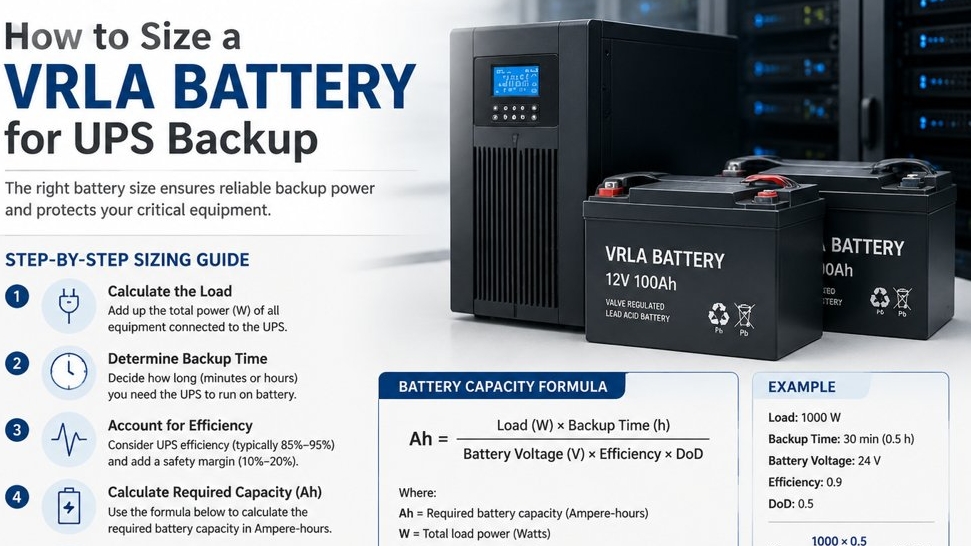
For additional lifecycle and operating context, see VRLA UPS battery sizing guide as a follow-up reference.
Request a UPS Battery Replacement Review
Do not wait for a generic "battery alarm" before checking the replacement plan. Send your UPS model, DC voltage, current battery model, battery quantity, load, required runtime, installation photos, and project country to the JYC team.
Request a UPS Battery Replacement Review
The review can help you identify suitable product families, confirm basic rack and terminal compatibility, and prepare a clearer RFQ for your procurement or engineering team.
Frequently Asked Questions
How often should UPS batteries be replaced?
There is no single replacement interval that applies to every UPS battery bank. Use the battery manufacturer's guidance, the UPS manufacturer's guidance, the site's runtime requirement, operating conditions, and condition-test results to set a planned replacement date. Review the plan sooner if alarms, weak test results, physical defects, or high-temperature exposure are present.
How do I know whether a UPS battery still has enough runtime?
Compare a controlled test or validated monitoring result with the runtime required by the current load. Also review individual block condition, connection quality, temperature, and charger behavior. A qualified technician can help determine whether the result is sufficient for the site's risk level.
Should all batteries in a UPS string be replaced at the same time?
For an aged series string, replacing the string with compatible new batteries is often considered because mixing units with different age and capacity can make charging and discharge behavior less uniform. The correct decision depends on the UPS configuration, battery condition, and maintenance policy.
Can I replace a 12V 7Ah UPS battery with a 12V 9Ah battery?
Possibly, but only after checking nominal voltage, physical dimensions, terminal type, charging compatibility, fuse and cable requirements, UPS cabinet space, and the UPS manufacturer's guidance. A higher amp-hour rating does not automatically make a replacement suitable.
What information should I provide when requesting a UPS battery quotation?
Provide the UPS model, system voltage, existing battery model, quantity, load, required runtime, installation dimensions, terminal requirements, destination country, standards required, and expected delivery date. These details allow a supplier to evaluate both electrical and mechanical compatibility.








 en
en  fra
fra  spa
spa  de
de  vie
vie  ru
ru  ara
ara  kor
kor